
Basic Information
Scientific classification
- Chinese name: Toucan
- Scientific name: Ramphastos toco, Toco toucan
- Classification: Climbing birds
- Family and genus: Toucanidae, order Toucanidae, genus Toucan
Vital signs data
- Body length: 36-79 cm
- Weight: 115-860g
- Lifespan: No verification data available.
Significant features
Distribution and Habitat
Toucans are found in tropical America, from central Mexico to Bolivia and northern Argentina, excluding the West Indies.
Toucans inhabit rainforests, woodlands, promenade forests, and grasslands, with the highest abundance in the lower Amazon River region.
Appearance
The toucan is somewhat similar to the hornbill, with a very large beak, but lighter in weight, serrated edges, and often adorned with brightly colored patterns. Its plumage is vibrant, primarily black.
Body length 36-79 cm (including beak); weight 115-860 g; male beak is usually longer than female beak.
Black with red, yellow, and white accents; or black and green with yellow, red, and maroon accents; or predominantly green; or predominantly tan and blue with yellow, red, and maroon accents. Sexes exhibit similar coloration, except for some species of the lesser toucan and some species of the tufted-tongue toucan.
Its eyes are surrounded by sky-blue feathers, its chest is orange-yellow, and its back is jet black. Its vibrant colors and strikingly large beak make it extremely valuable for viewing.
Detailed introduction
The toucan, scientifically known as Ramphastos toco, is a medium-sized climbing bird.
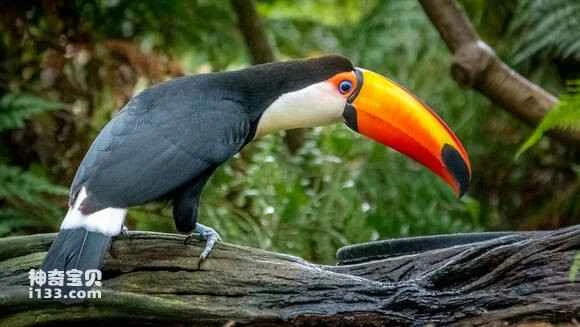
Toucans generally have unpleasant calls, often resembling frog croaks, dog barks, or grunts, clicks, or sharp, piercing sounds; however, a few species possess beautiful, melodious songs or melancholic calls. They primarily feed on fruit, but also consume insects, invertebrates, lizards, snakes, small birds, and bird eggs and chicks.
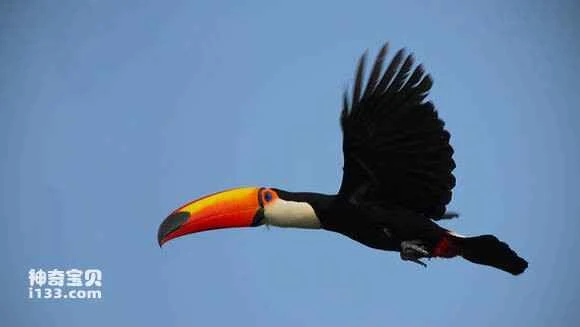
Toucans nest in natural burrows; some will inhabit abandoned nests of woodpeckers or large pied creeks, or even drive out the original nester and expand their own. They lay 1-5 eggs per clutch; white and unmarked. Incubation lasts 15-18 days, and chicks remain in the nest for 40-60 days.
Protect wild animals and ban the consumption of wild game.
Maintaining ecological balance is everyone's responsibility!


