Basic Information
Scientific classification
- Chinese name: Shrub Rat
- Scientific name: Rattus fuscipes
- Classification: Rodentia
- Family and genus: Muridae, Rat
Vital signs data
- Body length: Adults typically have a head and body length of about 12–20 cm, and a tail length of about 10–18 cm, which is usually similar to or slightly shorter than the head and body length.
- Weight: Weight is generally about 60–200 grams, and is greatly affected by gender, season and food conditions.
- Lifespan: In the wild, lifespan is mostly around 1–2 years, with a few individuals living longer when resources are stable.
Significant features
Native rats in the forest understory of southeastern Australia rely on the thick leaf litter and shrub cover for protection. They are omnivorous and often feed on fungi and invertebrates, playing an important role in forest food webs and ecological processes such as fungal dispersal.
Distribution and Habitat
They are mainly distributed in southeastern Australia and Tasmania, preferring well-shaded habitats such as moist or semi-moist forests, rainforest edges, coastal scrubland and valley forests, and relying on thick leaf litter, fallen trees and understory vegetation to provide nesting and refuge spaces.
Appearance
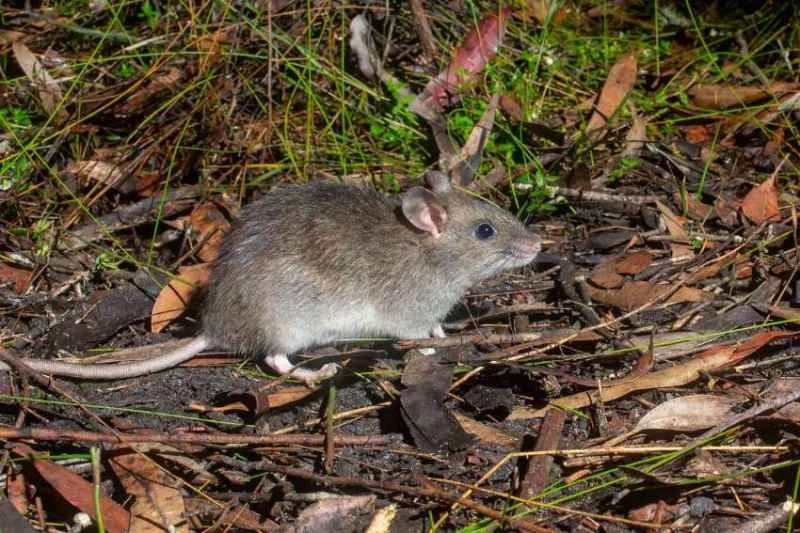
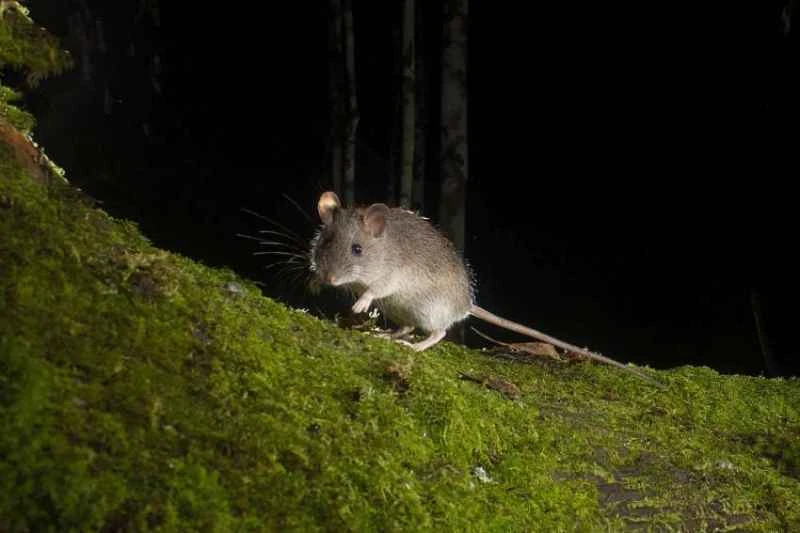
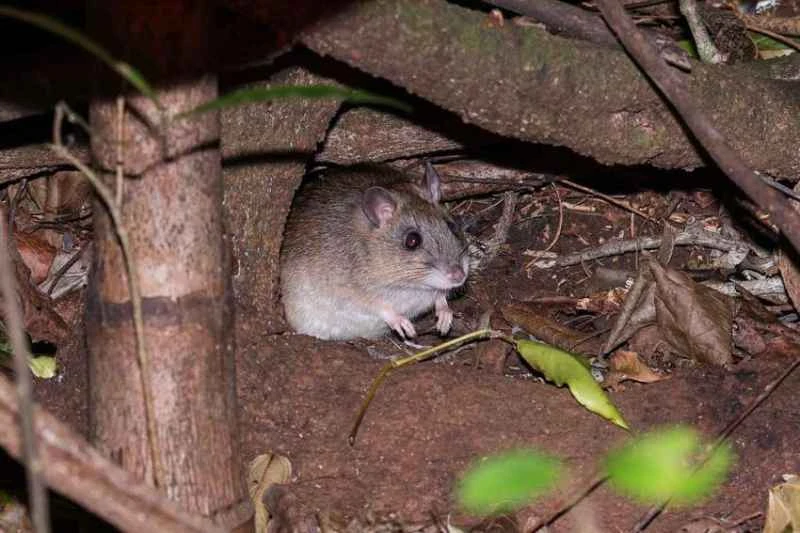
It is medium to sturdy in size, with a dark gray-brown to brownish-gray back and a lighter belly; the tail is similar in length to or slightly shorter than the body, and the incisors are orange-yellow and grow throughout life; it is more terrestrial and often moves along hidden passages in the leaf litter and at the bottom of shrubs.
Detailed introduction
The bush rat (scientific name *Rattus fuscipes *) is a common native rodent mammal found in southeastern Australia, belonging to the genus *Rattus* in the family Muridae. Unlike the house rat/brown rat commonly found in cities, the bush rat primarily inhabits the surface layer of forests, bushlands, and moist woodlands, relying on the concealment provided by thick leaf litter, fallen logs, and dense undergrowth. They are opportunistic omnivores, feeding on seeds, fruits, fungi, and invertebrates, playing an important role in ecological processes such as woodland food webs and seed/fungus dispersal.
Classification and nomenclature
Bush rats belong to the class Mammalia, order Rodentia, family Muridae, and genus Rattus . Their English name, Bush Rat, directly translates to "shrub rat," emphasizing their preference for shrublands and understory. They are one of Australia's native rat species, morphologically similar to domestic rodents such as the black/brown house rat, but their ecological niche and habitat preferences differ significantly.
Appearance features
The bush rat is medium-sized and sturdy, with a slightly broad head, a rounded muzzle, medium-sized ears, and relatively large eyes. Adults typically have a head-to-body length of 12–20 cm, and a tail length of 10–18 cm, often similar in length to or slightly shorter than the head and body. They generally weigh 60–200 grams, with males potentially heavier when resources are plentiful. The back fur is mostly dark grayish-brown, brownish-tan, or blackish-brown, while the belly is lighter, grayish-white or light brown. The thick fur is an adaptation to the temperature variations of cool, damp woodlands.
The tail is covered with fine hairs, and the scale rings are quite prominent; the incisors are orange-yellow and grow throughout life, requiring chewing to wear them down. The limbs and claws are adapted for quickly traversing the leaf litter, grass, and fallen logs to dig shallow burrows. Compared to the typical "climbing" black rat, the bush rat is more ground-oriented, often moving along the ground for cover.
Distribution range and habitat
The scrub rat is mainly distributed in southeastern Australia and parts of southern Australia, including New South Wales, Victoria, southeastern South Australia, and Tasmania (the distribution range varies slightly in different subspecies/geographical populations). It prefers habitats with complex structures and good surface cover, such as moist or semi-moist eucalyptus forests, temperate rainforest edges, montane woodlands, coastal scrub, heather scrub, river valley forests, and remnant forest belts at the edges of farmland.
This species is clearly dependent on "surface structure": thick layers of leaf litter, fallen trees, shrubs, and herbaceous plants provide concealed passageways, nesting materials, and refuge spaces. Local populations are more prone to decline and fragmentation after habitat clearing, overgrazing, frequent high-intensity fires, or road disintegration.
Lifestyle Habits and Behaviors
Bush rats are mostly active at dusk and night, typically hiding in their dens or under cover during the day. They develop fixed "tracks" in the leaf litter and under bushes, using familiar routes to travel between their dens and foraging sites, minimizing their exposure to open areas. While there may be overlap in activity ranges between individuals, they usually maintain some spatial separation through scent marking.
They are adept at digging shallow burrows or using hollows in fallen logs, crevices in tree roots, and rock fissures as nests, which are often lined with grass, leaves, fibers, and moss. When threatened, bush rats often quickly burrow under leaf litter, into crevices in fallen logs, or into caves to hide, demonstrating agility and high alertness.
feeding habits
Bush rats are opportunistic omnivores whose diet varies with the seasons and local resources. Common foods include seeds, nuts, fruits, shoots and leaves, fungi (both surface and underground), insect larvae, beetles, spiders, and other invertebrates. They may also consume humus or animal remains. They forage in secluded places and may drag some of their food back to their nests for storage.
In some woodland ecosystems, shrub rats feed on fungi and carry spores, which helps spread certain mycorrhizal fungi, thereby indirectly affecting the ability of plants to absorb nutrients and the woodland regeneration process.
Reproduction and life cycle
The breeding season of bush rats is usually related to climate and food conditions. In temperate regions, they are often more active in spring and summer, but the breeding season may be prolonged in mild, humid environments with stable food supplies. The gestation period for females is about 3 weeks, and each litter contains 2–6 pups. The pups are born hairless and with their eyes closed. They are nursed by their mothers in the nest, and their eyes open at about 2 weeks. They are gradually weaned and begin to forage independently at about 3–5 weeks.
Sexual maturity is typically reached within a few months to a year (depending on region and resources). Lifespan in the wild is generally 1–2 years, with a few individuals surviving longer under conditions of low predator pressure and stable resources. Population size often fluctuates due to rainfall, food abundance, fire history, and predator density.
Relationship with humans
Shrub rats are native wild animals and do not typically inhabit human settlements, thus they are not as prevalent urban pests as brown rats. They are more commonly found in woodlands, park greenbelts, farmland edges, or areas close to natural vegetation. To the public, they are ecologically more like "small woodland mammals," maintaining ecosystem functions by controlling insects and participating in processes such as seed and fungal dispersal.
However, in areas near urban woodlands or holiday homes, scrub rats sometimes enter sheds, garages, or campsites to forage for scraps. Therefore, keeping food sealed, managing waste, and reducing triggers can help avoid unnecessary human-rat contact.
Protecting the status quo and threats
The shrub rat is generally assessed as Least Concern (LC), reflecting its relatively wide distribution and ability to maintain a stable population in suitable habitats. However, local populations may still be affected by habitat clearing and fragmentation, loss of surface cover due to frequent or high-intensity wildfires, predation pressure from invasive predators (feral cats, foxes), and increased drought and changes in vegetation structure due to climate change.
The focus of conservation and management is on maintaining the surface structure of forests and shrublands (leaf layer, fallen trees, and understory), optimizing fire management in key areas to avoid frequent fires, and reducing pressure from invasive predators around sensitive habitats. Simultaneously, long-term monitoring to understand the responses of different populations to fire, drought, and habitat change will help in developing more effective regional conservation strategies.
Frequently Asked Questions
Q1: Are bush rats and brown rats (Norwegian rats) the same species?
No. The scrub rat is a wild rat native to Australia, mainly living in woodland scrub and leaf litter; the brown rat is highly associated with human living and storage environments and is a global domestic pest.
Q2: What kind of environment do bush rats mainly live in?
It prefers forests and shrublands with complex structures and abundant surface cover, such as moist eucalyptus forests, rainforest edges, coastal shrublands and valley forests, and often moves and nests in thick leaf litter, fallen trees and the bottom of shrubs.
Q3: What do they eat?
Their diet is broad, consisting mainly of seeds, fruits, shoots, and leaves. They also eat insects, spiders, and other invertebrates, and frequently consume fungi. Their diet changes with the seasons and available resources.
Q4: What needs to be done to protect this native rat?
The key is to protect the forest surface structure: preserve the leaf litter layer, fallen trees and understory vegetation, and avoid excessive clearing and frequent burning; control invasive predators such as wildcats and foxes in sensitive areas, and conduct long-term monitoring to understand population changes.