Basic Information
Scientific classification
- Chinese name: Naked-nosed Wombat
- Scientific name: Vombatus ursinus
- Classification: Rodentia
- Family and genus: Wombatidae, genus Wombatus
Vital signs data
- Body length: Adults typically have a body length of about 70–120 cm and a shoulder height of about 35 cm, with an overall short and stocky build.
- Weight: The weight is generally 15–35 kg, and some large individuals can exceed 40 kg.
- Lifespan: In the wild, lifespan is usually about 10–15 years, and can reach more than 20 years under captive conditions.
Significant features
This herbivorous marsupial, native to southeastern Australia, is adept at burrowing and is considered an "ecological engineer," known for its distinctive cubic droppings and powerful digging ability.
Distribution and Habitat
It is mainly distributed in the temperate regions of southeastern Australia and Tasmania, and is commonly found in moist woodlands, open scrublands, mountain grasslands, subalpine meadows, coastal scrublands, and farmland edges. It prefers areas with deep soil, good drainage, and easy burrowing.
Appearance
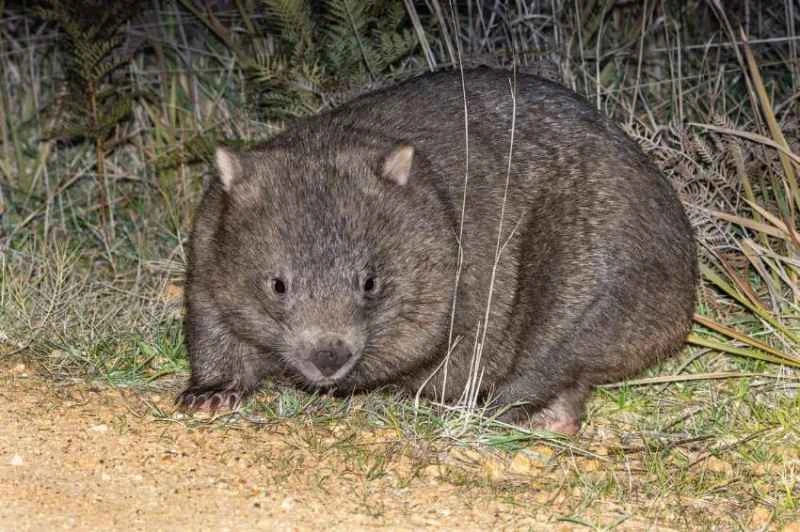
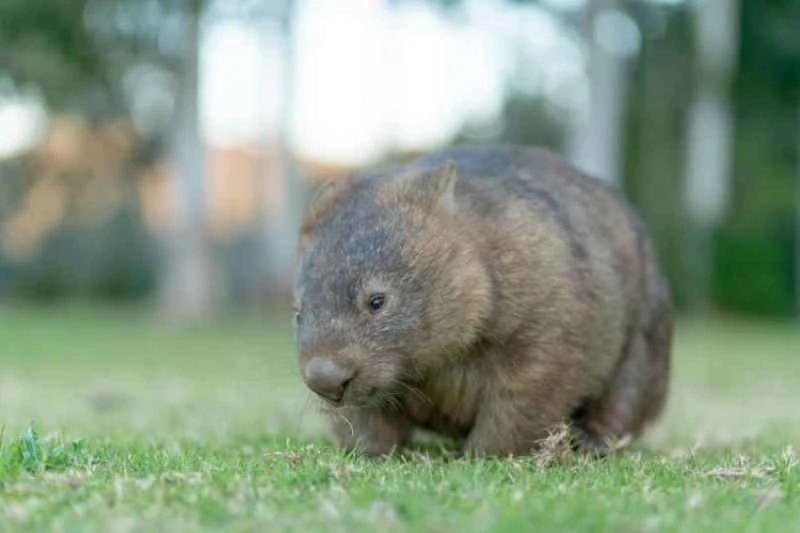
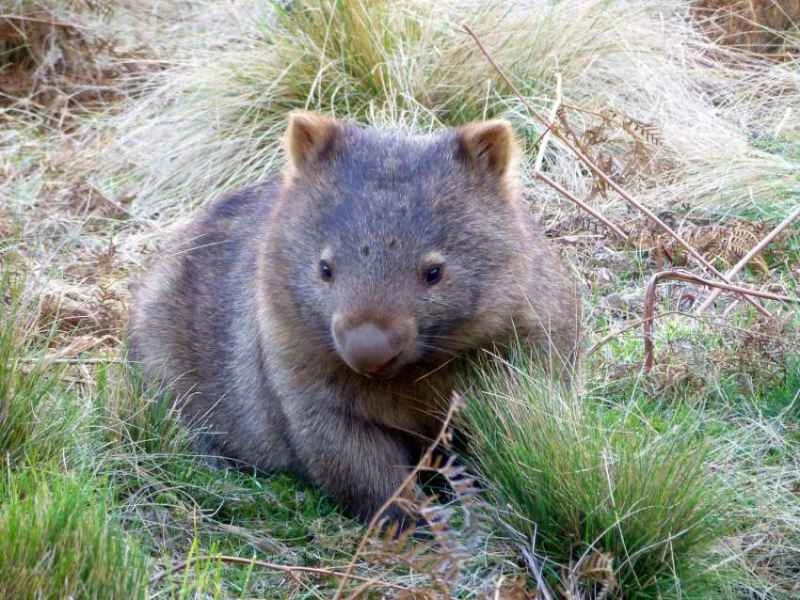
It has a short, stocky body, short but powerful limbs, a broad head, a blunt nose, a bare muzzle, and relatively small ears and eyes. Its fur ranges from light brown to dark gray, and it has thick skin. It has hard bony plates on its buttocks to defend against attacks at the entrance of its burrow, and its forelimbs have well-developed claws, making it very suitable for digging.
Detailed introduction
The bare-nosed wombat (scientific name *Vombatus ursinus *), also commonly known as the common wombat, is a medium-sized marsupial herbivore and the only extant species in the genus *Vombatus*. Native to southeastern Australia and Tasmania, it is considered one of the most representative native animals. The bare-nosed wombat is known for its robust build, powerful burrowing ability, and distinctive cubical feces, making it a quintessential "ecological engineer" species.
Classification and nomenclature
The naked-nosed wombat belongs to the class Mammalia, order Diprotodontia, family Vombatidae, and genus Vombatus . Currently, only one species, the naked-nosed wombat, exists in the genus Vombatus, along with two other species in the genus Lasiorhinus , which also belong to the family Vombatidae. The naked-nosed wombat gets its name from its almost hairless, bare snout, distinguishing it from the hairy-nosed wombat. The commonly used English name "Common Wombat" reflects its historical widespread distribution in southern Australia.
Appearance features
The naked-nosed wombat has a short, stocky body with short, thick limbs, lying close to the ground, giving it a "stout" appearance. Adults typically measure 70–120 cm in length and about 35 cm in shoulder height; their weight generally ranges from 15–35 kg, with some large, plump individuals exceeding 40 kg. They have a broad, flat head with relatively small eyes and ears, a rounded, blunt snout covered in keratinized skin. Their teeth are a pair of upper and lower incisors that continuously grow and remain sharp, serving as important tools for gnawing on tough grass roots and tree bark.
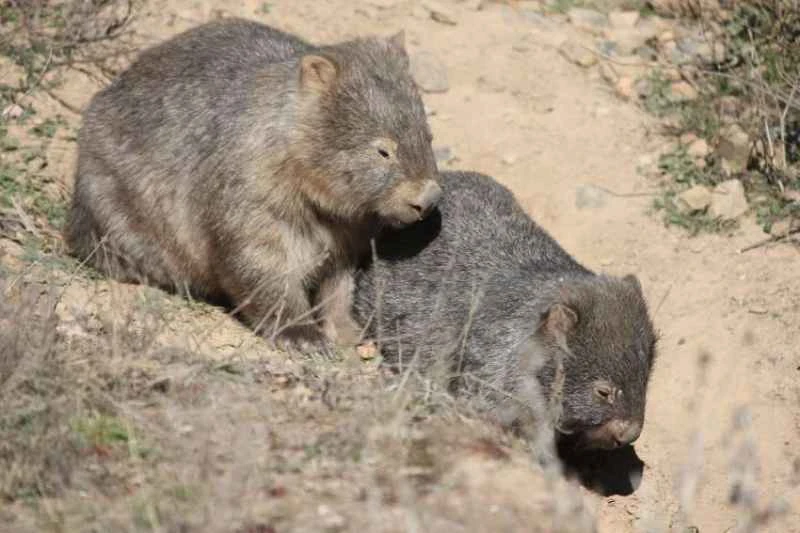
Coat color varies slightly depending on the region and individual, ranging from light sandy brown and yellowish-brown to dark gray and near black. Some individuals may also have light-colored patches or mottled colors. The skin is thick and tough, especially with a hard "bone plate" at the rump and tail base, which can be used to block the entrance to a burrow and resist bites and attacks when encountering predators or being chased by dogs. The limbs have strong claws, with the forelimbs being particularly well-developed, adapted for digging long and complex burrowing systems.
Distribution range and habitat
Naked-nosed wombats are mainly distributed in the cooler, wetter regions of southeastern Australia, including New South Wales, Victoria, southeastern South Australia, as well as Tasmania and parts of the Bass Strait islands. They prefer temperate habitats with deep soil layers that facilitate burrowing, such as moist woodlands, open scrublands, mountain meadows, subalpine grasslands, coastal scrublands, and farmland edges.
In Tasmania, naked-nosed wombats are found from the coast to the mountains, commonly in grasslands, heathland, coastal scrub, and open forests. On the northern edge of mainland Australia, they are more prevalent in cooler mountain forests above 600 meters; in the south and coastal areas, they can be found in lower-altitude forests, scrubland, and pastureland. Their burrows are typically dug on well-drained, slightly sloping slopes or along streams to keep them dry.
Lifestyle Habits and Behaviors
Naked-nosed wombats are mostly nocturnal or twilight-active animals, typically hiding in self-dug burrows during the day and venturing out to forage from dusk till dawn. Each adult usually has a relatively stable range of activity, within which they dig one or more complex burrow systems. The main passage of a single burrow can be several meters or even tens of meters long, with numerous internal branches and multiple entrances and exits, and the nest chamber is lined with dry grass, leaves, and roots.
Although often described as "solitary," wombats' burrows and ranges can overlap between individuals, and many other species, such as reptiles, small marsupials, hedgehogs, and various small mammals, also use wombats' burrows for shelter or refuge. Therefore, the naked-nosed wombat is considered an "ecological engineer" that improves soil structure and provides habitat. In colder or drier regions, they conserve energy and water by reducing their time outdoors and lowering their activity levels.
feeding habits
Naked-nosed wombats are strict herbivores, primarily feeding on various herbaceous plants and their roots, including native grasses, sedges, and the tender shoots and bark of some low shrubs. After their habitats were converted into pasture by humans, they also graze on cultivated grasses, sharing pasture resources with livestock. Due to the low nutritional value of their diet, wombats digest food slowly, and their intestines have a strong ability to break down cellulose.
One of the most famous and peculiar features of the naked-nosed wombat is its near-cubic-shaped feces. Research suggests this is related to its extremely slow intestinal transit time, relatively dry feces, and differences in intestinal wall elasticity. Cubic feces do not roll easily, making them easier to accumulate on rocks or tree trunks for scent marking and territorial communication.
Reproduction and life cycle
Naked-nosed wombats do not have a very fixed, uniform breeding season, but in many regions, the peak breeding season occurs during the cooler winter or early spring. Females typically give birth to only one cub at a time, with a gestation period of about 20–30 days. The cubs weigh only a few tens of grams at birth and are not fully developed. They immediately burrow into the mother's pouch, which opens backward on her abdomen, and grow and nurse inside for about 5 months.
When the cubs are born, they already weigh several kilograms. They will continue to follow their mothers for a period of time and continue nursing until they are about 12–15 months old, and usually become independent around 18 months old. Naked-nosed wombats can generally live 10–15 years in the wild, and the longest lifespan recorded in captivity has exceeded 20 years.
Relationship with humans
In the early history of human settlement and pasture expansion, wombats were considered "pests" by some farmers for their burrowing and damage to pastures and fences, and were hunted and driven away in some areas. Today, the naked-nosed wombat is a uniquely Australian wildlife species and is protected by law, but its population is still controlled in some areas due to conflicts of interest with agriculture and animal husbandry. On the other hand, wombats have also become an important star species for ecotourism and science education, where visitors can observe their burrowing and foraging behaviors in national parks, reserves, and some wildlife parks.
Protecting the status quo and threats
According to the IUCN Red List assessment, the naked-nosed wombat (common wombat) is currently classified as "Least Concern (LC)" globally, and its overall population remains relatively large. However, recent studies indicate that the distribution and numbers of naked-nosed wombats are declining in some areas. Major threats include the prevalence of sarcodactyly, habitat fragmentation, canine predation, road accidents, and the degradation of food and burrowing environments due to land-use changes. Long-term monitoring, control of sarcodactyly transmission, rational planning of roads and agricultural/pastoral land use, and enhanced public education are crucial directions for future naked-nosed wombat conservation.
Frequently Asked Questions
Q1: What is the difference between naked-nosed wombats and hairy-nosed wombats?
The naked-nosed wombat has a nearly hairless, bare snout and belongs to the genus *Vombatus* ; the hairy-nosed wombat has a snout covered with long hair and belongs to the genus *Lasiorhinus *. The two differ significantly in appearance, distribution, and ecological habits.
Q2: How are the "square poop" of naked-nosed wombats formed?
Naked-nosed wombats have extremely long intestines, which cause food to stay in their feces for a long time. The feces are highly water-absorbed, and the uneven distribution of elasticity in the intestinal wall results in the formation of nearly cubic fecal clumps with sharp edges. These clumps are easy to stack on rocks or tree trunks for scent marking.
Q3: Will naked-nosed wombats cause damage to farms?
Wombats can damage fences, irrigation canals, or cause ground subsidence when digging burrows, impacting agricultural and pastoral facilities. They also graze on pasture, creating competition for resources with livestock. Therefore, in some areas, farmers use fencing and protective netting to reduce conflict.
Q4: What are the main factors threatening naked-nosed wombats?
The main causes include skin diseases and deaths caused by scabies, road traffic collisions, predation by dogs and foxes, habitat destruction or conversion into agricultural and pastoral land leading to cave environment deterioration, and vegetation degradation caused by extreme climate and drought.


