Basic Information
Scientific classification
- Chinese name: Anselm's beaked whale
- Scientific name: Berardius arnuxii
- Order: Cetacea
- Family and genus: Beaked whale family, genus *Tetradon*
Vital signs data
- Body length: Adults are generally about 8–10 meters long, with some records reaching 11–12 meters; newborn calves are about 3–4 meters long.
- Weight: The weight of an adult individual is estimated to be several tons to more than ten tons, with the specific value varying depending on the individual and age.
- Lifespan: The exact lifespan is unknown, but it is generally speculated that it is similar to other medium to large beaked whales and can live for decades.
Significant features
One of the large beaked whales of the Southern Ocean, it is very similar in appearance to the Beaked Whale of the Northern Hemisphere. Adults have four teeth protruding from their lips. They have strong deep-diving ability and are elusive, making them typical cold-water deep-sea predators.
Distribution and Habitat
Widely distributed in the cold temperate to subpolar waters of the Southern Ocean in the Southern Hemisphere, from the waters off New Zealand, southern Australia and Tasmania to the offshore waters of Argentina, Uruguay and South Georgia Island, South Africa and other places. They are mostly active on the ocean margins and continental shelf slopes with water depths of more than 200 meters, and prefer highly productive waters with abundant upwelling currents.
Appearance
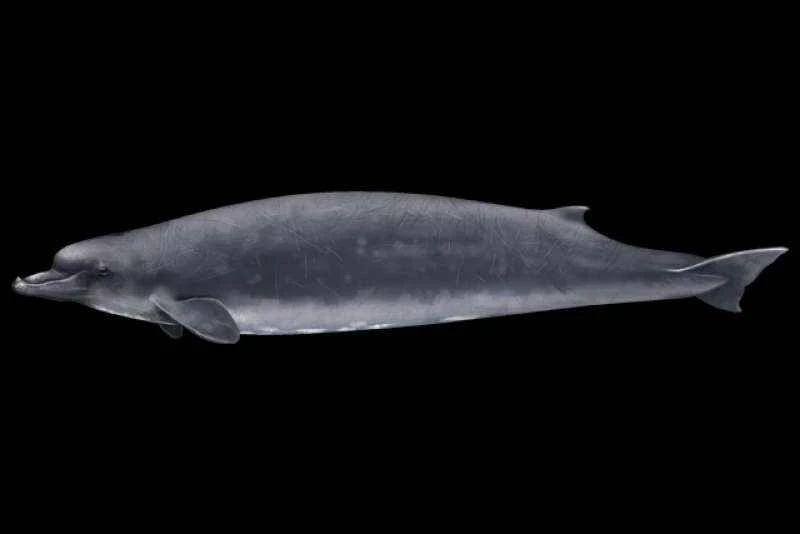
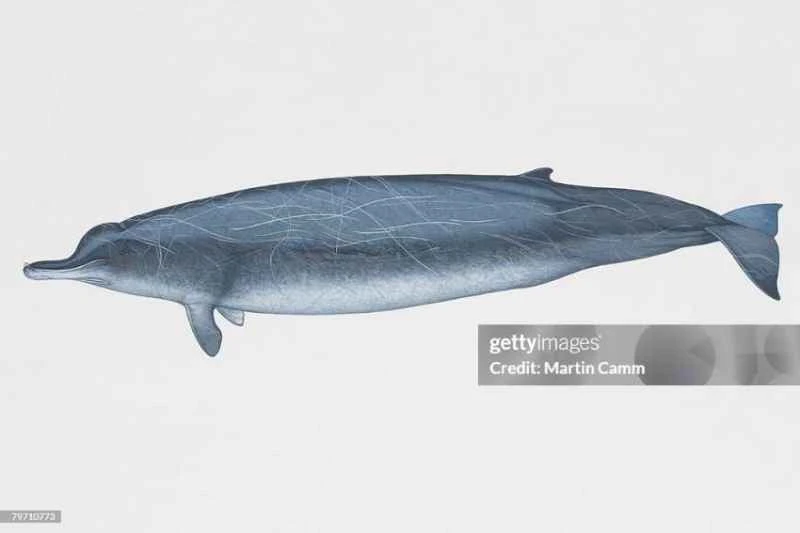
The body is robust and spindle-shaped, exceeding 8 meters in length; its color is mostly dark gray to nearly black, slightly lighter on the ventral side. There is a prominent forehead, a long and protruding snout, and a lower jaw longer than the upper jaw. In sexually mature individuals, four teeth protrude from the front of the lower jaw and can be seen from the outer edge of the mouth when closed. The dorsal fin is small and positioned posteriorly, the pectoral fins are short and oval, and the caudal fin is broad. The body surface is often covered with linear scars and circular biscuit shark bite marks.
Detailed introduction
Arnoux's beaked whale (scientific name Berardius arnuxii ) is a large toothed whale belonging to the genus Berardius in the family Beaked Whaleidae. It is the Southern Hemisphere counterpart of the Northern Hemisphere's beaked whale, as the two are extremely similar in appearance, but their habitats are completely different. Arnoux's beaked whales primarily inhabit the cold temperate to subpolar waters of the Southern Ocean. Their elusive nature and low frequency of encounters have led them to be considered one of the most mysterious whale species.
Classification and nomenclature
Arnoux's beaked whale belongs to the class Mammalia, order Cetacea, suborder Odontoceti, family Ziphiidae, and genus Berardius . This genus currently includes B. bairdii (North Pacific), B. arnuxii (Southern Hemisphere), and a recently identified species. Arnoux's beaked whale was first named in 1851 by the French anatomist Duvernoy based on a skull found on a beach near Akaroa, New Zealand. The genus name Berardius commemorates the French naval officer Auguste Bérard, while the specific epithet Arnuxii honors the ship's surgeon Maurice Arnoux, who discovered the skull. Its common English name is Arnoux's beaked whale, and it is also known as the "Southern Tetratooth Whale" or the "New Zealand Beaked Whale."
Appearance features
Anselm's beaked whale is one of the larger members of the beaked whale family, with adults typically measuring 8–10 meters in length, and some records reaching 11–12 meters; its weight is estimated to be several tons to over ten tons. Its body is robust and spindle-shaped, with the midsection being the most swollen. It has a prominent melon at the front of its head, and a long, protruding snout, resembling an "enlarged dolphin." The upper and lower jaws are of unequal length, with the lower jaw significantly longer than the upper jaw. Upon reaching sexual maturity, four short, stout "tusks" protrude from the front of the upper and lower jaws—a distinctive feature of the tetradontid genus.
The body color is generally dark, mostly dark gray, brownish-gray to nearly black, with a slightly lighter ventral side. As they age, numerous fine white scratches and dotted scars appear on their body surface, marks left from fights between adults and contact with other animals; circular bite marks from the "biscuit shark" (a type of shark) are often visible on their sides. The dorsal fin is relatively small and positioned posteriorly, about two-thirds of the way down the body; the pectoral fins are small and slightly oval, and the caudal fin is broad with a slightly wavy trailing edge, which is advantageous for deep diving and long-distance swimming.
Distribution range and habitat
Anselt's beaked whale is believed to be widely distributed in the Southern Hemisphere, from the southern tip of South America and the waters off the southern coasts of New Zealand and Australia, all the way to high-latitude waters near Antarctica. Strandings and sightings indicate they have been found in waters surrounding New Zealand, Australia (including Tasmania), Argentina, Uruguay, South Georgia, South Africa, and Antarctica. Overall, this species exhibits a zonal distribution around the Southern Ocean, primarily inhabiting deep waters above 200 meters and ocean margins, particularly favoring areas with abundant upwelling near continental shelf slopes, seamounts, and periglacial zones.
Lifestyle Habits and Behaviors
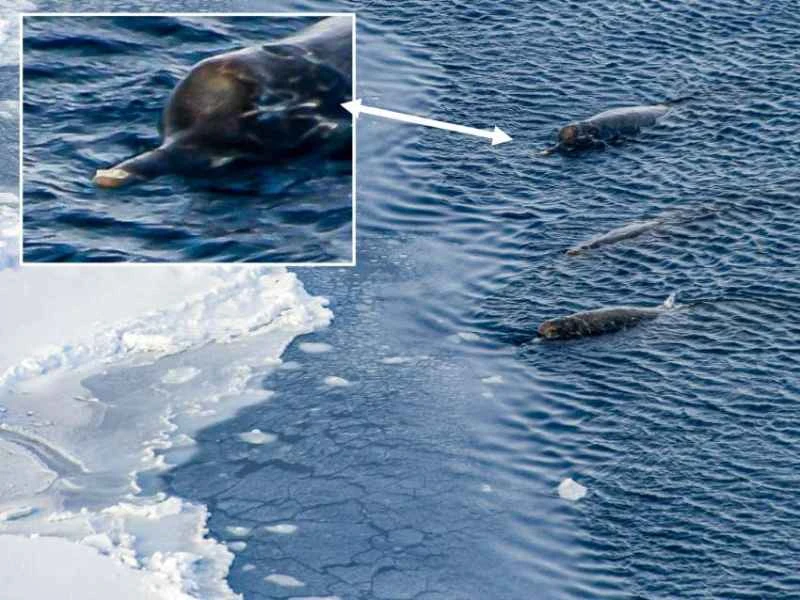
Due to extremely limited sightings at sea, scientists know very little about the habits of Anselm's beaked whale. Based on close relatives such as Bassbill's beaked whale, it can be inferred that they possess strong deep-diving capabilities, able to dive to depths of hundreds or even thousands of meters, foraging for extended periods in the mid- and deep waters before briefly surfacing to breathe. Observed groups range in size from a few individuals to dozens, with occasional records of large groups exceeding 40 individuals. Adult males are covered in linear scars, suggesting that during the breeding season they may use collisions and "blade-like teeth" to injure each other in competition for mates and social dominance.
feeding habits
Studies of the stomach contents of stranded individuals indicate that Anselm's beaked whales primarily feed on mid-to-deep-water cephalopods and fish, including various mid-to-deep-water squid, cuttlefish, and deep-sea fish. Like most beaked whales, they likely rely on echolocation to locate prey in completely dark deep-water environments, capturing fast-moving cephalopods through a combination of rapid sprints and sucking. They are one of the important mid-to-high-altitude predators in the cold-water ecosystem of the Southern Ocean.
Reproduction and life cycle
Currently, data on the reproductive biology of Anselm's beaked whale is extremely limited, with only a few records of stranded individuals with fetuses or calves. Based on research on other beaked whales, it is speculated that this species likely gives birth to one calf at a time, with a gestation period of about one year. Females typically give birth and nurse their calves in open waters. Newborn calves are about 3–4 meters long and need to learn to dive and forage under the guidance of their mothers. Members of the beaked whale family are generally considered to live for decades, and Anselm's beaked whale's natural lifespan is likely also in this range.
Relationship with humans
Anselm's beaked whale has never been a primary target of large-scale commercial whaling, only being caught sporadically in a few historical periods. Because it primarily inhabits open ocean and high-latitude waters, relatively isolated from human activity areas, there are relatively few records of bycatch by fisheries and ship collisions. Most human sightings of Anselm's beaked whales are related to stranding incidents, and researchers study their morphology and ecology by dissecting, measuring, and sampling these individuals. Currently, there are almost no fixed observation points for this species in whale watching tourism, and it remains a "deep-sea hermit" to the public.
Protecting the status quo and threats
According to the latest IUCN assessment, the Anselm's beaked whale is currently listed as "Least Concern (LC)," primarily because there is no evidence of a significant decline across the Southern Ocean and it has not been systematically hunted. However, this assessment remains highly uncertain due to the almost complete lack of information regarding its population size and trends. Like other beaked whales, the Anselm's beaked whale is likely highly sensitive to underwater noise (such as military sonar and seismic exploration), deep-sea fishing activities, marine plastic debris, and changes in ocean structure and prey distribution caused by climate change. Further understanding of its true distribution and population through passive acoustic monitoring and open-ocean surveys is a crucial prerequisite for developing conservation strategies.
Frequently Asked Questions
Q1: What is the relationship between Anselm's beaked whale and Bass's beaked whale?
Both belong to the genus * Berardius* and are extremely similar in morphology, considered a pair of "hemisphere counterparts": Berardius lives in the North Pacific, while Anselm's beaked whale is distributed in the Southern Ocean. Early on, some suspected they were simply different populations of the same species, but subsequent genetic studies have supported that they are independent species.
Q2: Why are Anselm's beaked whales so difficult to observe?
Beaked whales typically spend long periods diving and short periods surfacing, and they mostly live in the open sea far from the coast and in high-latitude areas with harsh sea conditions. Ships and whale watching activities rarely reach these areas, and the Anglet beaked whale population itself may not be very large, so there are very few live sighting records.
Q3: What do Ansel's beaked whales mainly use to find food?
They rely on echolocation to find cephalopods and deep-sea fish in the middle and deep waters, capturing their prey with powerful sprints and sucking, making them one of the important mid-to-high-level predators in the cold-water pelagic food web.
Q4: What are the current priorities for protecting Anselm's beaked whale?
On the one hand, more data on its distribution and quantity needs to be accumulated through acoustic monitoring and ocean surveys. On the other hand, the potential impacts of underwater noise, deep-sea fisheries and marine pollution should be controlled in the Southern Ocean to ensure the health of this mysterious beaked whale and the deep-sea ecosystem on which it depends.


