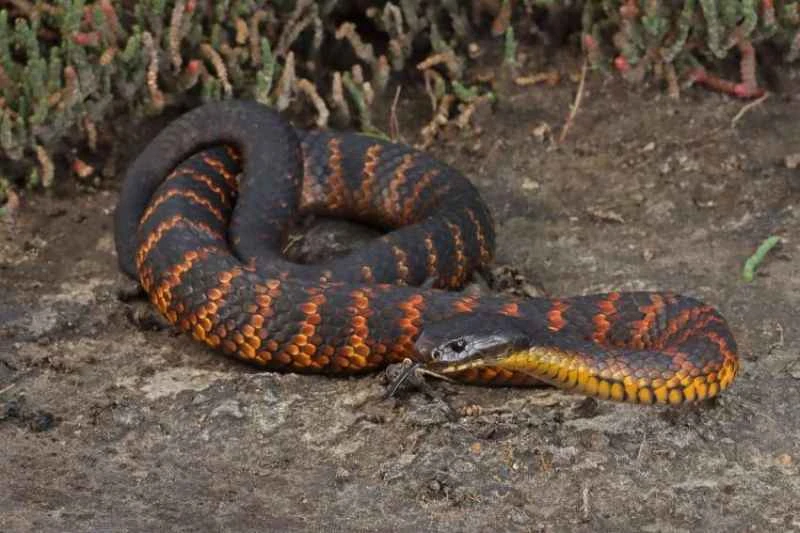
Basic Information
Scientific classification
- Chinese name: Tiger Snake
- Scientific name: Notechis scutatus
- Classification: Squamata
- Family and genus: Elapidae, genus *Tiger*
Vital signs data
- Body length: Adults are usually about 1–1.5 meters in total length, while large individuals can exceed 1.5 meters or even approach 2 meters, and have a robust body shape.
- Weight: Weight varies considerably with individual and regional differences, with most adult individuals weighing anywhere from several hundred grams to several kilograms.
- Lifespan: In the wild, it can usually survive for about 10–15 years, and may live longer in captivity and under good protection.
Significant features
One of the iconic high-risk venomous snakes of southern Australia and Tasmania, it has a robust body and often features tiger-stripe patterns. It prefers to inhabit wetlands and areas near water, is a strong swimmer, and its bites to humans are of significant medical importance.
Distribution and Habitat
It is mainly distributed in the southern coastal areas of Australia and Tasmania, including southern Western Australia, South Australia, Victoria, Tasmania and southeastern New South Wales. Typical habitats are environments close to water, such as estuaries, lake and reservoir edges, swamps and wetlands, irrigation canals and coastal salt marshes.
Appearance
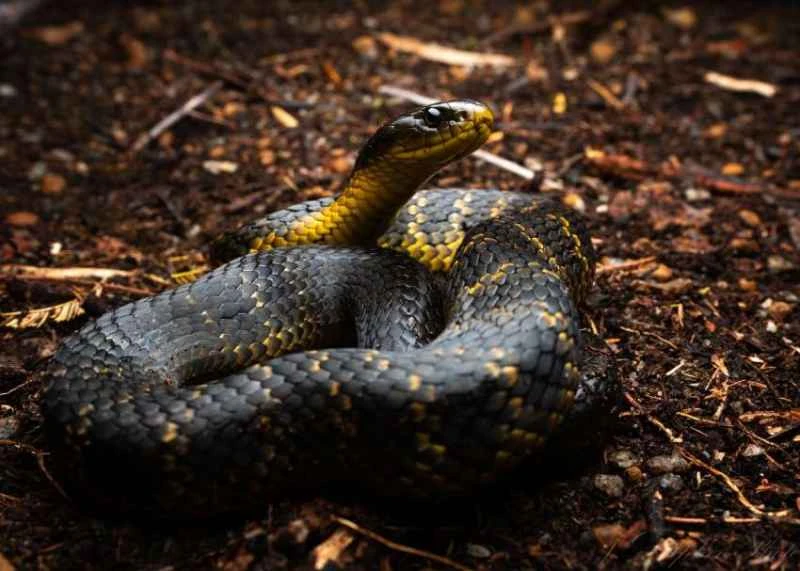
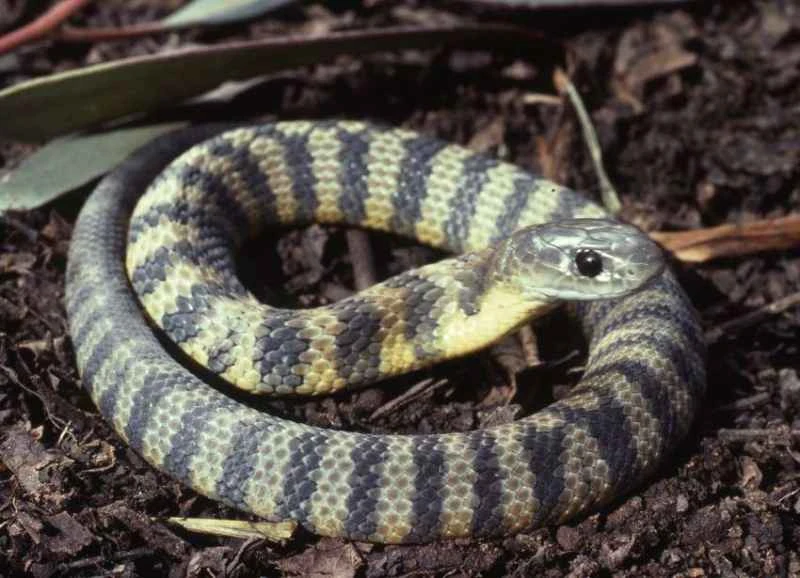
The body is robust, with the back ranging in color from olive and yellowish-brown to almost pure black. Many individuals have alternating light and dark horizontal bands or stripes, resembling tiger stripes; some individuals have indistinct stripes or almost none. The underside is lighter in color, ranging from pale yellow, cream, or orange-yellow. The head is slightly broad, with a clear boundary between it and the neck. The eyes are of medium size. When threatened, the head will raise its forequarters and flatten its body.
Detailed introduction
The tiger snake (scientific name *Notechis scutatus *) is a large, highly venomous native Australian snake belonging to the genus *Notechis* in the family Elapidae. It gets its name from the alternating light and dark stripes resembling tiger stripes on common individuals and is one of the most representative high-risk venomous snakes in the wetlands, estuaries, and coastal areas of southern Australia and Tasmania.
Classification and nomenclature
Tiger snakes belong to the class Reptilia, order Squamata, suborder Serpentes, family Elapidae, and genus Notechis . Currently, most scholars consider the morphological types of tiger snakes across Australia (including island populations) to be a single species, *Notechis scutatus *, with variations in color and body size in different regions considered regional variations or geographic types. The specific epithet * scutatus * means "shielded, scaly," related to its robust body shape and prominent body scales.
Appearance features
Tiger snakes are generally robust, with adults typically reaching a total length of around 1.2 meters, though larger individuals can exceed 1.5 meters or even approach 2 meters. Their backs exhibit remarkable coloration, ranging from olive, yellowish-brown, and orange-brown to almost pure black. Many individuals possess distinct alternating light and dark horizontal bands or stripes, resembling the stripes of a tiger, while some individuals have less defined stripes or even none at all. The underside is lighter in color, often pale yellow, cream, or orange-yellow. The head is slightly broad, clearly distinguishable from the neck. The eyes are medium-sized with round pupils; the upper jaw has fixed anterior-fanged fangs, typical of Australian anterior-fanged venomous snakes. When threatened, they noticeably flatten their bodies, expand their necks, and raise their forebody, assuming a classic attack posture.
Distribution range and habitat
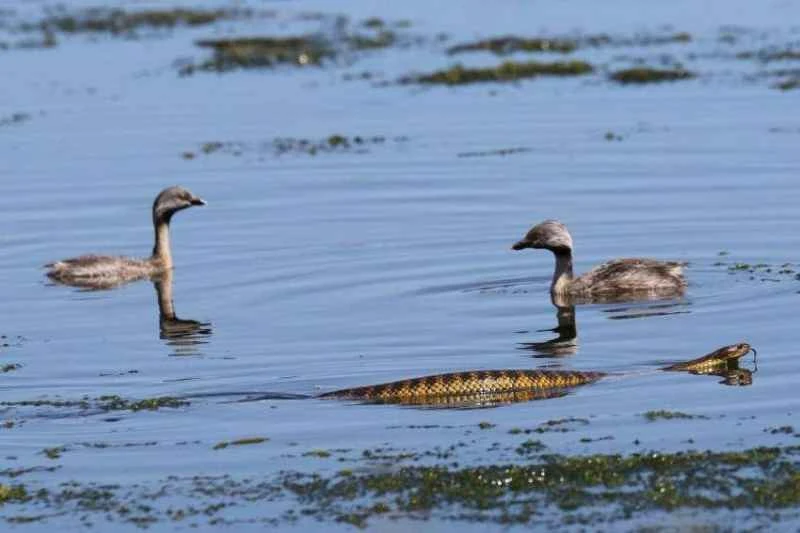
The tiger snake is endemic to southern Australia and Tasmania, with a range extending from the southern coast of Western Australia, through South Australia, Victoria, and Tasmania, to parts of southeastern New South Wales' coastal and inland areas. It strongly prefers habitats near water, such as estuaries, lake and reservoir edges, swamps and wetlands, agricultural irrigation ditches, artificial ponds, and coastal salt marshes. Tiger snakes are excellent swimmers and are often found near streams, swamps, and wet grasslands, also using rock crevices, fallen logs, burrows, and dense vegetation as hiding places.
Lifestyle Habits and Behaviors
Tiger snakes are active both during the day and often in the warm evenings and at night, making them a species of snake with a high degree of temperature adaptability. In cooler regions, they bask in the sun during warmer hours to raise their body temperature, while during hotter periods they retreat to shady spots or burrows to escape the heat. Tiger snakes are generally cautious, but when threatened or cornered, they will noticeably raise their forebody, flatten their body, and hiss as a warning. If the threat persists, they may bite quickly and forcefully. Tiger snakes are excellent swimmers and climbers, able to move nimbly in water and climb bushes, fallen trees, and even building structures.
feeding habits
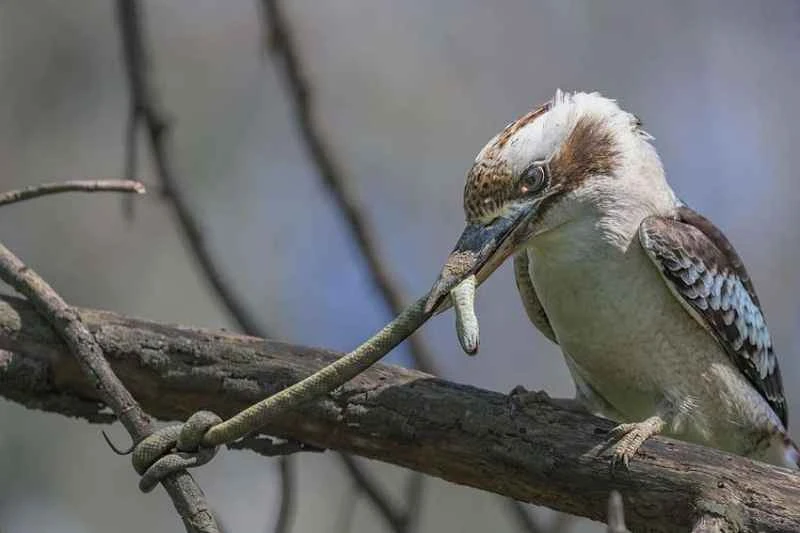
Tiger snakes are typical carnivorous predators, with a diet primarily consisting of various vertebrates. Adults in mainland areas mainly prey on frogs and small mammals (such as rodents), but also consume fish, small birds, and bird eggs; in some island populations, seagull chicks are an important food source. Tiger snakes typically inhabit areas near water or wetlands, using their sight and sense of smell to locate prey. They paralyze their prey with a rapid lunge and venom before swallowing it whole. Juveniles primarily feed on small frogs, lizards, and small fish.
Reproduction and life cycle
Tiger snakes are viviparous, giving birth to live young instead of eggs. The breeding season is typically in spring and early summer, during which males may engage in fighting for mating opportunities. After mating, the embryo develops inside the female for several months, giving birth to viviparous young in the summer. A litter usually contains 20-30 snakes, with extreme records showing over 60. Although newborn snakes are small, their venom glands and fangs are fully developed, making their venom formidable. Tiger snakes can live for 10-15 years in the wild, and may live even longer in captivity.
Relationship with humans
Because they often inhabit farmland, wetlands, and suburban environments near water sources, tiger snakes share some areas with human activity. Historical records show that tiger snakes have been a significant source of snakebite deaths in Australia. Their venom contains potent neurotoxins, myotoxins, and clotting factors, which can cause paralysis, muscle damage, kidney failure, and even death. If you encounter a tiger snake or a suspected tiger snake, keep your distance and do not attempt to capture or drive it away. If bitten, immediately apply pressure and bandage, and seek immediate medical attention for treatment with antivenom specifically for Australian cobras. In Australia, native snakes are generally protected by law, and indiscriminately killing or harming tiger snakes can result in hefty fines and legal liability.
Protecting the status quo and threats
The tiger snake is currently classified as "Least Concern" on the IUCN Red List. It has a wide distribution, and many populations remain relatively common. However, some island or localized wetland populations may decline due to habitat loss, drainage and development, road killings, and pressure from invasive predators. Because tiger snakes are sometimes considered "dangerous" in farmland and swamps, they may still be hunted. Key measures for tiger snake conservation include: maintaining and restoring wetland, river, and coastal ecosystems; strengthening public education near roads and residential areas to reduce indiscriminate fear and killing of snakes; and ensuring the long-term stability of native high predator populations through legislation and monitoring.
Frequently Asked Questions
Q1: How potent is the venom of the tiger snake?
The tiger snake is one of the most venomous and medically significant snakes in Australia. Its venom contains neurotoxins, myotoxins, and clotting factors, which can cause severe symptoms such as paralysis, rhabdomyolysis, and kidney damage. If a tiger snake bite is suspected, apply pressure bandage immediately and seek medical attention as soon as possible; do not delay.
Q2: Do all tiger snakes have obvious "tiger stripes"?
Not all tiger snakes have clear black and yellow stripes. In some regions or individuals, the stripes are lighter, the horizontal bands are blurred, or even the entire pattern is dark, but these are still classified as part of the complex regional variations in tiger snakes.
Q3: Why do tiger snakes often appear near water?
Tiger snakes prefer environments close to water, partly because wetlands near water often have abundant prey such as frogs, fish, and birds, providing rich food resources; and partly because water and wetlands offer a variety of micro-habitats to avoid high temperatures, maintain body temperature, and provide cover.
Q4: What should I do if I encounter a tiger snake in the wild or farmland?
The safest course of action is to stop immediately, maintain a safe distance from the snake, and do not attempt to drive it away or kill it. In most cases, tiger snakes will leave on their own once the threat has subsided. If its location poses a significant risk to residents or livestock, contact local professional snake catchers or wildlife agencies for assistance.


