Basic Information
Scientific classification
- Chinese name: Red-bellied Black Snake
- Scientific name: Pseudechis porphyriacus
- Classification: Squamata
- Family and genus: Elapidae, genus *Symplocos*
Vital signs data
- Body length: Adults are generally about 1.2–1.8 meters in total length, with large individuals exceeding 2 meters. They are considered medium to large, robust venomous snakes.
- Weight: Weight varies from person to person and nutritional status, with most adults weighing between several hundred grams and several kilograms.
- Lifespan: It is estimated that it can survive for more than ten years in the wild, and its lifespan may be even longer under captive conditions. It generally takes several years to reach sexual maturity.
Significant features
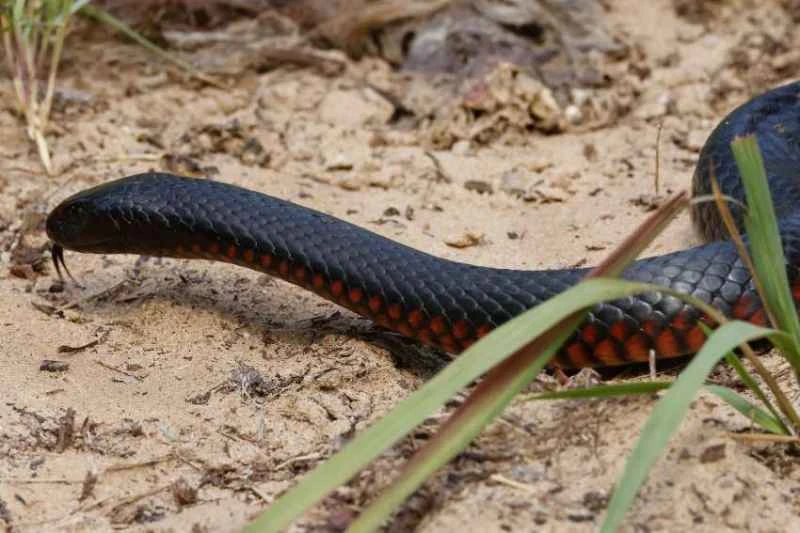
A large, venomous snake commonly found in eastern Australia, it has a distinctive appearance with a glossy black back and bright red belly. It prefers to live near rivers, wetlands, and urban water bodies and is one of the most familiar native snakes to many Australian residents.
Distribution and Habitat
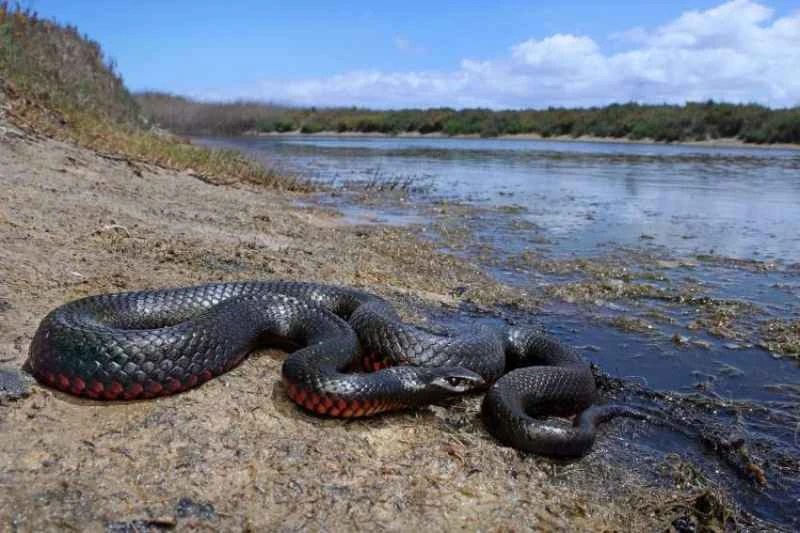
They mainly inhabit the coastal and near-inland areas of eastern and southeastern Australia, preferring rivers, streams, wetlands, lake edges, and humid forests and scrublands. In urban and rural environments, they are also commonly found in parks, reservoirs, farmland drainage ditches, and around water bodies near houses.
Appearance
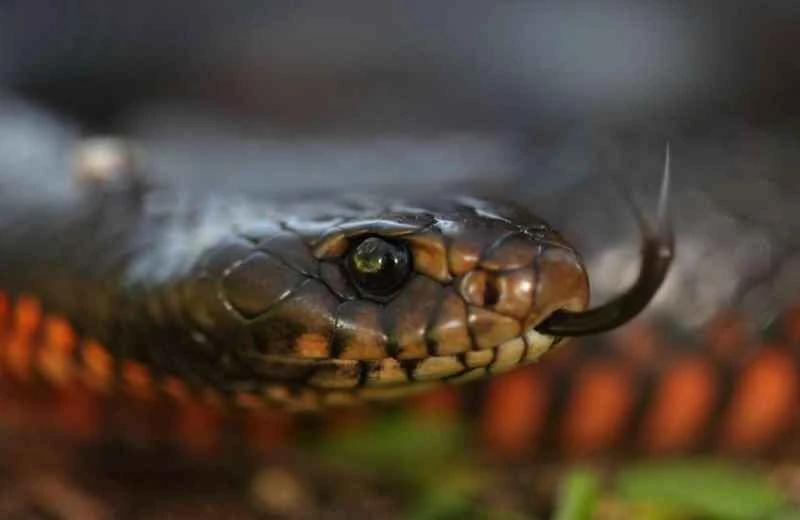
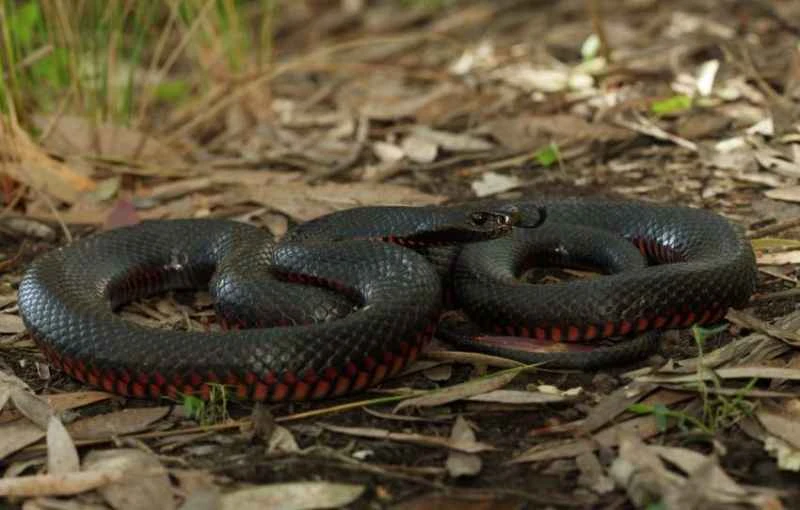
The back is uniformly glossy black or dark graphite, while the belly and lower sides of the body are bright red, orange-red, or pink, with the red often extending upwards along the scales on both sides. The head is slightly flat and wide, not clearly distinguishable from the neck. The eyes are medium-sized with round pupils, giving the whole a strong visual contrast between the glossy black body and the red belly.
Detailed introduction
The Red-bellied Black Snake ( Pseudechis porphyriacus ) is a common large venomous snake in eastern and southeastern Australia, belonging to the genus Pseudechis in the family Elapidae. It is known for its glossy black back and bright red or orange-red underside, making it one of the most familiar and easily recognizable native venomous snakes for many Australians. While its venom is not as extreme as that of the brown snake or taipan, it is still considered a highly dangerous snake, and a bite can lead to severe poisoning if not treated promptly.
Classification and nomenclature
The Red-bellied Black Snake belongs to the class Reptilia, order Squamata, suborder Serpentes, family Elapidae, and genus Pseudechis . The genus Pseudechis includes several species of Australian venomous snakes, such as the Red-bellied Black Snake and the Murga Snake, characterized by their large size, abundant venom, and wide diet. The specific epithet * porphyriacus* comes from Ancient Greek and means "purplish-red," reflecting the bright red hue of its belly. The common English name, Red-bellied Black Snake, succinctly summarizes its appearance.
Appearance features
The Red-bellied Black Snake is a medium to large-sized snake with a robust body. Adults typically reach 1.2–1.8 meters in total length, with larger individuals exceeding 2 meters. Its back is a uniform, glossy black or dark graphite color, with scales that have a slightly metallic sheen and almost no distinct markings from head to tail. Its most prominent feature is its ventral surface and the lower edges of its sides: the abdomen is primarily bright red, orange-red, or pink, with the red often extending upwards along the lateral scales, forming a distinct "red lateral line." The head is slightly flattened and broad, not clearly distinguishable from the neck. The eyes are medium-sized with round pupils. Juvenile snakes sometimes exhibit more pronounced red ventral and lateral banding, while their backs are black with a slight brownish tinge.
Distribution range and habitat
The red-bellied black snake is mainly distributed along the eastern and southeastern coasts and near-inland areas of Australia, including eastern Queensland, most of New South Wales, the Australian Capital Territory, and parts of Victoria. It strongly prefers habitats near water, such as rivers, streams, wetlands, swamps, lake edges, and damp forests and scrublands. In urban and rural environments, it is also commonly found in parks, reservoirs, farmland drainage ditches, ponds near houses, and around garden water features. The red-bellied black snake often uses fallen logs, piles of stones, dense grass, riverbank burrows, and human-built debris (such as old planks and sheet metal) as hiding places.
Lifestyle Habits and Behaviors
Red-bellied black snakes are mostly diurnal or most active at dawn and dusk, with their activity times varying with the seasons and temperatures. On warm, sunny days, they are often found basking in the sun on riverbanks, rocks, or roadside edges to raise their body temperature. When temperatures are too high, they will seek refuge in shady areas or water to cool down. Red-bellied black snakes are generally relatively cautious and will usually flee quickly when encountering humans. However, if cornered, accidentally stepped on, or repeatedly provoked, they may puff out their bodies, flatten their forelimbs, and hiss as a warning. If the threat persists, they may bite. Compared to some more aggressive Australian venomous snakes, the red-bellied black snake's defensive behavior is relatively mild, but this should not be used to underestimate its danger.
feeding habits
The red-bellied black snake is an omnivorous predator with a preference for prey found in aquatic environments. Its main diet includes frogs and tadpoles, freshwater fish, small lizards, other snakes (including venomous snakes), small mammals, and invertebrates that live near water. In urban and agricultural environments, they also prey on rodents such as field mice and house mice, helping to control rodent populations. When hunting, the red-bellied black snake often lies in ambush near or in water, using its body coloration to approach its prey. It then quickly bites with its front grooved fangs, injecting venom before releasing its grip and waiting for the prey to weaken or die before swallowing it whole.
Reproduction and life cycle
The red-bellied black snake is a viviparous venomous snake, giving birth to live young instead of eggs. The breeding season typically occurs from spring to early summer, during which males seek out and track females, sometimes resulting in fighting between males. After mating, the embryo develops inside the female for several months, eventually giving birth to the young in summer or late warmer season. A litter can contain anywhere from ten to twenty young, depending on the female's size and health. Although newborns are small, they already possess a complete fang and venom gland system, making them quite venomous and considered as dangerous as adults. The red-bellied black snake is estimated to live for over ten years in the wild, but sexual maturity typically takes several years.
Relationship with humans
Because the red-bellied black snake is widely distributed in the densely populated eastern coastal areas and prefers to live near water bodies and farmland, humans have a relatively high chance of encountering it. It can occasionally be seen in riverside parks, urban wetlands, farm ponds, and suburban residential gardens. The venom of the red-bellied black snake contains neurotoxins, myotoxins, and hemolytic components; a bite can cause symptoms such as local pain, swelling, nausea, headache, abnormal blood clotting, and muscle damage. Fortunately, modern antivenom and first aid measures are well-developed, and the red-bellied black snake is generally not as aggressive towards humans as some brown snakes; therefore, fatal cases are relatively rare with timely medical treatment. Australian law generally protects native snakes; if you encounter a snake, keep your distance and contact a professional.
Protecting the status quo and threats
The Red-bellied Black Snake is classified as "Least Concern" on the IUCN Red List due to its wide distribution and continued presence in many areas. However, local populations remain under pressure from various human activities, such as habitat loss due to wetland reclamation and riverbed hardening; crushing deaths from road traffic; human hunting driven by fear of snakes; and the indirect effects of pesticides, herbicides, and water pollution on aquatic prey and the snake's own health. Key measures for protecting the Red-bellied Black Snake and other native snakes include: preserving and restoring riparian wetlands and natural vegetation zones; reserving ecological corridors in urban and agricultural planning; reducing misunderstandings and indiscriminate hunting of snakes through public education; and encouraging non-lethal management practices when encountering snakes.
References
Andrew Churchman et al. (2010) “Clinical effects of bites from the red-bellied black snake (Pseudechis porphyriacus) and their correlation with venom concentration: Australian Snakebite Project (ASP-11)”, Australian Medical Journal, 193 (11): 696-700.
Cogger, H. (2000) "Australian Reptiles and Amphibians", Reed New Holland Publishing.
Greer, AE (2006) "Encyclopedia of Reptiles in Australia: Elapidae", Australian Museum
Ehmann, H. (1992) "The Australian Animal Encyclopedia: Reptiles", Australian Museum, Angus & Robertson Publishing.
Mirtshin, P. and Davis, R. (1991), “Dangerous Snakes of Australia,” Revised Edition, Ure Smith Press.
Shine, R. (1991) "Australian Snakes: A Natural History", Reed Books Pty Ltd.
Wilson, S. and Swan, G. (2010), “The Complete Guide to Reptiles in Australia,” 3rd Edition, Reed New Holland.
Andrew Churchman et al. (2010) "Clinical effects of bites from the red-bellied black snake (Pseudechis porphyriacus) and their correlation with venom concentration: Australian Snakebite Project (ASP-11)", Australian Medical Journal, 193(11):696-700.
Cogger, H. (2000), *Australian Reptiles and Amphibians*, Reed New Holland Publishing.
Greer, AE (2006), *Encyclopedia of Reptiles of Australia: Elapidae*, Australian Museum
Ehmann, H. (1992), *The Australian Animal Encyclopedia: Reptiles*, Australian Museum, Angus & Robertson.
Mirtshin, P. and Davis, R. (1991), Dangerous Snakes of Australia, Revised Edition, Ure Smith Press.
Shine, R. (1991), *Australian Snakes: A Natural History*, Reed Books Pty Ltd.
Wilson, S. and Swan, G. (2010), The Complete Guide to Reptiles in Australia, 3rd Edition, Reed New Holland.
Frequently Asked Questions
Q1: How potent is the venom of the red-bellied black snake?
While the venom of the red-bellied black snake is not as extreme as that of the inland taipan or the eastern brown snake, it is still highly toxic and can cause severe poisoning. If bitten, it should be treated as a medical emergency; apply pressure bandages immediately and seek medical attention as soon as possible.
Q2: Why do red-bellied black snakes often appear near water?
The red-bellied black snake's main prey includes frogs, fish, and other small animals that live near water. Therefore, environments near water provide abundant food sources, and water also helps it regulate its body temperature and avoid threats in hot weather.
Q3: What should I do if I encounter a red-bellied black snake in the suburbs or on a farm?
Remain calm, keep a safe distance from the snake, and avoid attempting to drive it away, capture it, or kill it. In most cases, the snake will leave on its own once it determines there is no threat. If its location poses a significant risk to people or pets, contact your local professional snake catcher or wildlife agency for assistance in relocation.
Q4: Is the red-bellied black snake beneficial to ecology and agriculture?
The red-bellied black snake helps maintain the food web balance in wetland and riparian ecosystems by preying on frogs, fish, small mammals, and other snakes. In farmland and rural environments, they also help control pest populations such as rodents, potentially having a positive impact on agriculture.