Basic Information
Scientific classification
- Chinese name: Mary River Tortoise
- Scientific name: Elusor macrurus
- Classification: Testudines
- Family and genus: *Pseudococcus* (family Cheloniidae)
Vital signs data
- Body length: Adult carapace length is usually about 34–42 cm, which is a relatively large freshwater short-necked turtle. Male individuals have particularly long tails.
- Weight: Weight varies greatly depending on sex and individual, with most adults weighing several kilograms and the largest individuals estimated to be close to 8 kilograms.
- Lifespan: It is speculated to be a long-lived species, capable of living for decades or even more than 50 years in the wild, but sexual maturity often takes 25–30 years.
Significant features
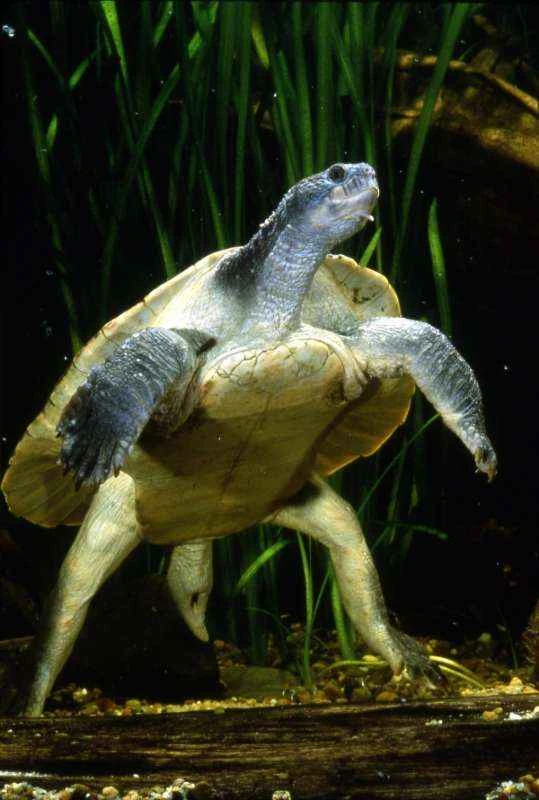
The Mary River Basin in Australia is home to a large freshwater short-necked turtle. Males have unusually long tails and can breathe through their cloaca, allowing them to remain submerged for extended periods. They are often called "punk turtles" because their carapace and heads are covered with green algae.
Distribution and Habitat
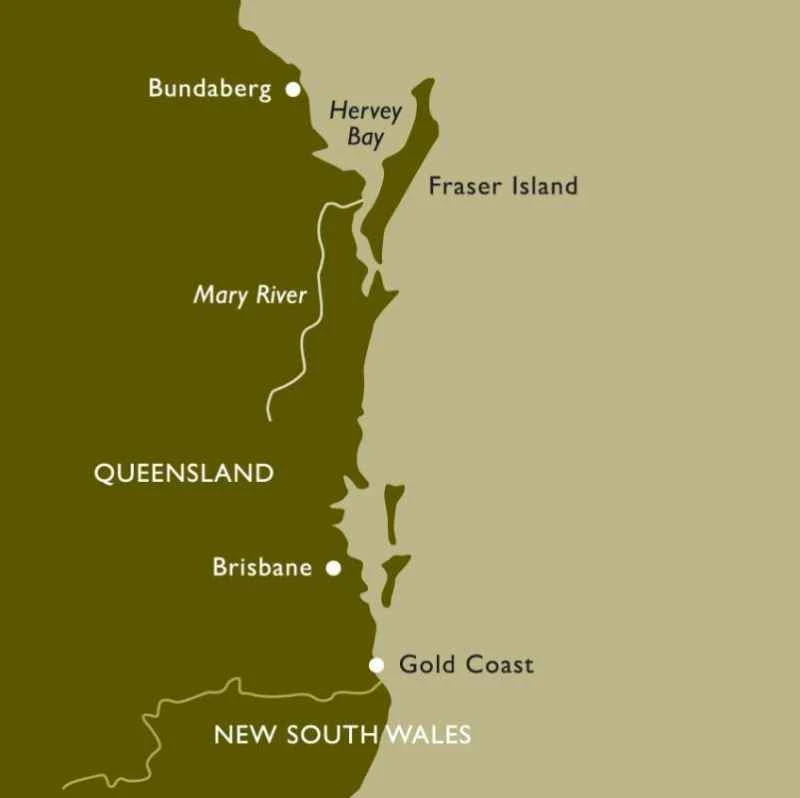
Found only in the Mary River basin in southeastern Queensland, Australia, it inhabits river sections with clear water, high oxygen content, and a combination of shallow rapids and deep pools. The riverbed is mostly gravel and sand, and the surrounding riverbanks are well-vegetated. It relies on the land adjacent to the riverbanks and floodplains as nesting and egg-laying sites.
Appearance
The carapace is roughly oval-shaped, slightly arched, and mostly dark olive green, brownish-green, or grayish-brown in color, often covered with algae; the plastron is lighter, ranging from creamy yellow to pale pink with dark spots. The head is relatively small, and the eyes are sometimes light blue or grayish-blue. The neck is shorter than that of the long-necked turtle but still folds to the side; the male's tail is exceptionally long and laterally flattened, which is one of the most distinctive morphological features of this species.
Detailed introduction
The Mary River Turtle ( Elusor macrurus ) is a large, distinctive freshwater short-necked turtle belonging to the genus Elusor in the family Cheloniidae, and is the only species in this genus. It is found only in the Mary River basin in southeastern Queensland, Australia, making it a typical "single-river endemic species." Due to the large-scale collection of juvenile turtles for the pet trade in the past, coupled with severe habitat alteration by dams and river engineering projects, the Mary River Turtle population has declined drastically over the decades, and it is now considered one of the most representative threatened freshwater turtle species globally.
Classification and nomenclature
The Mary River Tortoise belongs to the class Reptilia, order Testudines, family Chelidae, and genus Elusor . The genus Elusor is a monotypic genus containing only the Mary River Tortoise, representing a unique and ancient evolutionary lineage. The specific epithet * macrurus * means "long-tailed," describing its exceptionally long tail. Because the Mary River Tortoise was sold as a juvenile in the pet market for a long time and was not properly identified, it was not officially described as a new species until the 1990s. It is also nicknamed the "Punk Tortoise" or "Green-haired Tortoise" due to the green algae that often covers its body.
Appearance features
The Mary River turtle is a medium to large freshwater turtle. Adults typically have a carapace length of 34–42 cm, with some males exhibiting an astonishing combined carapace and tail length. The carapace is roughly oval-shaped, slightly arched on the back, and is mostly dark olive green, brownish-green, or grayish-brown in color, often covered with a layer of algae, providing excellent camouflage in murky river water. The plastron is lighter in color, ranging from creamy yellow to pale pink, sometimes with dark patches. The head is relatively small, with light blue or grayish-blue eyes. The neck is shorter than that of the typical long-necked snake-necked turtle, but still folds laterally. One of the most distinctive features is the male's extremely long tail, which can reach nearly two-thirds the length of the carapace and is laterally compressed. The tail structure retains special skeletal features that have shrunk in other Australian snake-necked turtles, believed to play a unique role in water balance and respiration.
Distribution range and habitat
The Mary River tortoise is endemic to the Mary River basin in Queensland, Australia, primarily found in the river stretch from Gympie to Maryborough and a few of its tributaries. It prefers clear, oxygen-rich, and well-flowing waters, with typical habitats consisting of alternating riffles, shallow sections, and deep pools. The riverbed is mostly gravel, pebbles, or a mixture of gravel and sand, often accompanied by natural riparian vegetation and fallen trees. Mary River tortoises rely on riparian land for nesting and egg-laying, making intact riparian zones and floodplains crucial to their life cycle.
Lifestyle Habits and Behaviors
Mary River turtles spend almost their entire lives in freshwater rivers and are highly capable swimmers. They are mostly active during the day, foraging in rapids and deep pools, and also resting on the riverbed or near the water's edge. This species possesses a "dual breathing" ability: on the one hand, like other turtles, they need to surface periodically to breathe air; on the other hand, their cloaca has abundant blood vessels and folds, allowing them to absorb dissolved oxygen underwater. This enables them to remain submerged for extended periods in cool, oxygen-rich water, earning them the nickname "turtles that breathe with their bottoms." Many individuals develop distinctive green algae-like "hair" on their heads and carapaces due to prolonged underwater stays, creating a highly recognizable "punk" appearance.
feeding habits
Mary River turtles are omnivorous, with a diet ranging from aquatic plants to various small animals. They nibble on algae and aquatic plants attached to rocks and fallen logs, and also prey on bivalves, insect larvae, small fish, and small amphibians. Occasionally, they will also ingest plant seeds or organic debris that have fallen into the water. The proportions of their diet vary at different ages; juveniles and subadults tend to consume more invertebrates and small animals, while larger adults may primarily feed on plants in certain river sections. As omnivores and benthic feeders in river systems, Mary River turtles play a certain ecological role in nutrient cycling and the maintenance of benthic habitat structure.
Reproduction and life cycle
The Mary River turtle is an oviparous freshwater turtle, and a significant characteristic of its life cycle is its extremely slow sexual maturity. Studies estimate that females take at least 25 years, and males may even take around 30 years, to fully mature and participate in reproduction. The breeding season typically occurs during the local warm season and periods of relatively stable water levels. Female turtles climb ashore from the riverbed and dig nests in sandy or loose soil areas above the normal water level on the riverbank or floodplain. Each nest contains a relatively limited number of eggs, and several nests may be laid during a single breeding season. Incubation depends entirely on ambient temperature and humidity. Once hatched, the young turtles must crawl back into the river to begin independent living. Because eggs and hatchlings are highly vulnerable to predation by foxes, dogs, monitor lizards, and birds, and are also affected by factors such as floods and riverbank damage, the survival rate to adulthood under natural conditions is extremely low.
Relationship with humans
In the 1960s and 70s, Mary River turtle hatchlings were sold in large quantities in the Australian pet market as "penny turtles" or "pet shop turtles," unaware that these young turtles came from the same river and belonged to the same rare species. Thousands of eggs and hatchlings were collected from the wild each year, severely impacting the already slow-maturing and low-reproduction population. Today, the Mary River turtle has become one of the "flagship species" for the conservation of native Australian freshwater turtles and river ecosystems, frequently appearing in public education reports and conservation materials. Meanwhile, human activities such as dam construction, riverbank development, river dredging, and pollution continue to affect its habitat and reproductive success.
Protecting the status quo and threats
The Mary River turtle is listed as "Endangered" on the IUCN Red List and is also one of the most strictly protected endangered freshwater turtles under Australian federal and Queensland laws. Its main threats include: historically large-scale collection for the pet trade leading to an overpopulation of adults and insufficient juvenile replenishment; dams and river engineering altering natural runoff and flooding patterns, submerging or cutting off traditional spawning banks; clearing of riparian vegetation, invasive plants, and land-use changes making it difficult for females to find suitable nesting sites; intense predation of nests and hatchlings by invasive or semi-wild predators such as foxes and dogs; and long-term stress from water quality deterioration and climate change. To save this species, local conservation organizations and research institutions have established nest protection areas and hatching and release programs along the Mary River. Through measures such as monitoring nests, protecting and artificially incubating some eggs, and raising hatchlings before releasing them back into the wild, they aim to improve hatchling survival rates and promote a slow population recovery.
Frequently Asked Questions
Q1: Why are Mary River turtles called "punk turtles" or "green-haired turtles"?
Mary River turtles are accustomed to spending long periods of time submerged in fast-flowing, deep pools with high oxygen levels, using their cloaca for supplemental respiration. As a result, their carapace and head are constantly immersed in water, making them prone to developing green algae filaments, which resemble upright "green hair" or a "punk hairstyle." This unique appearance makes them particularly conspicuous among many freshwater turtles.
Q2: Do Mary River turtles really "breathe through their butts"?
Strictly speaking, it still needs to breathe air through its lungs, but its cloaca has abundant blood vessels and folded structures, allowing it to absorb some dissolved oxygen from the water, thus enabling it to stay underwater for extended periods under suitable water temperature and current conditions. This special auxiliary breathing method is figuratively called "breathing with its buttocks."
Q3: Why were Mary River turtles once so common in the pet market?
In the 1960s and 70s, large numbers of baby turtles and their eggs were collected from the Mary River to sell as small pets. At the time, they were collectively known as "penny turtles" or "pet shop turtles" and were not recognized as a unique species with a very limited distribution. It was not until the species was formally described and it was confirmed that it was extremely dependent on the single Mary River basin that people realized the serious impact of the early pet trade on its wild population.
Q4: What are the most crucial measures for protecting Mary River turtles?
Core tasks include: protecting and restoring the natural riverbed structure and riparian vegetation of the Mary River, avoiding the construction of destructive dams and high-intensity river engineering projects in key sections; reducing water pollution and siltation; monitoring and protecting burrowing sites during the breeding season and controlling predators such as foxes; improving the survival rate of hatchlings through artificial incubation and release programs; and strengthening public education to prevent the illegal collection and trade of this species.


