Basic Information
Scientific classification
- Chinese name: Striped Rocket Frog
- Scientific name: Litoria nasuta
- Order: Anura
- Family and genus: Tree frog (Rhizophora spp.)
Vital signs data
- Body length: Adults are about 4.5–5.5 cm long, belonging to the light and agile frogs.
- Weight: Usually ranges from a few grams to more than ten grams.
- Lifespan: Can survive for several years in the wild, and can reproduce multiple times when habitat is stable.
Significant features
With exceptional jumping ability and rapid reflexes, and distinctive dark stripes on its back, it is a typical "rocket frog".
Distribution and Habitat
It is distributed in eastern and parts of northern Australia, and is commonly found in ponds, swamps, grassland wetlands and artificial water bodies.
Appearance
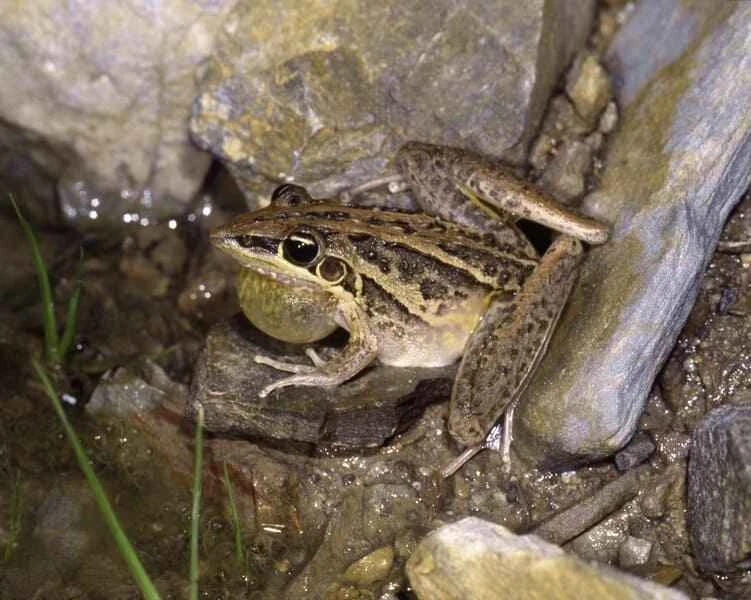
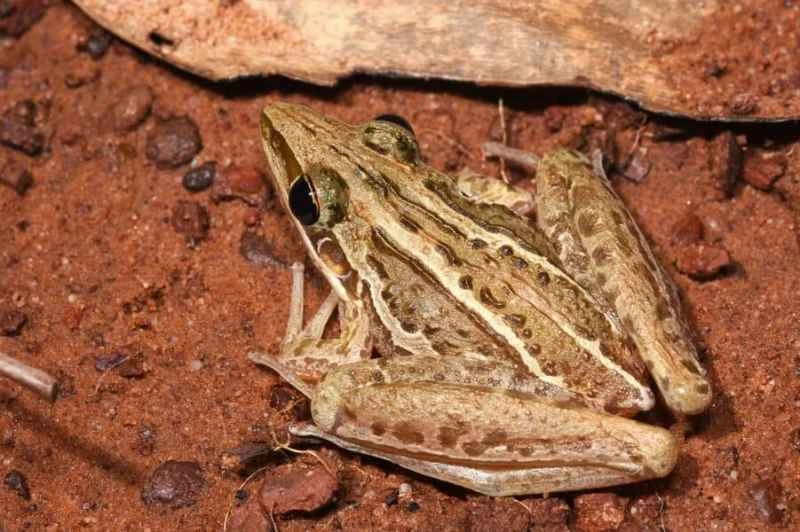
The back is brownish-brown or grayish-brown with dark longitudinal stripes, the hind limbs are long and slender, and the belly is light-colored.
Detailed introduction
The Striped Rocket Frog ( Litoria nasuta ) is a long-bodied, exceptionally powerful jumping frog native to Australia. It gets its name from its ability to launch itself several times its body length "like a rocket" when startled, and its distinctive dark stripes along its back. It is one of Australia's most iconic rocket frogs.
Classification and nomenclature
Chinese name: Striped Rocket Frog
English Name: Striped Rocket Frog
Scientific name: Litoria nasuta (or Ranoidea nasuta )
Family: Hylidae → Genus: Litoria / Ranoidea
Appearance and Identification Features
Size: Adults are about 4.5–5.5 cm long, with a slender and graceful body;
Back: Brown or grayish-brown base with a dark longitudinal stripe extending from the snout, which is the most typical identifying feature;
Limbs: Its hind limbs are extremely long and powerful, which is the source of its amazing jumping ability;
Abdomen: The abdomen is light in color, mostly light yellow or pale white;
Skin: Generally smooth with a slightly grainy texture.
Distribution range and habitat
The striped rocket frog is one of the most common tree frogs in eastern Australia , with a wide distribution.
It is distributed in Queensland, the northern tropical region, New South Wales, Victoria, and other areas.
Commonly found in swamps, stream edges, grassland wetlands, ponds, dams, and artificial wetlands.
Lifestyle
Nocturnal, most active from dusk to night;
Agile and swift, capable of jumping more than 2 meters when encountering danger;
They often roam among damp grass, ponds, ditches, and vegetation.
vocal characteristics
The male frogs emit short, crisp, rhythmic calls called "tik... tik... tik..." and often appear in large numbers on rainy nights during the breeding season.
feeding habits
Small flying insects, mosquitoes, and midges;
Beetles, ants, and other arthropods in the grass.
Reproduction and Development
The breeding season usually occurs in warm and humid months;
The eggs are laid in shallow, still water or small pools;
Tadpoles are highly adaptable and can grow in a variety of freshwater environments.
Preserve the status quo
According to the IUCN Red List, the striped rocket frog is assessed as Least Concern (LC) , and the overall population is stable.
Frequently Asked Questions
Q1: Why is the striped rocket frog called "rocket frog"?
Because it can jump a distance far exceeding its own length in an instant, it looks like it has been launched.
Q2: Is this type of frog common?
Very common, especially in the wetlands and grasslands of eastern Australia.
Q3: Is it dangerous to humans?
It is harmless and will not attack humans.
Q4: Can I keep it as a pet?
Most native frog species in Australia are protected, and keeping them must comply with local regulations.