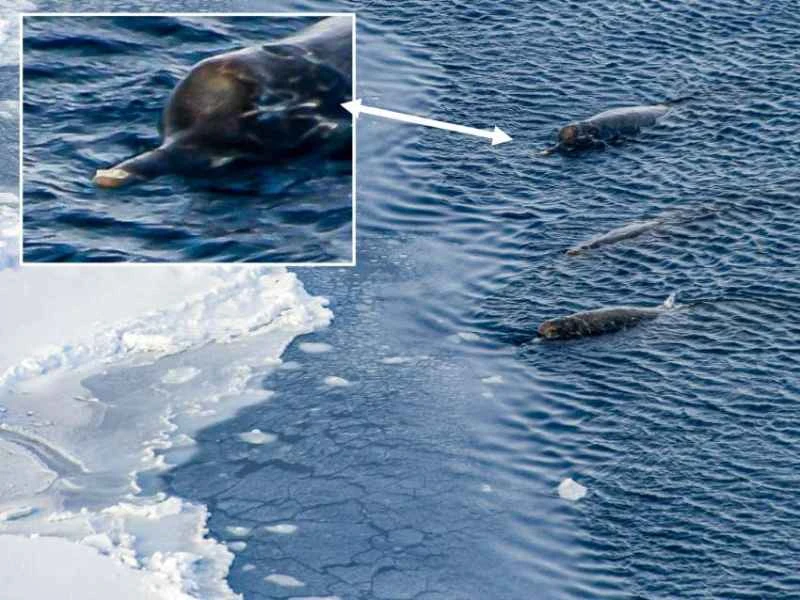
Basic Information
Scientific classification
- Chinese name: Storm Phoenix
- Scientific name: Fulmarus glacialis, Northern Fulmar, Fulmar
- Classification: Waterfowl
- Family and genus: Procellariiformes, Procellariiidae, *Syngonium*
Vital signs data
- Body length: 45-48 cm
- Weight: 665-880g
- Lifespan: No verification data available.
Significant features
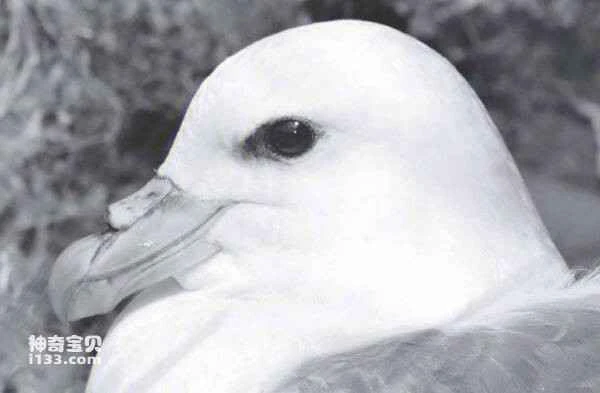
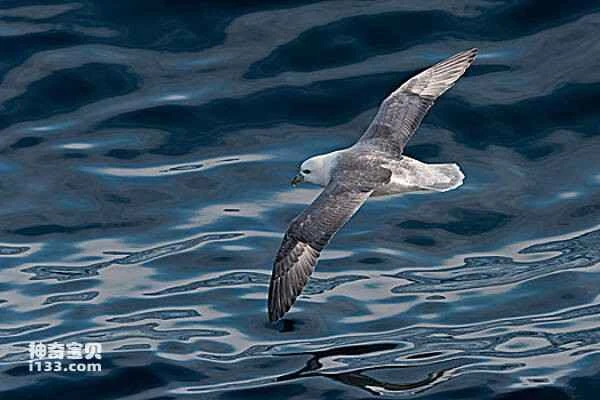
Its shape and body color are very similar to a gull, with a white head, neck, and underparts, and a black spot in front of its eyes.
Distribution and Habitat
Origin: Canada, China, Denmark, Faroe Islands, France, Germany, Greenland, Iceland, Ireland, Japan, Mexico, Netherlands, Norway, Portugal, Puerto Rico, Russian Federation (Central Asia region – migratory birds, East Asia region, European region), Saint Pierre and Miquelon, Svalbard and Jan Mayen, Sweden, United Kingdom, United States.
Migratory birds: Antigua and Barbuda, Bahamas, Belgium, Czech Republic, Finland, Morocco, Poland, Slovakia, Slovenia, Spain, U.S. Virgin Islands.
The storm petrel is a typical marine bird, only breeding on islands during the breeding season and never venturing onto land. It is mostly distributed in cold-water areas, primarily inhabiting cliff faces during the breeding season, occasionally venturing up to 1 kilometer into flat land. Sometimes it ventures near human settlements and even perches on houses in coastal towns.
Appearance
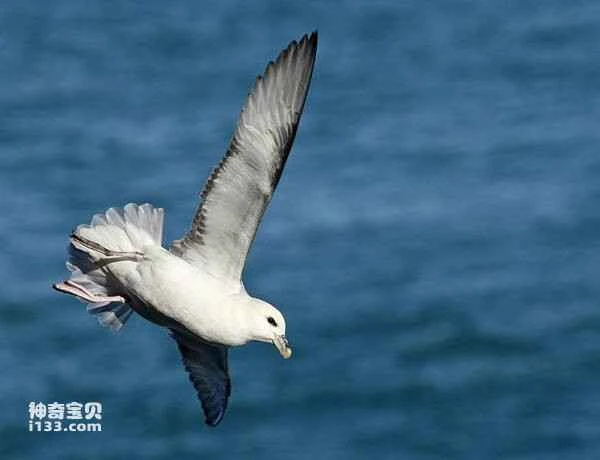
The Storm Petrel (Syngnathus 'Variegatus') is sexually similar in sex. Its bill is laterally compressed, of medium length, with the tip of the upper mandible curving downwards into a hook shape and being relatively sharp. The bill is composed of several horny plates with distinct boundaries. The nostrils are tubular and relatively long, with the two nasal tubes connected but separated by a septum, located at the base of the upper mandible along the midline of the bill ridge. The wings are broad and long, with pointed tips. There are 11 primary flight feathers, the first being the longest. The tail is relatively rounded, with 14 tail feathers of medium length. The legs are short and strong, with laterally compressed tarsi that are relatively sharp at both ends and covered with reticulated scales. The tarsus is slightly shorter than the middle toe. The toes are relatively slender; the outer toe is almost the same length as the middle toe, the hind toe is present but shorter, and the first three toes are fully webbed. The claws are narrow and sharp. The body feathers are thick and stiff, only becoming softer on the underparts. There are two types of body color: the pale type has a white head, neck and underparts, occasionally tinged with a bit of dirty gray, gray upperparts, sometimes with a bit of brown, dark gray flight feathers and wing coverts, especially dark primary flight feathers, pale gray underwing coverts and axillaries, occasionally white, and black around the eyes and in front of the eyes; the dark type is smoky gray, slightly tinged with gray or brown, and the primary flight feathers are darker.
The iris is brown. The beak is yellowish-brown with a yellow tip. The tarsi and toes are dark yellow, and the webs are yellow with black spots.
Size measurements: Weight 665-880 g; Body length 450-480 mm; Wing length 300-350 mm; Bill length 35.5 mm; Tail length 177.5 mm; Tarsus length 45 mm.
Detailed introduction
The storm petrel (scientific name: Fulmarus glacialis), also known as the Northern Fulmar or Fulmar, is a medium-sized seabird belonging to the family Procellariidae in the order Procellariiformes. There are three subspecies.
The Storm Falcon is a migratory bird. In spring, it migrates to its northern breeding grounds in April and May, and then leaves for the southern seas in September and October. Young birds may undertake transoceanic migrations, usually traveling farther than adults. In China, it has only been encountered off the Liaodong Peninsula and is a rare winter visitor.
Storm petrels typically fly tirelessly over the ocean day and night, sometimes skimming the surface with rapid wingbeats, and sometimes gliding low over the surging waves with their wings motionless. Their flight is extremely swift and agile, allowing them to weave through the waves in any weather condition, their legs outstretched behind them. When tired, they perch on the surface and drift with the current, or tuck their head and beak under their wings to sleep. They are exceptional swimmers, almost floating on the water, propelling themselves by paddling with their legs, their hindquarters raised high.
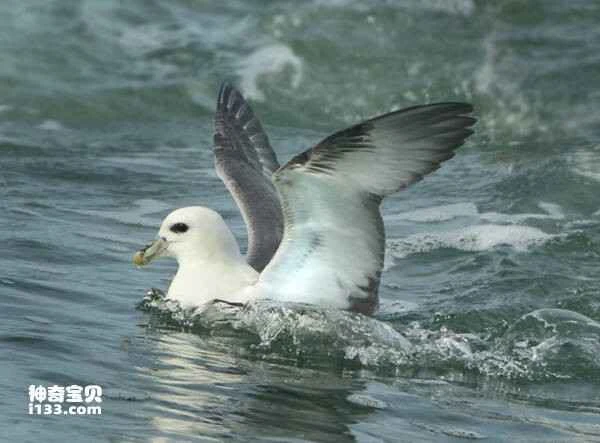
Storm petrels are gregarious birds, usually flying in flocks or foraging and resting on the sea surface, rarely acting alone. They also like to follow ships sailing at sea and bathe in the water, but often get their wings wet while bathing, making takeoff difficult. They have difficulty walking on land, almost crawling. They are relatively bold and unafraid of humans, and can spray a yellow liquid from their beaks for self-defense when threatened; if injured, they usually escape by swimming. They have difficulty taking off from land and need to climb to a high place to fly. Storm petrels make noisy cawing sounds at their breeding grounds. At sea, they are usually silent, but when feeding in groups, they make a guttural cawing sound. Their diet consists mainly of various small fish, fish eggs, mollusks, crustaceans, and other marine invertebrates. They also eat carrion, whale and fish entrails, and other dead animals or entrails, and even whale and other large mammal feces. During the breeding season, they also eat small amounts of plants. Foraging at sea, unable to hunt while flying or diving, it can submerge its head to catch surface plankton or land on the carcasses of dead whales, walruses, and other large animals to peck at their food. They usually forage in groups, sometimes following whaling ships to scavenge for discarded debris, fighting amongst themselves for food and creating a great deal of noise. They are quite voracious, often overeating when food is plentiful, to the point that they have to vomit some of it afterward.
Storm petrels breed on islands and coastlines of varying sizes in the northern ocean. Their arrival time at breeding grounds depends on the melting of local ice and snow, typically in late April or early May. They are usually paired upon arrival, although some pair up only after arriving. They often nest in flocks, rarely breeding in solitary pairs. Upon arrival, courtship begins. Courtship activities usually take place on calm waters near the breeding grounds. Initially, the male and female repeatedly and rhythmically leap out of the water, most of their bodies above the surface, then spread their wings and burst out of the water, propelling themselves forward by flapping their wings while emitting calls. This process is repeated multiple times.
Storm petrels nest on cliffs, in burrows, or in rock crevices near the water on islands, as well as on low rock walls of small islands, or on rocks or ground near the water. The nests are very simple, usually a shallow pit dug in the ground. If the ground is sandy, the pit is dug deeper, just enough to accommodate half the body during incubation, with the other half protruding outside. There is generally no lining inside the pit; occasionally some dry grass is placed, and small round stones are sometimes placed around the nest. The breeding season is from May to August, with egg-laying from early to mid-May, although some begin as early as mid-April, depending on the region. Each clutch contains one egg, occasionally two. The eggs are mostly oval, rarely pointed oval; white with reddish-brown spots; measuring 68-80 mm × 43-54 mm, with an average of 74 mm × 51 mm; weighing 65.2-98.3 grams. Both male and female parents take turns incubating the eggs, with an incubation period of 42-49 days or 56-60 days. The chicks are altricial, and both parents participate in raising them, with the chicks in the nest for 47-48 days.
Globally, the Storm Falcon population is estimated at approximately 7,000,000 pairs or 20,000,000 individuals (2016). In Europe, the breeding population is estimated at 3,380,000–3,500,000 pairs, equivalent to 6,760,000–7,000,000 mature individuals (2015). In Russia, the population is estimated at 1 million to 1 million breeding pairs, with a migrating population of 10,000,000 individuals (2009).
Listed as Least Concern (LC) in the IUCN Red List of Threatened Species 2017 ver 3.1.
Protect wild animals and ban the consumption of wild game.
Maintaining ecological balance is everyone's responsibility!