Basic Information
Scientific classification
- Chinese name: Tube-nesting spider
- Scientific name: Segestriidae et al. (a collective term for tubular-nesting spiders that build tubular silk nests)
- Classification: Arthropoda
- Family: Tube spiders
Vital signs data
- Body length: Most species are about 8–20 mm in length, and are small to medium-sized terrestrial or burrowing spiders.
- Weight: Weight typically ranges from tens to hundreds of milligrams, depending on the species and individual size.
- Lifespan: Mostly 1–3 years. Female spiders often live and reproduce in the same nest for a long time.
Significant features
They weave tubular silk nests in cracks, rock crevices, or under tree bark, and ambush prey at the nest entrance; they are mostly nocturnal ambush predators, and their toxicity to humans is generally weak.
Distribution and Habitat
It is widely distributed in temperate and subtropical regions and can be found on natural rocky slopes, forest edges, urban stone walls, garden stone steps, and building crevices.
Appearance
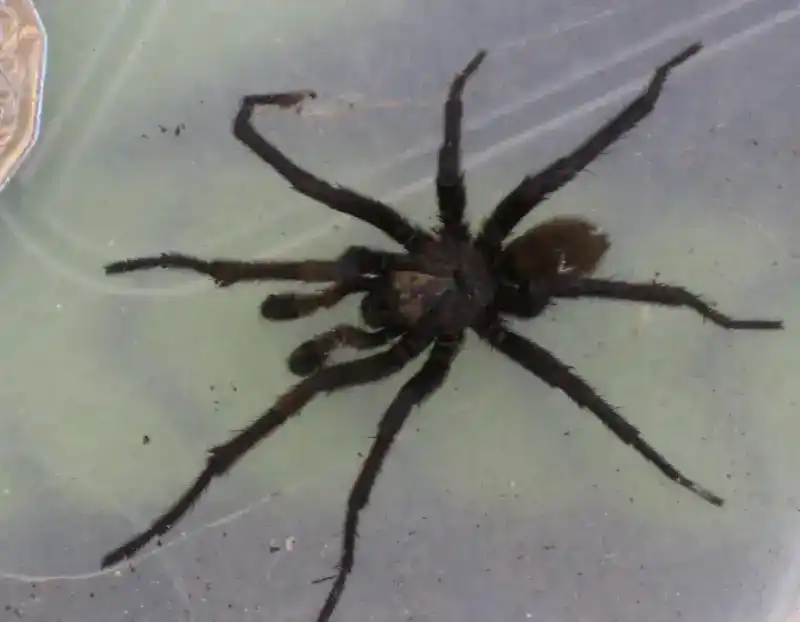
It has a slightly slender body, well-developed legs, and is mostly brown or grayish-brown in color, which is adapted to camouflage in rocky and bark environments; tubular silk nests and spiders lying at the nest entrance can be seen in the cracks.
Detailed introduction
Tube spiders generally refer to a group of spiders that prefer to weave tubular or cylindrical silk nests in cracks, rock crevices, or under tree bark, and then ambush prey at the nest entrance. Taxonomically, common "tube spiders," "web-weaving spiders," and "nesting spiders" mostly belong to the family Segestriidae, so this section will use the term "tube-nesting " spiders that build tubular nests as a general term for these terrestrial/burrowing spiders .
Basic Information
Representative taxonomic range: Spiders of the family Segestriidae that build tubular nests.
Common Chinese names: Tube-nesting spider, tube spider, tube-web spider (the names may vary slightly in different regions).
Common English term: Tube Spiders / Tube-web Spiders
Size: Most are small to medium-sized terrestrial spiders, with a body length of about 8–20 mm, and a few species may be slightly larger.
Lifespan: Most can live for 1–3 years, and female spiders usually live in the same nest for a longer period of time.
Appearance and Identification Features
The appearance of tube-nesting spiders varies from species to species, but they generally share the following common characteristics:
Body shape: The body is slightly slender with well-developed legs, which are suitable for moving quickly back and forth in the nest tube;
Color: The body color is mostly brown, grayish-brown or dark brown, and there are also species with light-colored spots or stripes, which is helpful for camouflage with tree bark and rocky environments.
Eye arrangement: Tube-nesting spiders often have a special arrangement of 6 or 8 eyes, and some species have a semi-circular or horseshoe-shaped eye row;
Silk nest structure: It is woven into a tubular or bag-shaped nest in cracks or cavities, with an opening at the front and radial warning silk or short radial silk extending to the surrounding matrix on the outside.
Unlike orb-weaver spiders, which rely on large orb webs to hunt, tube-nest spiders are more like "ambush hunters who stay at the door," hiding inside their nests and only suddenly rushing out when prey gets close.
Tubular nests and predation methods
The name "Tube Spiders" comes from their tubular silken nests . A typical Tube Spider weaves one or more silken tubes in crevices of rocks, bricks, walls, under tree bark, or in the gaps of dead wood.
The inner wall of the tube is reinforced with multiple layers of wire lining, forming a relatively tough "spider tunnel";
Several short filaments are pulled out from near the nest entrance to the outer surface, like "sensor wires," to detect external movements.
During the day, they mostly hide deep inside the nest tube, while at night they lie at the nest entrance, extending their forelegs to touch the warning threads.
When insects or other small arthropods touch these warning threads, the tube-nesting spider can instantly sense the vibration, and then rush out of the nest, using its forelegs and mandibles to subdue the prey and drag it back to the nest to feed.
Distribution range and habitat
Typical members of the tube-nesting spider family are common in temperate and subtropical regions , distributed from Europe, Asia, the Americas to Australia; some related groups can also be found in tropical mountain and forest environments.
Common habitats include:
Rock piles, stone walls, retaining walls, and gaps in old buildings;
Cracks in the trunk, areas where the bark has curled up, and gaps inside fallen logs;
Roadside stones, garden stone steps, and the cracks and joints between stones and bricks in gardens and parks;
Sometimes they also weave nests in the gaps of balconies, fences, or eaves.
They prefer cool, secluded, and slightly damp microenvironments , which are also the activity channels for many insects and small arthropods.
Diet and ecological role
Tube-nest spiders are typical ambush predators , primarily employing the following methods:
Ants, beetles, small cockroaches, and other surface insects;
Small spiders and various arthropods;
Occasionally, they will also prey on small frogs, small lizards, and other vertebrates of similar size that pass by their nests.
By efficiently burrowing into cracks and piles of rocks, they provide a natural insect control force for the natural environment and urban green spaces, and are also important predators in nocturnal arthropod communities.
Toxicity and its effects on humans
Most tube-nesting spiders have relatively weak venom to humans; their venom is primarily used to subdue insect prey. In the rare cases of bites, most only cause localized pain, mild redness and swelling, or brief itching.
General recommendations:
Wear gloves when handling stones, bricks, and dead wood to avoid putting your fingers directly into unseen crevices;
If bitten by a suspected tube nest spider, wash the wound with clean water and observe the symptoms. In most cases, there is no need to worry excessively.
If the pain from the wound persists, a systemic allergic reaction occurs, or the injured person is a child or elderly person, medical attention should be sought immediately.
Relationship with humans
Tube spiders typically live a secretive life, never actively attacking humans, and certainly not weaving webs indoors. They help prey on large numbers of insects and other small invertebrates in gardens and stone wall crevices, acting as passive and unassuming "underground guardians."
In most cases, if you find tubular webs and spiders in the yard wall or stone crevices, simply avoid direct interference; there is no need to deliberately remove them, and it is not recommended to use chemical insecticides.
Frequently Asked Questions
Q1: What are "Tube Spiders"? Are they a specific species?
"Tube Spiders / Tube-web Spiders" is usually a general term for a type of spider that weaves tubular silk nests and ambushs prey at the nest entrance.
Rather than a single, fixed species, they mostly belong to related groups such as the tube-nesting spider family.
Q2: Will tube nest spiders enter indoor spaces?
Most tube-nest spiders prefer outdoor environments such as rocks, tree bark, and wall crevices, but may occasionally be found in building exterior walls or balcony crevices.
However, it generally does not encroach on indoor living spaces on a large scale.
Q3: Are they dangerous to humans?
It is generally not very dangerous for healthy adults, and bites usually cause only minor local symptoms.
As long as you avoid putting your bare hands into unseen places such as crevices in rocks or tree holes, the chance of being bitten is very low.
Q4: If you find them in the garden, do you need to remove them?
Generally, this is not necessary. Tube-nest spiders ambush and prey on insects and other small arthropods, making them beneficial predators in gardens and green spaces.
If the nest is located in a crevices that must be used, the entire rock or structure can be gently removed during the day when the spider is hiding inside the tube, and the nest moved to another corner.