Basic Information
Scientific classification
- Chinese name: sac spider
- Scientific name: Cheiracanthiidae (representing the genus Cheiracanthium, etc.)
- Classification: Arthropoda
- Family: Cheiracanthium
Vital signs data
- Body length: Various species are approximately 4–10 mm in body length and 1–2 cm in leg span; small hunting spiders.
- Weight: Weight typically ranges from tens to hundreds of milligrams, varying depending on the species and individual.
- Lifespan: Most species live for about 1–2 years, and female spiders can lay eggs multiple times.
Significant features
During the day, they rest by weaving flat silk sacs on the back of leaves or in crevices, and at night they emerge from the sacs to hunt insects; some species have a pale yellow body color, hence the common name "yellow sac spider".
Distribution and Habitat
The family of spiders is found almost all over the world, in the leaves and crevices of forests, farmlands, grasslands, horticultural plants, and near human settlements.
Appearance
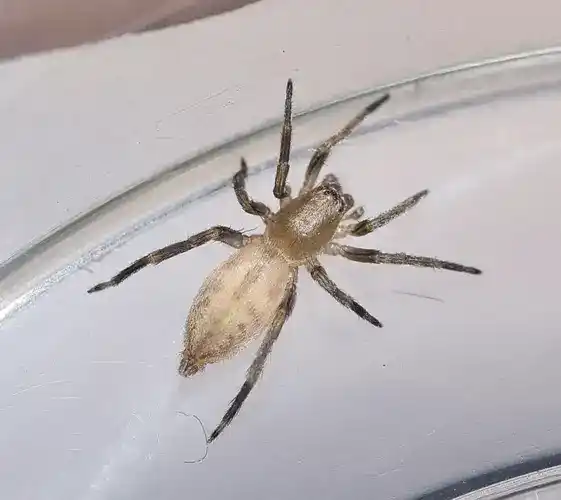
Its body is small and slightly elongated oval, with relatively long feet; its body color is mostly pale yellow, milky white or light green, with a slightly darker head and chest, and a smoother abdomen.
Detailed introduction
Sac spiders are a large group of spiders that like to rest by weaving "sacs" in leaves or crevices. They mainly include the family Cheiracanthiidae and some closely related groups (such as bag spiders in the family Clubiona ). The "yellow sac spider" or "small yellow spider" that people often refer to usually refers to some pale yellow species in the Cheiracanthiidae family.
Basic Information
Representative scientific name (general term): Family Cheiracanthiidae – Cheiracanthidae (typical genera such as Cheiracanthium , etc.)
Common Chinese names: Yellow-sac spider (for yellow species)
Common English name: Sac Spiders / Yellow Sac Spiders
Size: Body length is usually about 4–10 mm, a few species may be slightly larger, and leg span is about 1–2 cm.
Lifespan: Most small species can live for 1–2 years, and female spiders can produce multiple egg sacs in their lifetime.
Silk Sacs and Living Habits
The name "sac spider " comes from the silk sacs they habitually weave. Unlike garden spiders, which rely on large webs to catch prey, sac spiders are mostly hunting spiders that do not weave large webs . Instead, they weave a small, flat silk sac on the back of leaves, in grass, in crevices in walls, or on the surface of objects.
During the day, the silkworm spider will hide in its silk sac to rest or molt;
Female spiders typically lay their eggs in a silk sac and guard the sac.
At night, they emerge from their silk sacs and actively roam on plants or walls to prey on insects.
Appearance features
Most yellow-sac spiders are small in size, with a slightly elongated oval body and relatively long legs, though not as extremely long as those of long-legged spiders. Common body colors of the "yellow-sac spider" are:
Pale yellow, milky white, or light yellowish-green body color;
The cephalothorax is slightly dark, sometimes tinged with light brown or olive green;
The abdomen is relatively smooth, and some species may have inconspicuous spots or lines.
The silkworm spider is agile and can quickly escape along leaves or walls when startled, or hide back in its silk sac.
Distribution and Habitat
Scaly spiders are found almost globally , but are particularly common in temperate and tropical regions. They can be found in a variety of habitats:
On the leaves and branches of forests and shrubs;
Crop leaves in farmland, grassland and orchard;
Near gardens, green belts, walls, fences, and outdoor lighting fixtures;
Some species will even venture indoors, weaving small silk sacs in corners, window frames, or furniture crevices.
Diet and ecological role
The sac spider is a typical nocturnal hunting predator , primarily preying on:
Plant pests such as aphids, leafhoppers, and small beetles;
Various small flying insects and small arthropods of the class Arachnida;
They also occasionally prey on slightly larger insect larvae or other small spiders.
Therefore, many burrowing spiders are considered a natural biological control force in farmland and horticultural systems, helping to suppress pest populations and serving as important small natural enemies in the ecosystem.
Toxicity and its effects on humans
Yellow-sac spiders possess venom glands used to paralyze their prey. Some species of yellow-sac spiders have been reported in medical literature for occasional bites, and their venom has been suspected of causing local necrosis or more severe skin reactions.
Current clinical studies show that most cyst spider bites only cause localized pain, redness, and a mild burning sensation . A small number of people may experience more extensive erythema or discomfort lasting for several days, but severe systemic poisoning is very rare. Overall, they are not considered highly dangerous spiders.
Contact with humans and protection
People often see the small silk sacs spun by sac spiders during the day in gardens, near fruit trees, crops, and outdoor lighting fixtures. Unless deliberately squeezed or grasped, the sac spiders will usually flee quickly rather than attack.
In areas where burrowing spiders are known to be abundant, the following simple protective measures can be taken:
Before tidying up flower pots, removing leaves, or turning over gardening tools, gently shake or inspect them.
Try to avoid pinching the small "white sacs" on the back of the leaves with your bare hands;
If you suspect you have been bitten by a spider, wash the wound with clean water, observe the symptoms, and seek medical attention if necessary.
Frequently Asked Questions
Q1: Can burrowing spiders cause serious harm to humans?
Most spider bites only cause local pain and swelling; severe systemic poisoning is very rare in clinical practice.
For healthy adults, there is usually no need to panic excessively, but if the redness and swelling continue to expand or are accompanied by obvious systemic symptoms, medical attention should be sought as soon as possible.
Q2: Why is it called "sac spider" or "yellow sac spider"?
They weave flat, small "silk sacs" in the leaves or crevices, where they rest, molt, and lay eggs.
Some species have a pale yellow body color, hence they are often called "yellow-sac spiders".
Q3: What role do burrowing spiders play in the ecosystem?
The burrowing spider actively preys on a variety of small insects at night, including many agricultural and horticultural pests.
Therefore, they are important natural enemies in natural and farmland ecosystems and play a positive role in pest control.
Q4: What should I do if I find a pod spider in my home?
It can usually be gently covered with a cup or a piece of paper and moved outdoors.
If you do not wish to keep the silk sacs indoors, you can gently remove the small white sacs from the leaves or corners of the room during the day.