Basic Information
Scientific classification
- Chinese name: Cat Spider
- Scientific name: Oxyopidae (typical genera include Oxyopes and Peucetia)
- Classification: Arthropoda
- Family: Catarapidae; Genus: Catarapidae
Vital signs data
- Body length: Approximately 3–25 mm, with most common species measuring 5–15 mm.
- Weight: Varies depending on species and individual, mostly ranging from a few milligrams to tens of milligrams.
- Lifespan: Generally about 1 year, some species can live 1-2 years.
Significant features
They do not weave large hunting nets; they actively hunt prey on plants; they have good eyesight; and their feet have prominent bristles.
Distribution and Habitat
It is distributed almost all over the world and is commonly found in sunny environments such as grasslands, farmland, thickets, flower beds, and roadside vegetation.
Appearance
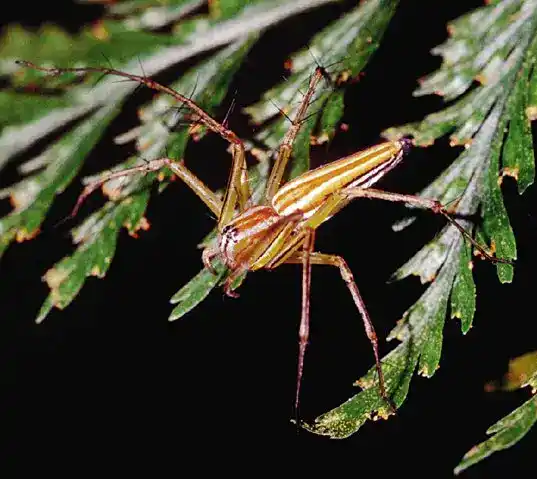
They are light and agile, with a high head and chest; long legs covered with bristles; and body color is mostly green, yellow, or brown, often with stripes or spots for camouflage.
Detailed introduction
Lynx spiders are a large group of hunting spiders known for their agility in running and jumping, primarily belonging to the family Oxyopidae . They mostly live in grass, bushes, and flowers, actively hunting insects with their excellent eyesight and rapid movement, making them a very important group of "ambush hunters" in fields and gardens.
Basic Information
Scientific name (general term): Oxyopidae – family cat spiders (typical genera such as Oxyopes , Peucetia , etc.)
Size: Mostly small to medium-sized spiders, with a body length of about 3–25 mm, and common species are mostly between 5–15 mm.
Lifespan: Generally about 1 year, some tropical species can live up to 1–2 years under good conditions.
Ecology and Behavior
Cat spiders typically do not weave large webs ; instead, they actively patrol the surface of plants like small cheetahs. They are adept at running and leaping among the branches and leaves, and some species will lie in ambush on flowers, waiting for insects to come to collect nectar or pollen before swiftly pouncing.
Cat spiders have relatively good eyesight compared to other spiders, enabling them to observe and track moving prey. Some species have a high tolerance for their own kind, and may even exhibit a degree of aggregation on the same plant.
Morphological characteristics
Typical characteristics of cat spiders include: a high cephalothorax with a ring of hexagonal eyes at the front; legs covered with long, coarse, stiff bristles , with some species having leg bristles that almost form a "basket," allowing them to firmly grasp prey during a pounce. Their body color is mostly green, yellowish-brown, or brown, with some species having stripes or spots, which helps them camouflage themselves among grass and flowers.
Toxicity and Effects on Humans
Cat spiders possess venom glands to paralyze their insect prey, but for healthy humans, occasional bites usually only cause moderate local pain, redness, or itching , and rarely trigger severe systemic reactions. They generally do not attack humans unprovoked, and may only bite defensively when accidentally scratched, pinned down, or subjected to prolonged pressure.
Ecological role
Cat spiders prey extensively on aphids, small flying insects, moth larvae, and other small arthropods, and are considered important biological pest control enemies in agricultural ecosystems such as cotton fields, vegetable gardens, and orchards. However, some studies have also found that they occasionally prey on pollinating insects, so their overall effectiveness depends on the specific environment. In general, preserving diverse vegetation and reducing the use of chemical pesticides helps cat spiders, along with other natural enemies, maintain ecological balance.
Frequently Asked Questions
Q1: Will cat spiders attack people on their own initiative?
Generally not. They are more concerned with small insect prey in their vicinity, and will choose to run away or hide when they encounter many people. They will only bite if they are forcibly caught.
Q2: Is cat spider venom dangerous?
It is mainly used to paralyze small insects and usually only causes temporary local discomfort to healthy adults; if there is a history of allergies or obvious symptoms, medical attention should be sought in time.
Q3: Why is it called "Lynx Spider"?
The name comes from their lynx-like agility, good eyesight, and quick pounce on prey, rather than their large size.
Q4: Are cat spiders beneficial to agriculture?
Many cat spider species prey heavily on pests and are considered beneficial natural enemies in crops such as cotton fields. However, they may also prey on a small number of pollinating insects, and overall, their role is still predominantly positive.