Basic Information
Scientific classification
- Chinese name: flounder
- Scientific name: Pleuronectiformes
- Classification: Medium-sized fish
- Family: Pleuronectiformes Pleuronectidae Bothidae Soleidae
Vital signs data
- Body length: 10–200 cm (varies greatly depending on the species)
- Weight: From tens of grams to hundreds of kilograms (large cold-water species)
- Lifespan: 5–20 years, longer for very large species
Significant features
Abnormal "eye position migration"; extremely laterally compressed body shape; burrowing in sand for camouflage; benthic predation.
Distribution and Habitat
The continental shelf is predominantly sandy and muddy, with some estuaries and freshwater areas.
Appearance
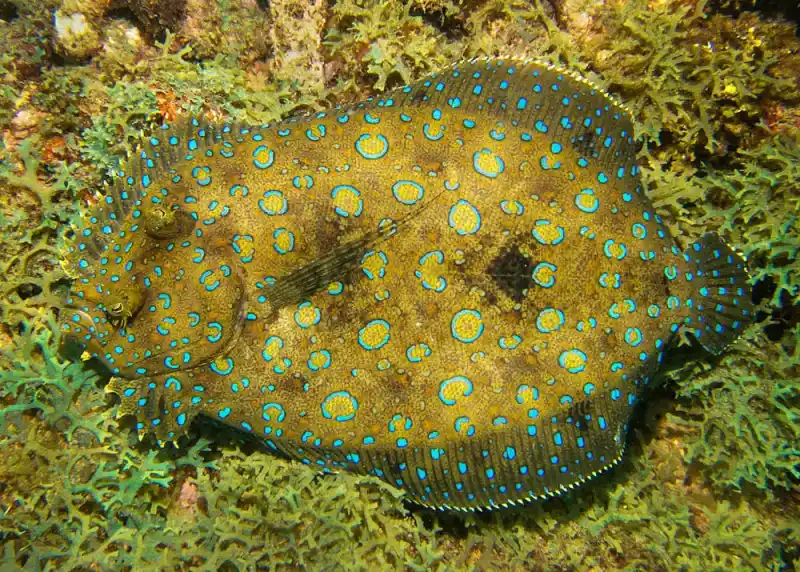
Both eyes are on the same side; the dorsal/anal fins extend along the body edge; the upper pattern is variable, and the lower pattern is lighter in color.
Detailed introduction
Pleuronectiformes , commonly known as flatfish, includes several groups such as the families Pleuronectiidae, Flounderidae, and Soleidae. Their most distinctive feature is the "eye migration" during metamorphosis : in the larval stage, they are bilaterally symmetrical, with one eye migrating to the same side as they grow; adults exhibit obvious left-right asymmetry and inhabit the seabed (sand or mud) in a lateral recumbent position.
Ecology and Biology
Diet: Mostly benthic predators , feeding on small fish, crustaceans, mollusks, and polychaetes; some species also consume organic detritus.
Reproduction: The vast majority of them spawn at sea. The eggs and larvae are buoyant , and after metamorphosis, they sink to the bottom and settle down.
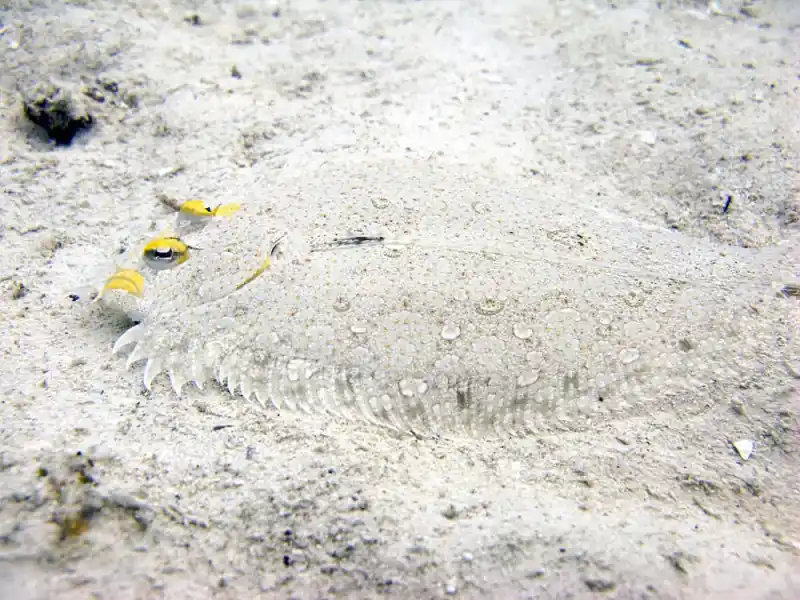
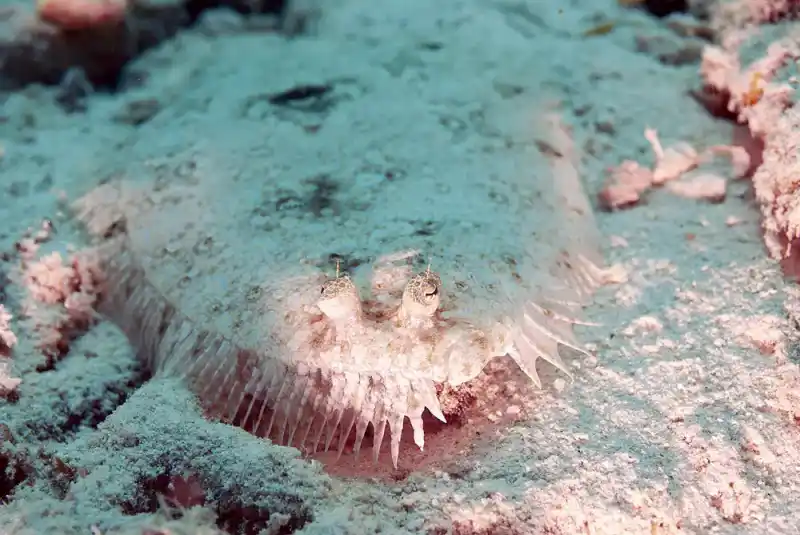
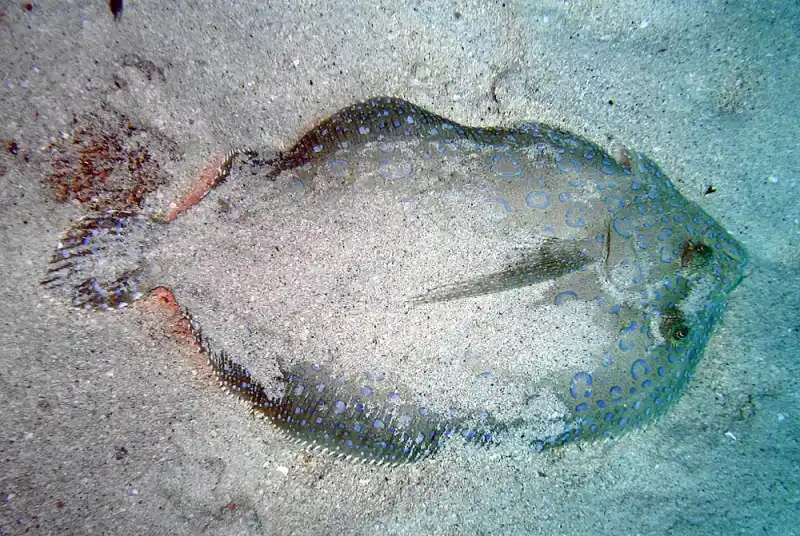
Behavior: Skilled at mimicry and burying themselves in sand ; many species are more active at night and hide during the day.
Morphology and Recognition
Eye position: Adult fish have both eyes on one side of the body (right-eyed flounder vs. left-eyed flounder). For example, in the Pleuronectidae family , the right eye is usually facing upwards, while in the Bothidae family, the left eye is usually facing upwards (there are exceptions).
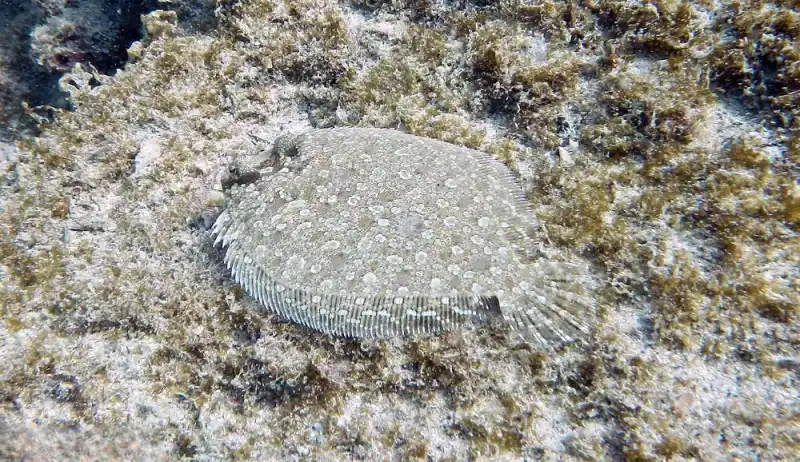
Body shape: extremely laterally compressed , oval or rhomboid; dorsal and anal fins extend along the body margin ; mouth shape and tooth row show significant differences in feeding behavior.
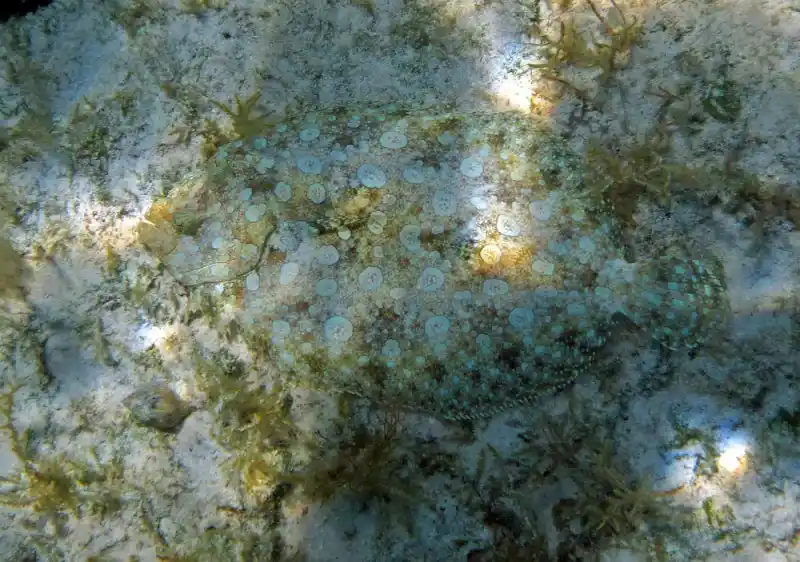
Camouflage: The upper (upper) body color can change color/pattern with the substrate; the lower (lower) body color is mostly light.
Body size and lifespan
Body length: From small tongue soles of 10–20 cm to over 2 m (such as halibut).
Lifespan: Mostly 5–20 years , larger cold-water species can live longer.
Distribution and Habitat
It is mainly found on continental shelves and slopes with sandy or muddy bottoms in temperate, cold, and tropical seas worldwide, and is also found in estuaries and a few freshwater areas (such as some tongue soles).
Human use and management
Fisheries value: Many species are important food fish and bottom trawl/gillnet fish (such as halibut, turbot, European flounder, etc.).
Key management points: Bottom trawling gear has a significant impact on habitats; it is recommended to combine body length restrictions, fishing bans, regional marine protected areas , and habitat restoration .
IUCN: This article is a general overview at the order level , and assessments vary considerably among different species (LC–EN). Entries in this site's general overview are marked as not assessed (NE) .
Frequently Asked Questions
Q1: How to distinguish between "left-eyed flounder" and "right-eyed flounder"? The upward-facing eyes of adult fish are different: most flounder have their right eye facing upward, while the left eye faces upward, but there are exceptions. It is necessary to combine the fin rays, bones and body patterns to make a comprehensive judgment.
Q2: Why can it be "invisible"? The skin on the upper side has pigment cells , which can quickly adjust the color and texture, and with the addition of some sand, it can achieve camouflage.
Q3: What is the relationship between it and sole/tongue sole? They are all members of different families in the order Pleuronectiformes, and there are differences in mouth shape, body shape and habitat.
Q4: Will they enter freshwater? Very few species can enter freshwater or estuaries, but most are saltwater or brackish water fish.