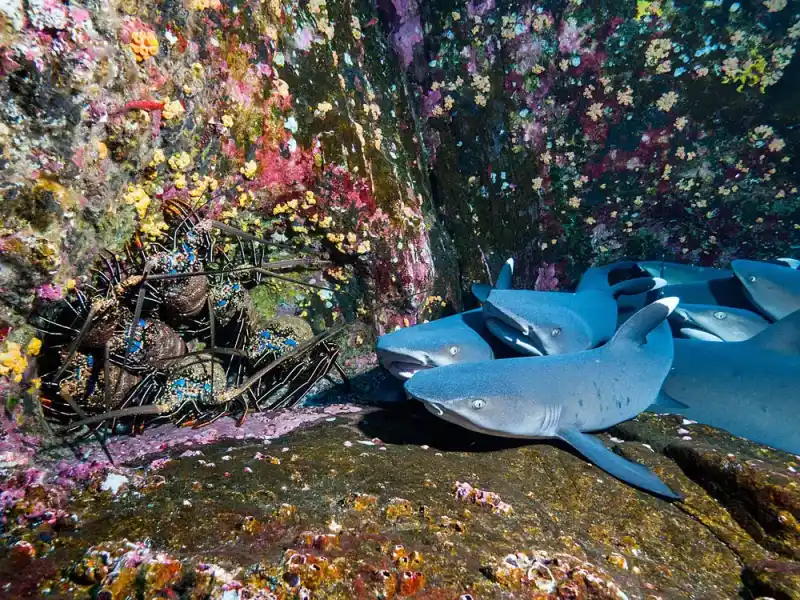
Basic Information
Scientific classification
- Chinese name: White-tip reef shark
- Scientific name: Triaenodon obesus
- Classification: Large fish
- Family and genus: Carcharodon spp., Scutigera spp.
Vital signs data
- Body length: Commonly 1.2–1.6 m; maximum ~1.9 m
- Weight: Commonly 10–20+ kg
- Lifespan: Approximately 20–25 years (estimated)
Significant features
Nocturnal ambush; ovoviviparous with few offspring; small range of activity and station loyalty; obvious dependence on reefs and caves.
Distribution and Habitat
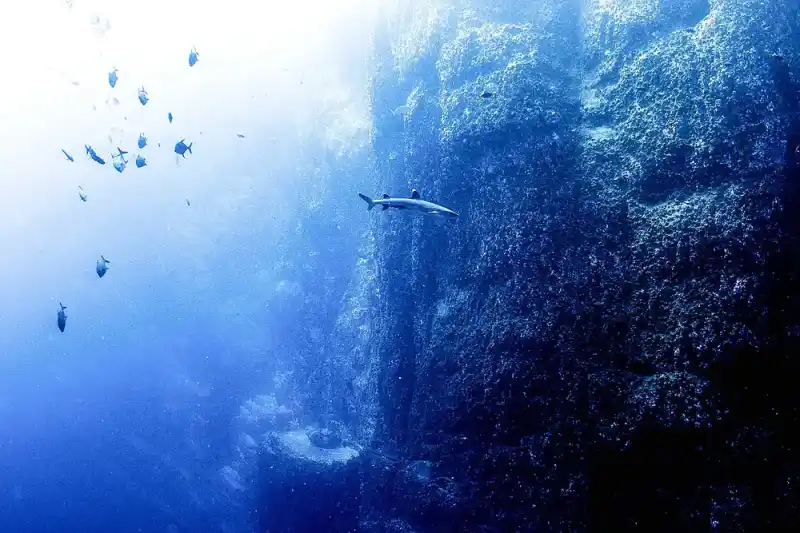
Indo-Pacific tropical/subtropical coral reefs (reef slopes, platform edges, lagoons and caves); commonly 1–40 m.
Appearance
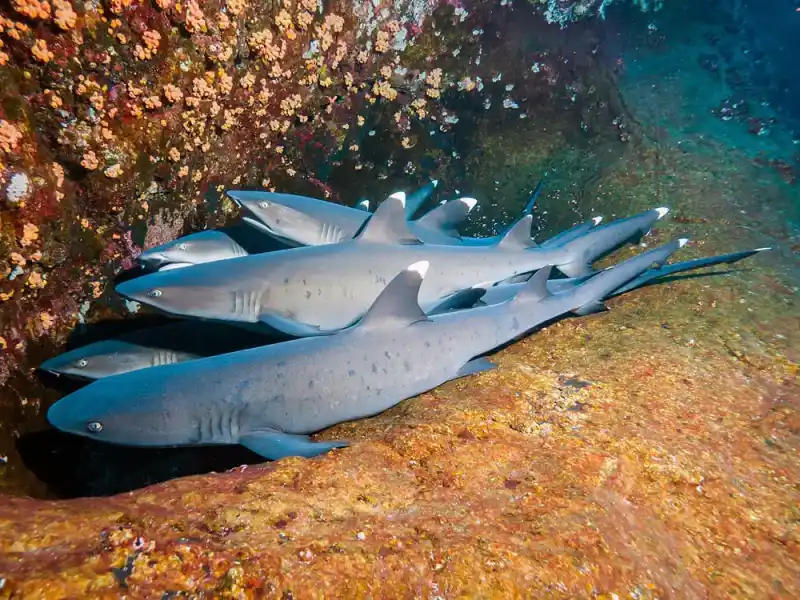
The first dorsal fin and the upper tail lobe have white tips; the snout is short and blunt, and the nasal flap is distinct; the body is grayish-brown with a white belly and large eyes.
Detailed introduction
The whitetip reef shark ( Triaenodon obesus ), also known as the white-edged reef shark , is one of the most common medium-sized sharks in the Indo-Pacific coral reefs. It belongs to the family Carcharhinidae and the genus Triaenodon (a monotypic genus) . It is known for its nocturnal ambush hunting : during the day, it mostly lives and rests in caves and coral crevices, and after dusk, it comes out to hunt for food on reef slopes and platform edges.
Ecology and Behavior
Diet: Reef-dwelling bony fish, cephalopods and crustaceans; often patrols along the bottom edge or crawls into crevices to catch food.
Activity rhythm: resting during the day and active at night; exhibits site loyalty and a small activity range.
Reproduction: Ovoviviparous , gestation period is about 10–13 months; 1–5 offspring per litter (mostly 2).
Morphology and Recognition
The body is slender and slightly flattened; the snout is short and blunt, and the nostrils have skin flaps; the first dorsal fin is relatively small and positioned towards the rear; the tips of the first dorsal fin and the upper lobe of the caudal fin have striking white tips/edges ; the body color is grayish-brown on the back and white on the belly. The eyes are large, adapted to low-light environments.
Body size and lifespan
Body length: Commonly 1.2–1.6 m, with a maximum of about ~1.9 m.
Weight: Commonly 10–20+ kg (regional variations).
Lifespan: Approximately 20–25 years (estimated).
Distribution and Habitat
Widely distributed in tropical/subtropical coral reefs of the Indo-Pacific : from East Africa, the Red Sea to the island chains of the Central Pacific (Hawaii, Polynesia, etc.). Commonly found on reef slopes, reef platform edges, lagoon reefs , and caves, typically at depths of 1–40 m (deeper locations have also been recorded).
Threats and Protection
Fisheries stress: target/bycatch from reef handlines, gillnets and longlines; shark fin and meat utilization.
Biological vulnerability: late maturity, low litter size, and slow population recovery.
Habitat degradation: coral bleaching, coastal pollution and tourism disturbance.
IUCN Global Assessment: Vulnerable (VU) . Recommendations: Ban destructive fishing practices, establish and connect reef protected area networks , regulate diving and night diving (maintain distance and avoid encirclement), reduce bycatch and implement live release guidelines.
Frequently Asked Questions
Q1: How to distinguish it from grey reef shark/blacktip reef shark? Whitetip reef sharks have obvious white tips at the end of the first dorsal fin and the upper tail lobe; they are more slender and have a short, blunt snout, and often "stack up" to rest during the day.
Q2: Is it dangerous to humans? Generally docile, but close provocation or feeding may lead to defensive behavior; following diving rules can greatly reduce the risk.
Q3: Why is it rated as vulnerable? Overfishing in reef areas combined with habitat degradation; low reproduction rate and slow recovery.
Q4: Is there a clear day-night cycle? Yes. Resting in caves during the day and hunting at night is a typical characteristic.