Basic Information
Scientific classification
- Chinese name: Orca
- Scientific name: Orcinus orca
- Classification: Giant fish
- Family and Genus: Dolphinidae, Orca
Vital signs data
- Body length: Males 6–8 meters; Females 5–7 meters (larger individuals are even longer).
- Weight: Males 4–6 tons; Females 2–4 tons
- Lifespan: Females 60–80 years (some may live longer); Males 30–50 years
Significant features
Top predators; highly social and culturally diverse; significant ecotype differences; cooperative hunting and dialectal communication.
Distribution and Habitat
Global oceans, more common along cold and temperate coasts; also utilizes offshore seamounts, fjords and upwelling areas.
Appearance
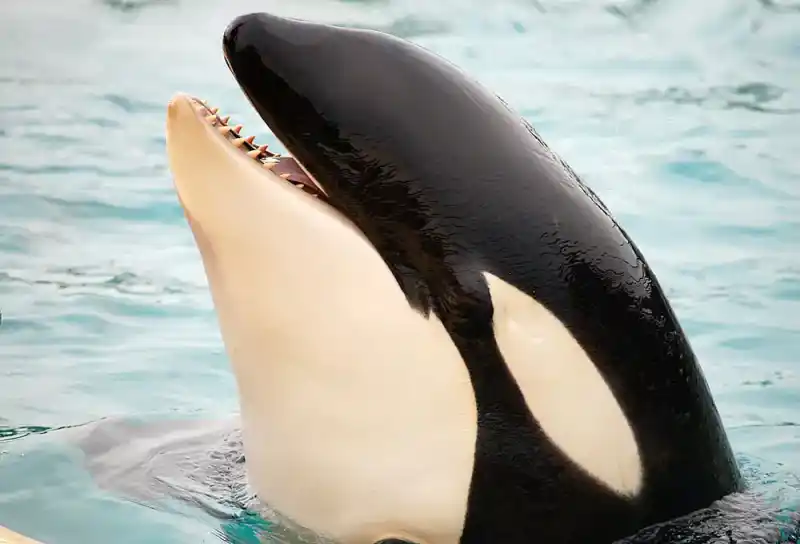
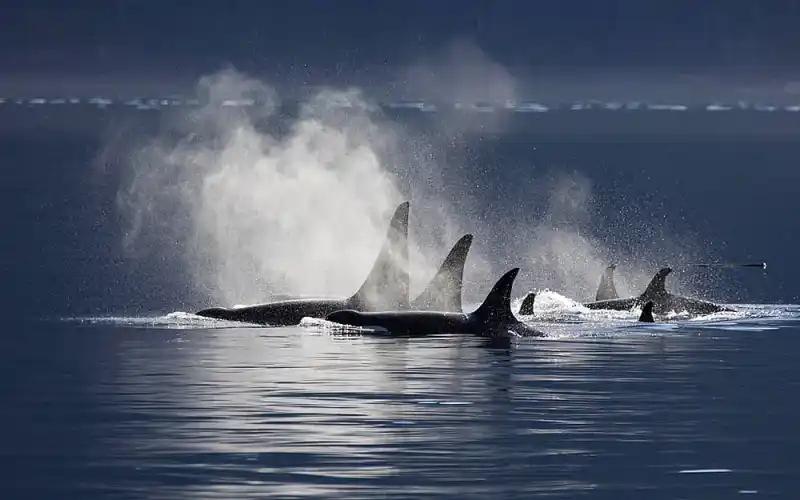
Black and white body coloration; gray and white saddle-shaped spots; male whales have a tall, triangular dorsal fin, while subadult males and females have curved dorsal fins.
Detailed introduction
The killer whale ( Orcinus orca ) is the largest member of the dolphin family and one of the most widely distributed apex predators in the world. Its black and white coat, the male's large dorsal fin (up to 1.8 meters), and the greyish-white " saddle-shaped spot " are easily recognizable. Multiple ecotypes and cultural groups exist in different sea areas, exhibiting significant differences in diet (fish-based/mammal-based), vocal "dialects," hunting tactics, and migration patterns.
Ecology and Behavior
Diets are highly adaptable: piscivorous groups prefer schools of fish such as salmon, trout, and herring; mammal-prey groups prey on seals, sea lions, dolphins, and even baleen whale larvae. Groups are matrilineal , exhibiting intergenerational information transmission and cooperative hunting tactics (such as beaching and coordinated encirclement). Acoustic communication is complex, with different groups possessing stable dialects.
Morphology and Recognition
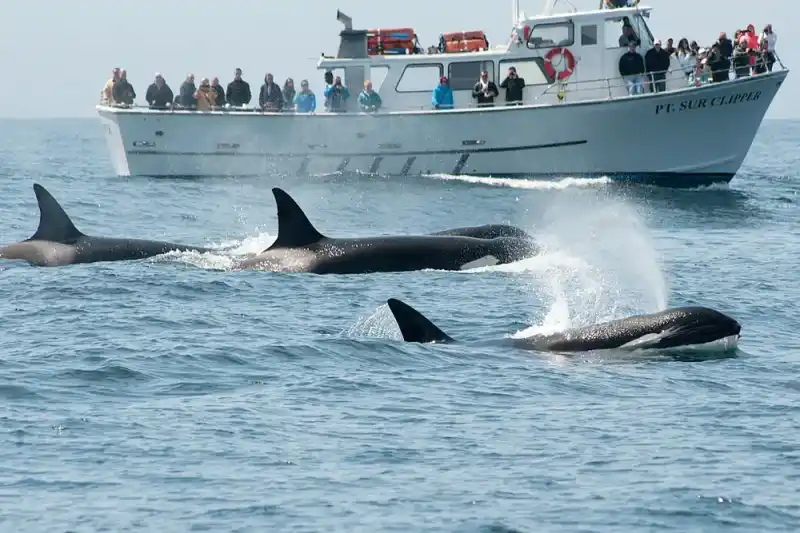
Males typically reach 6–8 meters in length (larger individuals can be even longer), while females reach 5–7 meters. Males weigh 4–6 tons, and females weigh 2–4 tons. The male dorsal fin is tall and upright and triangular , while the dorsal fin of subadult males and females is more curved. The eye patch is white, and there is a grayish-white "saddle-shaped spot" above and behind the dorsal fin.
Distribution and Habitat
They are distributed in almost all oceans around the world , and are more common in cold temperate zones to high latitudes. They also utilize offshore seamounts, upwelling currents and fjord systems. The range of activity and seasonal migration of different ecotypes vary significantly.
Threats and Protection
Prey depletion and fisheries interaction: Specialized predatory groups are highly sensitive to the decline of target fish species; entanglement in fishing gear and the risk of competition for prey.
Noise and pollution: Ship noise interferes with acoustic communication and foraging; persistent organic pollutants (PCBs, etc.) accumulate in high trophic level organisms.
Ship collisions and habitat disturbance: nearshore shipping lanes and whale watching stress.
Management recommendations: Spatiotemporal dynamic protection of key foraging/brooding waters, speed management and quiet hull programs, reduction of pollutant input, and fisheries coordination quotas and by-product reduction.
Frequently Asked Questions
Q1: Do orcas attack humans?
Whale attacks on humans are extremely rare in the wild; incidents have occurred involving captive individuals. Maintain distance and adhere to whale watching guidelines.
Q2: What are the differences between the different ecotypes?
They differ in diet (fish/marine), acoustic dialects, body size and marking details, range of activity and social structure, and some ecotypes may constitute independent evolutionary lineages.
Q3: How long is the lifespan?
Female whales typically live to be 60–80 years old, with some living even longer; male whales generally live to be 30–50 years old, with a few living even longer.
Q4: What is the protection level?
The IUCN Global Assessment is Data Deficient (DD) , primarily due to incomplete clarification of classifications and ethnic differences; regions/ethnic groups may have other protected statuses.