Basic Information
Scientific classification
- Chinese name: Macaroni penguin
- Scientific name: Eudyptes chrysolophus
- Classification: Waterfowl
- Genus and family: Penguinidae (family Penguinidae)
Vital signs data
- Body length: approximately 70 cm; wingspan: approximately 70–80 cm (flippers)
- Weight: 3–6 kg (major fluctuations during breeding/molting seasons)
- Lifespan: 8–15 years in the wild, some may live longer.
Significant features
Long, dense, golden-yellow crest feathers; large breeding colonies; primarily feeds on krill; diving and foraging range is variable.
Distribution and Habitat
They breed on rocky and grassy slopes of sub-Antarctic islands; outside of the breeding season, they forage in the Southern Ocean, relying on high-yield coastal upwelling zones.
Appearance
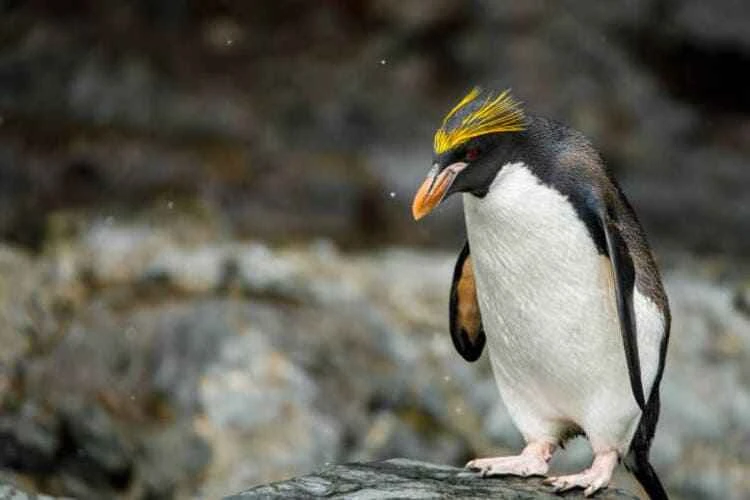
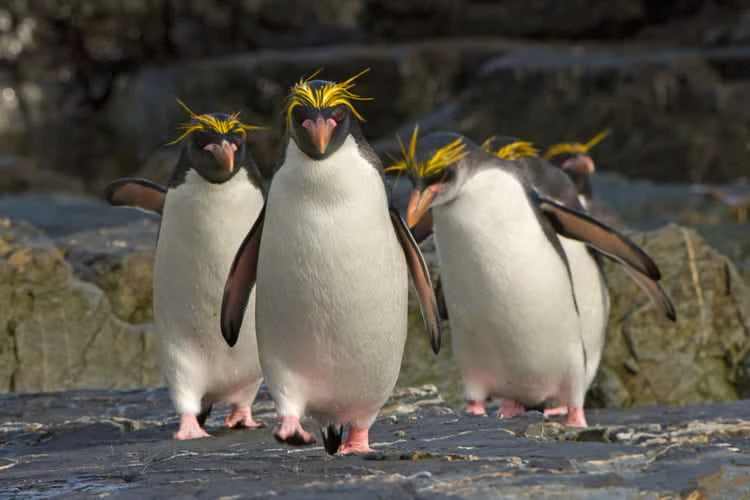
Upper body black, belly white; golden crest feathers on the head spreading outwards; beak orange-brown; males and females look similar.
Detailed introduction
The Macaroni penguin ( Eudyptes chrysolophus ) is a large member of the genus Eudyptes, renowned for its bright yellow crest extending backwards from its head. This species primarily breeds on sub-Antarctic islands such as South Georgia, South Shetland, South Orkney, Crozet, Kerguelen, Hard McDonald, and Bouvet , and forages extensively in the Southern Ocean outside the breeding season. Its IUCN status is Vulnerable (VU) , and its overall status is declining.
Ecology and Behavior
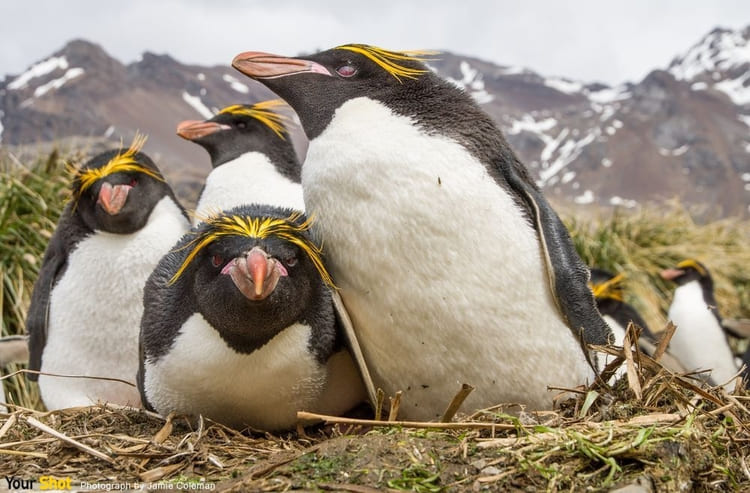
They primarily feed on Antarctic krill , but also consume fish and cephalopods. During the breeding season, they form large breeding colonies, with nests typically located in exposed areas between rocky and grassy slopes. Both males and females incubate and raise their young, often using rift-like nesting channels and passageways. Their diving depth and foraging distances vary significantly depending on sea conditions and available resources.
Morphology and Recognition
Adult birds have golden-yellow crest feathers growing from both sides of their forehead, extending backward and outward; their upper body is black, their belly is white, and their beak is orange-brown; the key difference between them and Yellow-brown Penguins/Rockhopper Penguins is that their crest feathers are longer and denser , and their cheeks and beaks are also different in color.
Reproduction
Typically, each clutch contains two eggs, with the first egg being smaller and having a lower hatching success rate. The incubation period is approximately 33–37 days, and the chicks leave the nest around 60–70 days old. In the wild, their lifespan is mostly 8–15 years, with some individuals living longer.
Threats and Protection
Climate and ocean changes affect krill availability, which in turn affects reproductive success and adult body condition.
Fisheries interaction (krill and line fishing bycatch) and human disturbance on certain breeding islands.
The risks of invasive species and pathogens need to be continuously monitored.
Conservation measures include: invasive species control on key breeding islands, visitor management during the breeding season, and ecological quotas and bycatch mitigation in fisheries.
Frequently Asked Questions
Q1: How to distinguish it from the yellow-browed penguin/rockhopper penguin?
Macaroni penguins have longer, denser, and brighter crest feathers; their veil and beak colors also differ. Their breeding grounds and colony sizes also vary.
Q2: What do you mainly eat?
They primarily feed on Antarctic krill, but also consume small fish and cephalopods, with the proportions varying depending on the sea area and year.
Q3: Why is it rated as "Vulnerable (VU)"?
Long-term monitoring shows that multiple populations have declined, which is related to factors such as changes in food availability caused by climate change and fishery interactions.