Basic Information
Scientific classification
- Chinese name: Puffin
- Scientific name: Crested Puffin, Tufted Puffin, Flower Queen, Tufted Puffin, Crested Puffin
- Classification: Waterfowl
- Genus and species: Puffin, tufted puffin, tufted puffin, tufted puffin
Vital signs data
- Body length: 35–38 cm
- Weight: 700-900g
- Lifespan: 20 years
Significant features
White fur on the face and yellow feathers on the head
Distribution and Habitat
They nest on rocky cliffs and remote islands in the North Pacific, such as Alaska, Oregon, and the Kamchatka Peninsula.
Appearance
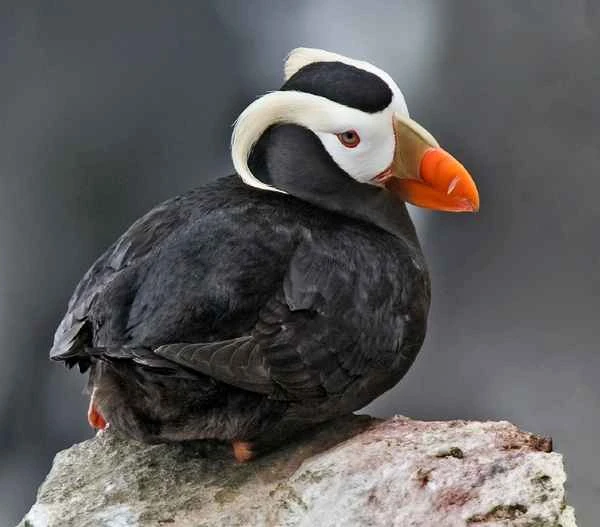
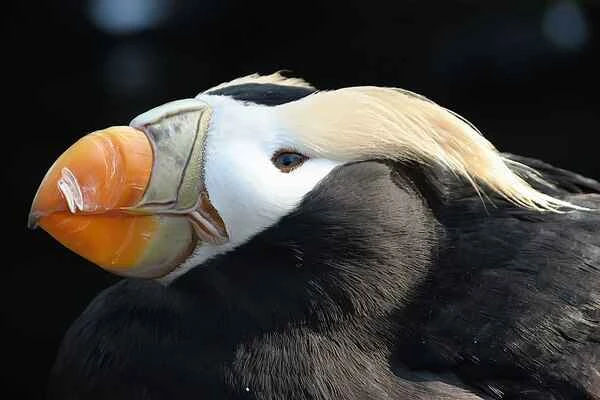
Its all-black body is complemented by a white face and golden head feathers, along with a large, bright orange beak.
Detailed introduction
Table of contents
Introduction to Puffin
physical characteristics
Body shape and weight
Colorful feathers
Habitat and distribution range
What do they eat? They're expert hunters!
Reproduction and nest building
Migratory habits
Natural enemies and threats
natural predators
Environmental crisis
Preserve the status quo
Interesting little habits
1. Introduction to Puffins
The tufted puffin, scientifically known as *Fratercula cirrhata* , gets its name from the white feathers on its face and the yellow feathers on its head. This bird lives in the cold waters of the North Pacific Ocean , found from Alaska to Japan . Not only are they beautiful, but they also possess remarkable survival skills, making them an indispensable part of the marine ecosystem.
2. Physical characteristics
Body shape and weight
Although the puffin isn't very big, its personality and colors are impressive!
Height : Approximately 35–38 cm
Wingspan : Approximately 53–61 cm
Weight : Approximately 700–900 grams
Despite their small size, their body structure is perfectly suited for diving and survival in cold climates.
Colorful feathers
The plumage of a puffin changes significantly with the seasons:
Summer : Its all-black body, white face, golden head feathers, and bright orange beak make it very eye-catching.
In winter : the feathers become dull, the color of the beak is no longer bright, and even the "yellow feathers" on the head will fall off, making it look much more low-key.
This seasonal "makeover" is intended to better attract a spouse.
3. Habitat and distribution range
The tufted puffin is a typical oceanic bird , spending most of its time at sea.
Breeding grounds : They prefer to nest on rocky cliffs and remote islands in the North Pacific, such as Alaska , Oregon , and the Kamchatka Peninsula .
Winter distribution : In winter, they migrate to open seas, and can even appear in the waters of California or Hokkaido, Japan .
These places provide abundant food resources and a safe breeding environment.
4. What do they eat? Master predators!
Puffins are known for their hunting skills and prefer to eat the following foods:
Small fish : such as baby eels, herring, and silver cod.
Squid : If they encounter them, puffins will definitely not let them go.
Crustaceans : They also occasionally eat shrimp or crab.
Diving hunting skills
They use their wings to propel themselves underwater, swimming as if they are "flying".
It can dive to a depth of 60 meters and hold its breath for more than a minute !
Its mouth is uniquely designed, capable of holding up to 10 small fish horizontally at the same time, storing food for their babies.
5. Reproduction and Nest Building
The breeding season is a "social season" for puffins, during which they display remarkable loyalty and intelligence:
Lifelong partners : Once they pair up, they usually remain monogamous.
Nesting sites : They prefer to dig holes in the soil or use rock crevices, and often build nests together with large groups of their kind.
Egg-laying pattern : Only one egg is laid at a time, making each breeding cycle extremely important.
Parenting method : Parents take turns incubating the eggs for 45 days and feeding the chicks until they are about 6–7 weeks old and can fly out of the nest.
The baby puffins leave their nests at night to avoid predators and swim directly to the sea.
6. Migratory Habits
Puffins migrate seasonally each year:
During the breeding season, they gather on the islands, but disperse into the open sea once the season ends.
They can fly thousands of kilometers, saving energy by relying on wind and ocean currents.
7. Natural enemies and threats
natural predators
Puffins need to be careful not only on land, but also at sea:
Land predators : Rats, foxes, and raccoons will steal their eggs and chicks.
Aerial predators : Eagles, seagulls, and owls may attack adult puffins.
Marine predators : Seals and even occasionally killer whales may hunt them.
Environmental crisis
Climate change : Warming oceans are affecting fish populations, leading to food shortages for them.
Pollution issues : Oil spills and marine plastics threaten their survival.
Overfishing : Humans have caught too many small fish, which has also put puffins in competition for food.
8. Preserve the status quo
Although the tufted puffin is listed as a species of least concern , its population is declining in some areas.
Protecting breeding grounds and eliminating invasive species are the main measures at present.
Many other organizations are also monitoring fish resources to ensure ecological balance.
9. Interesting little habits
"Sea Parrot" : This nickname is perfect for them because of their bright beaks and lively personalities.
Diving experts : They swim very nimbly underwater, a far cry from their clumsy movements on land.
Seasonal "face change" : After the breeding season ends, their brightly colored beaks fall off, like a "mask" they've worn for a year.
Long-lived birds : Puffins can live up to 20 years , longer than many other birds.
10. Why are puffins important?
Puffins play an important role in marine ecosystems:
Key to the food chain : They are both predators and food for other organisms, balancing the marine ecosystem.
Climate change indicator : Changes in puffin populations and habits often reflect the health of the marine environment.
Summarize
Puffins are masterpieces of nature, both fascinating and intelligent, playing a vital role in the complex marine ecosystem. From their agile diving skills to their captivating appearance, these little birds are testament to the wonder and diversity of nature. Protecting puffins is protecting our marine home.
Frequently Asked Questions
Puffin Frequently Asked Questions (FAQ)
1. What are the differences between a tufted puffin and a common puffin?
The biggest differences between the tufted puffin and the Atlantic puffin lie in their appearance and distribution area:
Appearance : The tufted puffin has a tuft of golden feathers on its head and a large, brightly colored beak, while the common puffin has a simpler face color and a smaller beak.
Distribution : Puffins live along the North Pacific coast, such as in Alaska and Japan, while common puffins are mainly distributed in the North Atlantic.
2. Why are the beaks of puffins so brightly colored?
The bills of puffins become particularly brightly colored during the breeding season, a way of attracting mates. The vibrant coloration helps them stand out in a large flock, demonstrating their health and reproductive ability. After the breeding season, the bill color fades.
3. Why are puffins called "ocean architects"?
This is because tufted puffins are highly skilled at nest building. They choose mud burrows on cliff faces, dig their own safe "homes," and carefully protect the eggs or chicks inside. Their cooperative group work and nest-building abilities are truly a marvel of nature!