Basic Information
Scientific classification
- Chinese name: Lion Tiger
- scientific name:
- Order: Carnivora
- Genus and species: Liger
Vital signs data
- Body length: 3.6 meters
- Weight: 400kg
- Lifespan: 20-25 years
Significant features
Artificial hybridization
Distribution and Habitat
These are artificially hybridized species, and therefore do not exist in nature.
Appearance
Head: Ligers typically have large heads that combine the mane of a lion with the stripes of a tiger.
Coat color: The coat color is mainly golden yellow, and there are often some tiger stripes on the back, but they are not as conspicuous as tiger stripes.
Body: The body is strong and large, with thick and powerful limbs, exhibiting mixed characteristics of a lion and a tiger.
Detailed introduction
The liger, a hybrid of a male lion and a female tiger, has become a star in the animal kingdom due to its unique size and appearance. With its massive size and imposing presence, the liger is often considered "the world's largest big cat." However, its existence has not only been awe-inspiring but has also sparked numerous discussions regarding ethics, reproduction, and health. This article will provide a comprehensive overview of the liger, from its history, size, reproduction, health issues to ethical controversies, taking you deeper into the world of this mysterious hybrid animal.
Table of contents
Definition and characteristics of liger
The size and appearance of a liger
Reproduction and health issues of ligers
Natural enemies and ecological roles of ligers
The cultural influence and public perception of ligers
Ethical Controversies and Protection Issues of Ligers
7. Liger Medical Research: Exploring the Effects of Hybridization on Health
8. Applications of the liger in veterinary medicine
9. The Importance of Ligers in Medical Research
1. Definition and characteristics of a liger
A liger is a hybrid offspring of a male lion and a female tiger, belonging to the "hybrid feline" family. Ligers typically exhibit mixed characteristics of both lions and tigers, and are larger than either parent. Unlike other hybrid species, ligers do not exist in the wild; they can only be bred in captivity.
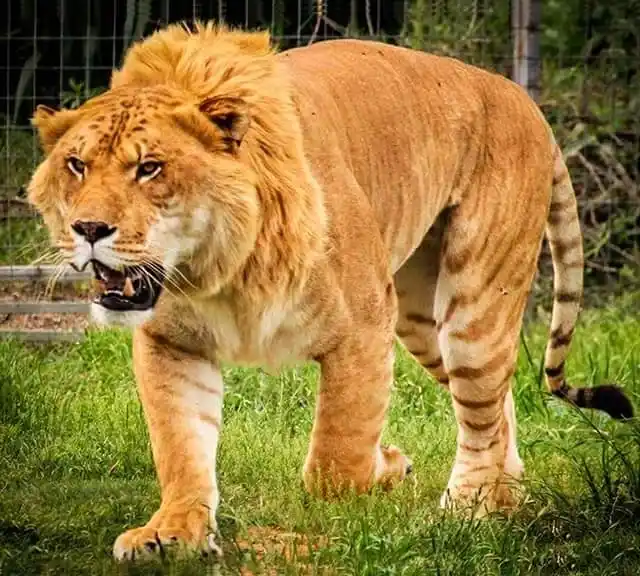
Features:
Size : The liger is currently the largest cat species in the world. Adult males can reach a length of 3.6 meters and weigh more than 400 kilograms.
Fur : Their fur is usually golden yellow with stripes similar to those of a tiger.
Temperament : Ligers are docile and usually do not exhibit the same aggressiveness as their parents, but they still retain the hunting instincts of felines.
2. The size and appearance of a liger
Body type:
Ligers are enormous, the largest of all felines. Adult male ligers can reach 12 feet (about 3.6 meters) in length, much longer than a typical male lion or tiger. They can weigh approximately 400 to 500 kilograms, twice the weight of a male lion or tiger. Female ligers are relatively smaller, but still larger than a typical female lion or tiger.
appearance:
Head : Ligers typically have large heads that combine the mane of a lion with the stripes of a tiger.
Coat color : The coat color is mainly golden yellow, and there are often some tiger stripes on the back, but they are not as conspicuous as tiger stripes.
Body : The body is strong and large, with thick and powerful limbs, exhibiting mixed characteristics of a lion and a tiger.
Differences from parents:
Ligers are often larger than their parents because they inherit the best traits from both, especially in terms of size. Lions typically have a strong sense of territory, while the independence of tigers is also reflected in ligers, creating a unique personality.
3. Reproduction and health issues of ligers
Reproduction:
Liger breeding is usually controlled because lions and tigers do not often mate in the wild. Ligers typically reproduce through artificial insemination or human-assisted mating. Genetic differences between female tigers and male lions limit the fertility of hybrid offspring; male ligers are generally infertile.
Health issues:
As a hybrid species, ligers may face several genetic issues. The biggest health problem is the stress their enormous size puts on their bones and internal organs. For example, excessive weight can lead to joint problems and even shorten their lifespan. Male ligers are almost infertile, which is another health concern. Furthermore, hybrid genes can cause growth problems, particularly stunted growth or overgrowth.
Breeding Challenges:
Because males are infertile, liger breeding usually relies on artificial means, and their health is often inferior to that of purebred lions and tigers. Many zoos choose to invest more resources in the conservation of purebred animals rather than in the breeding of hybrid species.
The age of ligers relates to their lifespan and growth rate. Here are some relevant details:
1. Average lifespan of a liger
Ligers typically have a shorter lifespan, around 20 to 25 years. This is similar to the lifespan of their parents (lions and tigers), who live approximately 12 to 16 years in the wild and up to 20 years in captivity. However, their lifespan may be affected by their larger size and the potential health problems resulting from their hybrid genes.
2. The growth rate of liger
Ligers grow exceptionally rapidly. In the first few months after birth, they experience a rapid growth phase, particularly in weight and length. Compared to other felines, ligers grow faster than lions and tigers, typically reaching adult size between two and three years of age. In zoos, ligers generally show a significant size advantage around one year of age, but their weight continues to increase.
3. The relationship between health and lifespan
While ligers are enormous, this also leads to health problems, particularly related to their joints, bones, and cardiovascular system. These issues can affect their lifespan. Overgrowth can cause premature aging or health problems, and even reduce their quality of life. Therefore, although ligers can theoretically live to be over 20 years old, in reality, many ligers die prematurely due to health problems.
4. Differences between captive breeding and wild rearing
In zoos or artificial environments, ligers typically have long lifespans because they receive medical care and food security, whereas they are not common in the wild. If ligers were released back into the wild, their survival would be limited by habitat constraints and potential predation pressure, potentially resulting in a shorter lifespan.
The average lifespan of a liger is 20 to 25 years, but due to their large size and genetic issues, many ligers may face health problems at a young age, thus shortening their lifespan. In good captive environments, their lifespan may be close to that of their parents, but many still die prematurely due to health problems.
4. Natural enemies and ecological roles of ligers
Ligers are the product of artificial hybridization and therefore do not exist in the wild. They typically live in zoos or private parks, where they do not face any real predators. However, if we assume that ligers lived in the wild, they might face the following challenges:
Other predators , such as leopards and wild dogs, may compete with them for food and territory.
Habitat pressure : Large predators require vast habitats, and the liger's massive size may lead to resource shortages.
However, since ligers have never lived in the wild, their ecological role is more limited to captive environments, primarily serving as objects of human observation.
5. The cultural influence and public perception of ligers
The liger's enormous size and distinctive appearance have made it a symbol in popular culture. The appearance of a liger character in the 2004 film *Napoleon Dynamite* further cemented the animal's place in the public consciousness. Many people have developed a strong interest in this extraordinary creature, especially in zoos and wildlife parks.
Furthermore, ligers are displayed as "super species" in zoos, attracting large numbers of visitors. This makes them a unique symbol in the cultural and entertainment sphere.
6. Ethical Controversies and Protection Issues Regarding Ligers
Ethical Controversy:
The breeding and captivity of ligers has sparked widespread ethical controversy. Some animal rights organizations argue that breeding such unnatural hybrids offers no real conservation benefit and may even negatively impact animal health and well-being. There is a general consensus that zoos and wildlife sanctuaries should focus on protecting endangered species, not creating these hybrids.
Protection issues:
The existence of ligers also exposes the contradictions in modern zoos' approach to species conservation. While some zoos claim that breeding ligers raises public awareness of felines, many argue that these animals lack conservation value and sufficient natural habitat. Therefore, animal rights activists are calling for zoos and research institutions to dedicate more effort to restoring wild populations and saving endangered species.
7. Liger Medical Research: Exploring the Effects of Hybridization on Health
The liger, a hybrid offspring of a male lion and a female tiger, has attracted global attention due to its enormous size and unique genetic characteristics. Beyond its striking appearance, the liger also holds significant value in scientific research, particularly in medicine. Its hybrid nature offers numerous intriguing research opportunities in genetics, physiology, and hybrid chemistry. This article will delve into the role of the liger in medical research and its impact on health.
Genome composition and hybridization characteristics of ligers
A liger is the offspring of a male lion ( Panthera leo ) and a female tiger ( Panthera tigris ), possessing a unique genetic makeup. Lions and tigers belong to different species, and their genes differ in many ways. When they interbreed, a unique gene combination is produced, creating the liger, a hybrid animal. Due to this hybridization, ligers typically exhibit characteristics such as larger size and temperament different from purebred lions and tigers.
The most striking characteristic of ligers is their gigantism . Ligers can reach 12 feet (approximately 3.7 meters) in length and weigh around 900 pounds (approximately 400 kilograms), significantly larger than either parent. This difference in size is attributed to the interaction of growth genes from lions and tigers. Lions have slower growth genes, while tigers have very active ones; therefore, ligers inherit the interaction of these two genes, resulting in their enormous size.
The genetic study of ligers has provided new insights into growth regulation and offered important information for understanding the effects of hybridization on body size, metabolism, and other aspects.
Health problems and medical research of ligers
While ligers are admired for their enormous size, their hybrid genetics have also brought about some health problems. The health of ligers has attracted widespread attention in the medical field because they are often more susceptible to certain diseases than purebred lions and tigers. Below are some of the major health problems faced by ligers and directions in medical research:
Heart problems
Ligers , due to their enormous size, are prone to heart disease , particularly cardiomyopathy . This condition causes the heart to weaken and enlarge, making it unable to pump blood effectively. Heart problems are relatively common in ligers , possibly related to their massive size. Medical researchers are studying liger heart disease in an attempt to uncover the causes and physiological mechanisms of this size-related heart disease.
Male infertility
Another striking characteristic of ligers is that male ligers are typically infertile . This means that male ligers cannot reproduce, while female ligers can. This difference in fertility has sparked research in the medical community into the reproductive issues of hybrid animals . Reproductive problems in hybrid animals are often related to genetic incompatibility between different species. Researchers are attempting to use liger reproductive studies to reveal the impact of hybridization on fertility.
genetic diseases
Due to their hybrid genetic characteristics, ligers are often more susceptible to certain genetic diseases than purebred lions and tigers. For example, ligers may face health problems related to bones and the immune system. Studying these diseases helps scientists gain a deeper understanding of the impact of genetic diversity and hybrid vigor on animal health. Research on liger genetic diseases can provide the medical community with important information for gene management in other animals.
8. Applications of the liger in veterinary medicine
The liger 's unique size and health issues make it a subject of study in veterinary medicine . Veterinarians treating ligers require different techniques than those used for treating ordinary lions and tigers. Due to their enormous size and strength, veterinarians must exercise extreme caution when administering anesthesia, surgery, and treating diseases.
Veterinarians need to understand the medical characteristics of lions and tigers to better care for ligers . Their nutritional, exercise, and medical needs differ from those of purebred lions and tigers, thus requiring more specialized treatment plans. Veterinarians also collaborate with biologists and geneticists to ensure that ligers receive the best possible medical care.
Ethical and Conservational Significance of the Liger
The breeding of ligers has sparked widespread discussion about ethical issues . Some animal rights organizations argue that hybrid animal breeding could lead to a loss of genetic diversity, and that these animals are unable to survive in the wild. Therefore, breeding ligers could have adverse effects on animal welfare. Furthermore, ligers often face health problems and may suffer as a result.
However, some argue that liger research can provide valuable data for science, particularly in genetics and disease research . The health problems of ligers help us better understand the effects of genetic mixing on species. While the existence of ligers may raise ethical concerns, their contributions to medical research are undeniable.
The dual role of ligers in medical research
Ligers hold a special place not only in zoology but also offer a unique perspective for medical research. By studying their genetic makeup , health issues , and fertility , scientists can gain crucial information about genetics, disease mechanisms, and the health effects of hybridization. While liger breeding raises ethical concerns, they provide a valuable resource for medical research, helping us to better understand the complexities of life sciences.
As science advances, research on ligers may reveal more secrets about genetics, disease, and species reproduction, bringing deeper medical and biological insights.
9. The Importance of the Liger in Medical Research
1. Genetic makeup of ligers
A liger is the offspring of a male lion and a female tiger, its genetic structure incorporating genes from two different species, exhibiting their distinct biological characteristics. One of the most striking features of a liger is its enormous size; they are typically much larger than purebred lions or tigers. This extreme increase in size is known as "gigantism." Scientists believe that the liger 's increased size is a result of the interaction of growth-regulating genes between lions and tigers.
Key research directions:
Gene interactions : The enormous size of ligers is closely related to the gene interactions between lions and tigers, and researchers are using ligers to study the role of growth-regulating genes.
The role of growth hormone : The size of ligers is closely related to their growth hormone regulatory genes, which provides clues for disease research in the medical field, such as diseases related to growth hormone.
2. Health problems of ligers
Despite their enormous size, ligers also face numerous health challenges. Unlike purebred lions and tigers, ligers , being hybrids, often exhibit genetic health problems.
Major health problems:
Heart problems : Ligers are more prone to heart disease, especially dilated cardiomyopathy , a condition that weakens and enlarges the heart muscle, which can lead to heart failure in severe cases.
Skeletal problems : Due to the enormous size of ligers , their bones and joints are subjected to great stress, making them prone to skeletal malformation and joint problems.
Reproduction issues : Male ligers are typically infertile , a common phenomenon in hybrid animals. While female ligers can reproduce, male ligers are generally unable to produce offspring.
3. The medical research contributions of ligers
The study of ligers has provided us with valuable data on the genetics, health issues, and growth mechanisms of hybrid animals. Through research on liger genes, health problems, and developmental mechanisms, the medical community can better understand some biological issues related to gene regulation, disease occurrence, and growth.
Key medical research:
The relationship between genes and health : The enormous size and predisposition to heart disease in ligers provide a natural experimental ground for research on growth hormone regulation and cardiovascular disease. Scientists are studying these characteristics to explore how gene regulation can be used to address similar human diseases.
Hybridization and Health Issues : The health issues of ligers allow researchers to better understand the impact of hybridization on the health of organisms, particularly how it affects physiological functions such as growth and the immune system.
4. Applications of ligers in veterinary medicine
The existence of ligers is also of great significance to the field of veterinary medicine. Due to their enormous size, ligers require specialized medical care that differs from that of regular lions or tigers. These special needs include anesthesia, surgery, and disease treatment.
Challenges in Veterinary Medicine:
Anesthesia and surgery : The large and strong size of ligers makes anesthesia and surgery more complex, and veterinarians must use different anesthetic dosages and methods to ensure the safety of the operation.
Special medical needs : Ligers require special diet and exercise programs for health management to avoid health problems caused by being overweight or too large.
5. Ethical discussions and protection issues concerning ligers .
While ligers have provided valuable scientific data for medical research, their existence has also raised ethical and animal welfare questions. Because ligers are not native to the wild, their breeding typically takes place in zoos or private facilities, sparking debate about whether hybrid animals should exist at all.
Ethical issues:
Animal welfare : Critics argue that ligers were bred purely for entertainment and scientific research, and that the health problems of these hybrid animals make their survival even more difficult.
Loss of genetic diversity : Breeding ligers may lead to a loss of genetic diversity because they cannot provide genetic resources for wild populations of lions or tigers.
Conservation and breeding issues:
Because ligers typically cannot survive in the wild, the value of their breeding in terms of animal conservation and species preservation has been questioned. Conservation organizations are calling for greater attention to the protection of wild species, rather than the creation of artificial hybrids.
The Dual Role of Ligers in Medical Research
As a hybrid offspring of lions and tigers, ligers have not only attracted widespread attention in zoology but have also made significant contributions to medical research. By studying ligers ' genes, health problems, growth mechanisms, and reproductive disorders, scientists have been able to explore knowledge about growth regulation, genetic diseases, and heart health. Furthermore, the existence of ligers raises ethical and conservation issues, requiring us to find a balance between scientific research and animal welfare. In short, the role of ligers in medical research goes far beyond showcasing their enormous size; their inspiration and contributions to the scientific community should not be underestimated.
in conclusion
As a product of artificial hybridization, the liger, despite attracting considerable attention from audiences and scientists due to its massive size and unique appearance, has also sparked considerable controversy. Both ethically and in terms of health, the breeding and conservation of ligers present numerous challenges. However, as a cultural symbol and a subject of scientific research, the liger still holds a unique place in zoos and the entertainment industry. It is hoped that with increased research and attention, ligers can be managed in a more rational manner, leading to a deeper understanding of animal conservation.
Frequently Asked Questions
1. What is a liger?
A liger is a hybrid offspring of a male lion and a female tiger, possessing characteristics of both species. They are enormous, typically larger than either of their parents. Ligers can exceed 3 meters in length and weigh up to 400 kilograms or more.
2. Why are ligers so big?
The liger's enormous size is primarily due to inheriting genes from both lions and tigers. Lions are social animals and are relatively large, while tigers are solitary and strong. This genetic mixing results in ligers exhibiting the size advantages of both animals, making them larger than either a single lion or tiger.
3. Can ligers survive in the wild?
Ligers are captive-bred species and therefore do not exist in the wild. If they were to live in the wild, they would likely face competition for resources and threats from other predators. However, ligers typically live only in zoos or private parks, thus avoiding the survival challenges of the wild.
4. Can ligers reproduce?
Typically, male ligers are infertile and unable to reproduce. While some female ligers may be able to reproduce, their reproductive capacity is limited due to the significant genetic differences between lions and tigers, thus their existence often depends on human intervention.
5. What health problems do ligers have?
As hybrid species, ligers may face several health problems. The most common health issues include skeletal problems due to their excessive size, joint pain, and certain genetic defects. Furthermore, ligers typically have shorter lifespans, and many face health challenges due to overgrowth or genetic issues.