Basic Information
Scientific classification
- Chinese name: Common shrew
- Scientific name: Sminthopsis murina
- Classification: Rodentia
- Family: Marsupialidae; Genus: Marsupialis
Vital signs data
- Body length: Adults typically have a head and body length of about 7–10 cm and a tail length of about 7–10 cm, which is similar to their body length.
- Weight: Weight is mostly around 15–30 grams, and is significantly affected by the season and physical condition.
- Lifespan: In the wild, it is mostly around 1-2 years, with a short lifespan and rapid generational turnover.
Significant features
Small marsupials, common in southeastern Australia, are nocturnal, agile, and rely on grass and leaf litter for cover. They feed mainly on invertebrates such as insects and spiders and have a rapid generation cycle.
Distribution and Habitat
It is mainly distributed in southeastern Australia, inhabiting sparse forests, grasslands, heather thickets and farmland edges, and relies heavily on thick grass, leaf litter, fallen trees and piles of stones for daytime hiding and escape routes.
Appearance
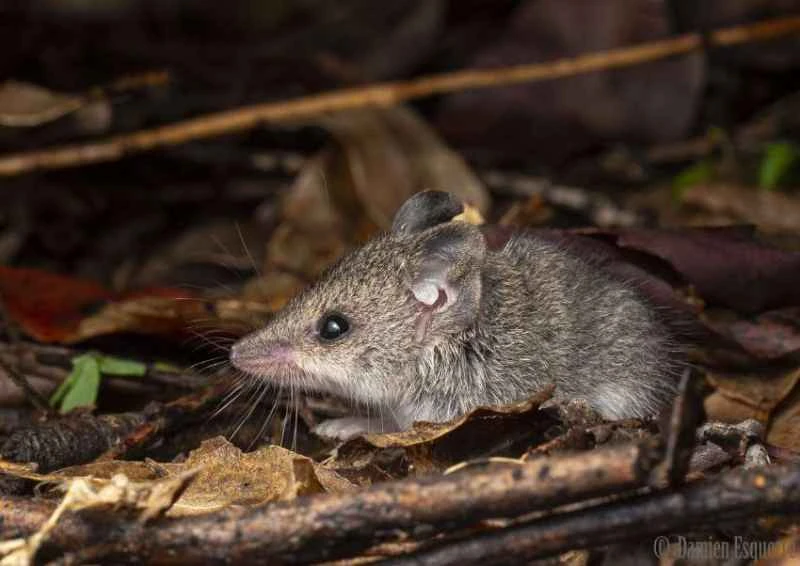
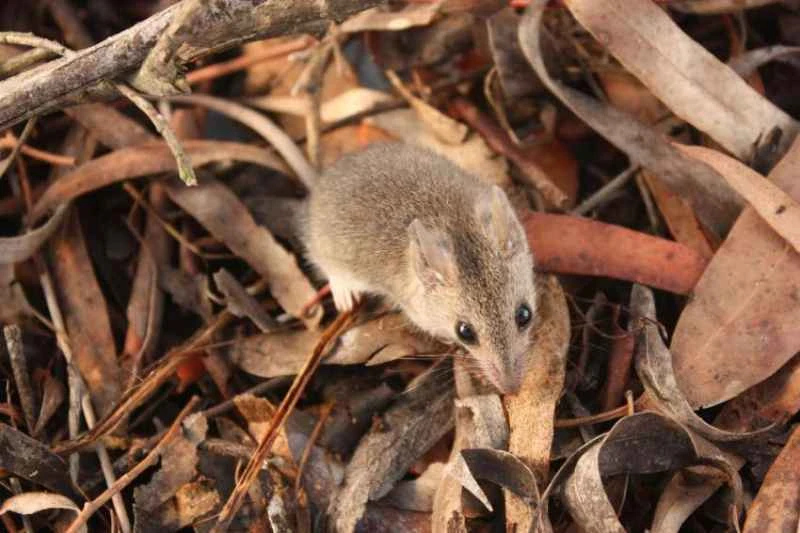
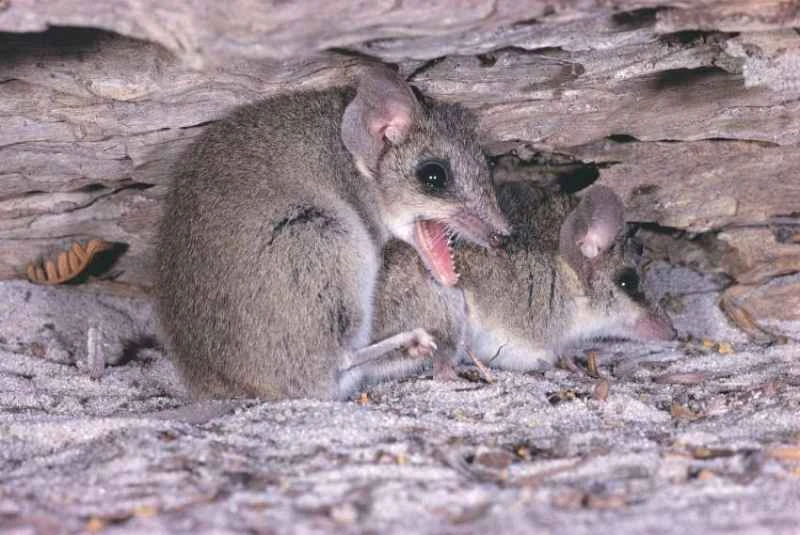
It is extremely small in size, with a slender snout, thin and erect ears, and relatively large eyes. Its back is grayish-brown to brownish-gray, and its belly is light-colored. Its tail is slender and long, often similar in length to its body, and sometimes it can store fat at the base of its tail. Its sharp teeth are suitable for catching insects.
Detailed introduction
The Common Dunnart (scientific name *Sminthopsis murina *) is a small, carnivorous marsupial commonly found in southeastern Australia, belonging to the family Sminthopsidae and the genus *Sminthopsis*. It is small and agile, mostly active at dusk and night, resting during the day in grass, fallen logs, rock crevices, or piles of leaves. The Common Dunnart primarily feeds on insects and other small invertebrates, but will also consume small amounts of small vertebrates or carrion, making it an important nocturnal insect predator at the edges of woodlands, grasslands, and farmlands.
Unlike rodents, marsupial shrews are marsupial mammals, with females possessing a pouch or pouch folds (the appearance varies considerably between individuals and at different reproductive stages). They have short lifespans, reproduce rapidly, and are highly dependent on habitat surface structures (grass, dead branches and leaves, fallen trees). Therefore, local populations may fluctuate when fire frequency changes, excessive clearing occurs, or pressure from invasive predators increases.
Classification and nomenclature
The Common Dunnart belongs to the class Mammalia, superorder Marsupia, order Dasyuromorphia, family Dasyuridae, and genus Sminthopsis . The English name "dunnart" is a common name used in Australia, referring generally to small marsupials, primarily feeding on insects, including those in the genus Sminthopsis. In Chinese, it is often translated as "袋黩" (dài shǒu). In some regions, it may also be called "灰袋黩" (huī dài shǒu) or "灰褐袋黩" (huī hè dài shǒu) (depending on the source translation), but for the species section, it is recommended to consistently use "Common Dunnart".
Appearance features
The common marsupial shrew is very small, resembling a "pointed-snouted mouse," but more like a miniature version of a marsupial predator: a long, slender snout, large eyes, and thin, erect ears. Adults typically have a head-to-body length of about 7–10 cm and a tail length of about 7–10 cm, with the tail often being similar in length to the body. Weight is generally around 15–30 grams (depending on sex, season, and body condition). The back is mostly grayish-brown to brownish-gray, while the underside is lighter, appearing creamy white or light gray.
The tail is usually quite thin, and some individuals can store fat at the base of the tail (more noticeable during seasons when food is plentiful), serving as a short-term energy reserve. The limbs are slender with sharp claws, adapted for rapid running and burrowing into grass roots and leaf litter to hunt prey. The teeth are sharp, with well-developed canines and premolars, reflecting their primarily animal-based diet.
Distribution range and habitat
The common marsupial shrew is mainly distributed in southeastern Australia (commonly found in New South Wales, Victoria, and surrounding areas), and can be found relatively stably in suitable habitats. It prefers open or semi-open woodlands, grasslands, heather thickets, sparse forests, residual vegetation zones at the edges of farmland, and nature reserves near cities.
It has a high demand for "surface cover": thick grass, leaf litter, fallen trees, piles of stones, or the bottom of bushes provide it with daytime hiding places, nesting materials, and escape routes from predators. Frequent clearing of the ground, heavy grazing, or frequent burning reduces cover, making it more vulnerable to predation by cats, foxes, and birds of prey, thus affecting its local population.
Lifestyle Habits and Behaviors
Common marsupial shrews are mostly active at dusk and night, often moving quickly across the ground, "sneaking" along grass roots, the edges of fallen logs, and under leaf litter to search for prey. During the day, they usually rest in their nests, which may be located deep in grass, under fallen logs, in rock crevices, or in abandoned caves, lined with dry grass, leaves, and plant fibers for insulation.
They are very agile and will quickly burrow into cover or remain stationary when threatened. The common marsupial shrew has a relatively small range, but will frequently patrol multiple feeding sites at night. They rely on their sense of smell and hearing to locate prey, and when hunting, they will suddenly pounce and swiftly bite with their sharp teeth.
feeding habits
The common marsupial shrew primarily feeds on insects and other invertebrates, including beetles, crickets, ants, spiders, and moth larvae. It may also occasionally feed on small lizard larvae, chick remains, or carrion. They have a high metabolic rate and require frequent feeding. In cold or food-scarce conditions, they may conserve energy by briefly lowering their body temperature and activity (similar to a short-term "sluggish/paralyzed" state), the specific manifestations and extent of which vary depending on the individual and the environment.
Reproduction and life cycle
Breeding seasons are typically related to climate and insect resources, and are more active in spring and summer in many regions. The gestation period for females is short (about two weeks), and they can give birth to multiple offspring per litter (commonly about 6–10, depending on individual differences). The offspring are extremely small at birth, attached to nipples and continuing to develop within the pouch or the skin folds at the edge of the pouch; they then undergo the process of emerging from the pouch, following their mother, and gradually becoming independent.
Common marsupial shrews have a relatively short lifespan, typically completing their growth, reproduction, and generation cycle within 1–2 years in the wild. Due to this rapid generational turnover, the population responds more quickly to changes in rainfall, food abundance, fire, and predation pressure.
Relationship with humans
Common marsupials pose no direct threat to humans and actually help control insect populations. They sometimes appear in urban fringe parks and gardens near shrubbery, but are usually very well hidden and difficult to spot. Reducing the roaming of nocturnal cats, preserving shrubbery and leaf litter in gardens, and avoiding excessive clearing of ground cover can help maintain these native small marsupials around cities.
Protecting the status quo and threats
The common marsupial shrew is generally assessed as Least Concern (LC) or not a critically endangered species, but local populations may still be affected by a variety of factors: habitat clearing and fragmentation leading to reduced surface cover; frequent or high-intensity wildfires altering the understory structure; predation by invasive predators (feral cats, foxes); and habitat isolation caused by roads and urban expansion.
The focus of conservation and management is on maintaining surface structure and ecological connectivity: preserving fallen trees, litter layer and understory vegetation, using fire management strategies that are more conducive to understory restoration, controlling feral cats and foxes around key habitats, and understanding the response of different populations to climate and fire changes through long-term monitoring.
Frequently Asked Questions
Q1: Is the common marsupial shrew a mouse?
No. Marsupial shrews are marsupial mammals, and females have a visible pouch or skin folds along the edge of the pouch; while mice belong to the rodent class. They are similar in appearance mainly because of their small size and terrestrial activity, but their classification and physiology differ greatly.
Q2: What do common marsupials mainly eat?
They primarily feed on insects and other invertebrates, such as beetles, crickets, ants, spiders, and moth larvae, and may also opportunistically feed on small vertebrate larvae or carrion.
Q3: Why do they need a layer of fallen leaves and grass?
These surface structures provide concealed passageways, nesting materials, and refuge spaces, reducing the risk of being preyed upon by cats, foxes, and birds of prey. They are also often the richest areas for prey (insects).
Q4: What threats does the common marsupial shrew face?
The main causes are habitat clearing and fragmentation leading to reduced cover, frequent or high-intensity wildfires altering the understory structure, and increased predation pressure on feral cats and foxes; road and urban sprawl also increase the risk of isolation and death.