Basic Information
Scientific classification
- Chinese name: Imitating an octopus
- scientific name:
- Classification: Molluscs
- Genus and species: mimics octopus
Vital signs data
- Body length:
- weight:
- life:
Significant features
Master of Disguise in the Ocean
Distribution and Habitat
It is widely distributed in the Indo-Pacific region, especially in the waters of Indonesia, the Philippines and Malaysia.
Appearance
Detailed introduction
The mimic octopus (scientific name: *Thalumoctopus mimicus *) is a small but extremely intelligent marine creature, renowned for its amazing camouflage abilities. It can mimic a variety of marine animals by changing its shape, color, and behavior, thus avoiding predators and obtaining food. This article will provide a comprehensive overview of the mimic octopus's size, weight, lifespan, habitat, species, reproduction, diet, predators, the animals it mimics, and some interesting facts, helping readers better understand this unique marine creature.
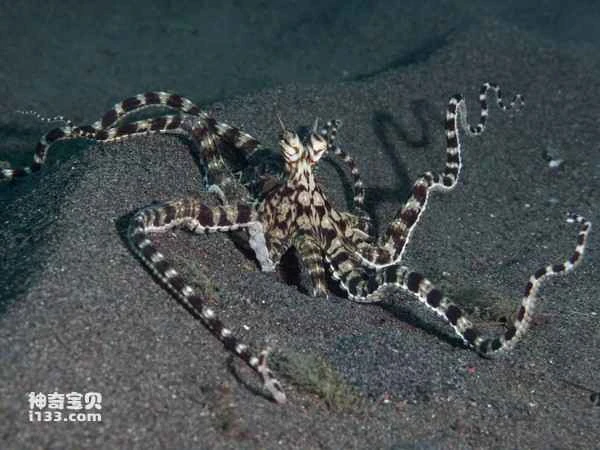
Table of contents
Overview of imitating an octopus
Mimicking the size and weight of an octopus
Mimicking the lifespan of an octopus
Mimicking the habitat of an octopus
Types of octopuses
Mimicking octopus reproduction
Imitating the eating habits of an octopus
Predators that mimic octopuses
Animals that imitate octopuses
Fun facts about imitating octopuses
Summarize
1. Overview of imitating an octopus
The mimic octopus is a small octopus widely distributed in the Indo-Pacific region , particularly in the waters of Indonesia , the Philippines , and Malaysia . It is notable for its unique camouflage abilities, capable of mimicking up to 15 different animals. This ability makes the mimic octopus a highly efficient survivor in the ocean.
2. Imitate the size and weight of an octopus.
Mimic octopuses are typically small, with adults reaching a length of about 60 centimeters (approximately 24 inches) including tentacles. However, their actual body length is about 20 centimeters (8 inches). Mimic octopuses usually weigh around 0.5 kilograms (approximately 1 pound). Despite their small size, their remarkable adaptability and variability give them a strong advantage in the wild.
3. Mimicking the lifespan of an octopus
The mimic octopus has a short lifespan, typically only one to two years . Like most octopuses, its life is filled with rapid growth and reproductive cycles. This short lifespan doesn't hinder its survival abilities; instead, it makes it more reliant on rapid adaptation and camouflage to evade predators and capture prey.
4. Imitating the octopus's habitat
Mimic octopuses inhabit shallow waters , especially at depths of 5 to 20 meters (16 to 66 feet). They typically live on sandy or muddy seabeds, an environment that provides them with excellent cover. Mimic octopuses prefer to hide in caves , crevices , or other concealed places on the seabed, cleverly blending into their surroundings through their unique camouflage techniques to avoid detection by predators.
5. Types of creatures that imitate octopuses
The mimic octopus belongs to the family Octopodidae, but it is not the only octopus with camouflage abilities. While only one species of mimic octopus is currently known, * Thaumoctopus mimicus *, several other species in the octopus family also exhibit similar mimicry behaviors. However, the mimic octopus is the only known octopus species capable of mimicking so many different animals.
6. Mimicking the reproduction of octopuses
The mimic octopus is a semelparous animal , meaning it reproduces only once in its lifetime. During the breeding season, the male seeks out a female and uses a special tentacle called a hectocotylus to transfer a spermatophore to her. The female then lays hundreds of eggs in a secluded location and guards them until they hatch.
Once hatched, the young octopuses (called larvae or egg-hatched larvae ) live independently, immediately beginning their own lives of hunting and escaping predators. The larvae grow rapidly within a few short months after hatching, eventually reaching adulthood.
7. Imitate the eating habits of octopuses
Mimic octopuses are carnivorous , primarily feeding on small fish , crustaceans (such as shrimp and crabs), and other marine invertebrates. They typically capture prey through camouflage and ambush . Mimic octopuses can change their body color and shape to disguise themselves as other harmless or dangerous animals, waiting for prey to approach before swiftly striking and sucking it into their mouths.
In addition, mimicking the octopus, it uses its powerful tentacles to capture prey. These tentacles have suckers that allow it to firmly grasp its prey, preventing it from escaping.
8. Predators that mimic octopuses
Although mimicking octopuses can camouflage themselves to scare away predators, they still face some natural enemies, primarily large fish (such as groupers), sharks , and marine mammals (such as dolphins). These predators may be able to penetrate the mimicking octopus's camouflage and take it as prey.
To cope with these threats, mimic octopuses rely on their unique camouflage abilities to scare away predators. For example, when faced with a threat, a mimic octopus will mimic a lionfish (a fish with venomous spines) or a flatfish to increase its perceived threat and reduce the risk of being preyed upon. If camouflage fails, it can also use ink spray as an escape method.
9. Animals that imitate octopuses
One of the most amazing abilities of the mimic octopus is its ability to imitate up to 15 different animals . Here are some of the common animals it imitates:
Lionfish : Mimicking the octopus, they extend their tentacles to form spiky fins, conveying a threat message to predators.
Flatfish : They mimic the octopus by flattening their bodies, pretending to be flat fish on the seabed to avoid predators.
Crocodile : Imitates an octopus by adjusting its posture to mimic the head and body of a crocodile, pretending to be a larger predator.
Frogfish : By mimicking the octopus, they can also contort their bodies and change the posture of their tentacles to create a frogfish-like appearance.
Crab : It imitates the shape of an octopus by bending its tentacles to confuse predators.
These mimicry behaviors help mimic octopuses gain a survival advantage in the ocean, easily evading predators.
10. Funny stories about imitating octopuses
Mimicry ability : The octopus is considered one of the best camouflage animals in the ocean. It can not only change its shape, but also adjust its color and texture, and even imitate the behavior of different animals.
Short lifespan : Mimicking the lifespan of an octopus, which is typically only 1 to 2 years, its lifespan is short but full of rapid adaptations and survival strategies.
Rapid color change : It mimics the special pigment cells ( pigment cells ) and skin protrusions in the skin of an octopus, which can change color and texture in seconds, allowing it to easily camouflage itself in various environments.
11. Summary
The mimic octopus is one of the most adaptable creatures in the ocean. It mimics other animals by changing its shape , color , and behavior to avoid predators, capture prey, and survive its short lifespan. From its amazing camouflage abilities to its unique behaviors, the mimic octopus is undoubtedly one of the most mysterious and fascinating creatures in the ocean. This article will provide a better understanding of the mimic octopus's biological characteristics and its important role in nature.
Frequently Asked Questions
Mimic Octopus (scientific name Thaumoctopus mimicus ) FAQ
Why is it named after an octopus?
The mimic octopus is renowned for its amazing camouflage abilities, mimicking the appearance and behavior of more than 15 marine creatures, including flounder, sea snakes, lionfish, and sea anemones. This ability helps it evade predators or disguise itself as a dangerous species to scare away enemies.What is the camouflage mechanism that mimics an octopus?
Mimicking octopuses involves altering their body color, shape, and movements to achieve camouflage. They utilize pigment cells in their skin (called melanocytes) to change color, while simultaneously adjusting their body shape and movement to resemble other animals, such as growing into a snake-like form to mimic sea snakes or displaying flippers to mimic flatfish.Where do they mimic the octopus's habitat?
Mimicking octopuses live in shallow waters of the tropical Indian and Pacific Oceans, and are commonly found in Indonesia, Malaysia, and the Philippines. They prefer muddy or sandy bottoms, which provide them with better camouflage.What does an octopus eat?
They primarily prey on small fish, crabs, shrimp, and other small crustaceans. The mimic octopus uses camouflage to approach its prey, quickly capturing it with its tentacles and bringing it to its mouth.What enemies does an octopus-like creature have?
Mimicking the octopus's natural enemies includes large fish, seabirds, and some marine mammals. It scares away predators by camouflaging itself as venomous or threatening creatures (such as sea snakes or lionfish), and will also quickly burrow into the sand to escape if necessary.


