Basic Information
Scientific classification
- Chinese name: Red Kangaroo
- scientific name:
- Classification: Hoof Order
- Family and genus: Red Kangaroo
Vital signs data
- Body length: 2.4m
- Weight: 54-90kg
- Lifespan: 6-8 years
Significant features
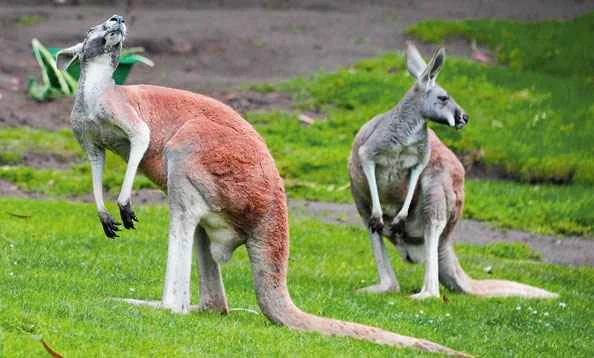
Their strong and powerful hind legs are key to their rapid leaps.
Distribution and Habitat
They are found almost throughout all of Australia, but their main habitats are concentrated in the arid and semi-arid regions of the interior, such as the "Australian Outback" or "wilderness".
Appearance
Strong hind legs, large ears
Detailed introduction
Table of contents
What is a red kangaroo?
Physical characteristics of red kangaroos
Size and weight
Unique features
Habitat and Distribution
Where do red kangaroos live?
Ability to adapt to harsh environments
Diet and foraging habits
Red kangaroo food
Foraging behavior
Life cycle and reproduction
Mating and breeding season
The growth process of cubs
Behavior and Social Structure
social groups
Domination and mating behavior
Red kangaroo predators
Natural predators
Human impact
The current state of red kangaroo conservation
Population change
protection efforts
Interesting facts about red kangaroos
Conclusion: The importance of red kangaroos in the ecosystem
1. What is a red kangaroo?
The red kangaroo (Macropus rufus) is the largest member of the kangaroo family and one of Australia's most iconic animals. They are known for their red or brown fur, robust bodies, and powerful hind legs. Native to Australia, red kangaroos primarily inhabit the arid regions of the Australian outback. Despite their rugged appearance, they play a vital role in maintaining ecological balance.
2. Physical characteristics of the red kangaroo
Size and weight
The red kangaroo is the largest of all kangaroo species. An adult male red kangaroo (also called a "male kangaroo") can reach a length (including its tail) of 2.4 meters (about 8 feet). Males typically weigh between 54 and 90 kilograms, but some exceptionally large males can exceed 100 kilograms. Female red kangaroos are smaller, usually weighing between 18 and 32 kilograms.
Unique features
Red kangaroos have strong, powerful hind legs, key to their rapid leaps. Their tails help maintain balance and provide directional control during high-speed jumps. Their large ears help them detect distant sounds and possess keen hearing, crucial for spotting predators.
3. Habitat and Distribution
Where do red kangaroos live?
Red kangaroos are widely distributed, found almost throughout Australia, but their primary habitat is concentrated in arid and semi-arid inland areas, such as the “Australian Outback” or “wilderness.” These areas have sparse vegetation, low rainfall, and extreme climates. Red kangaroos are highly adapted to this environment, enabling them to search for water and food for extended periods.
Ability to adapt to harsh environments
Red kangaroos possess many unique abilities to adapt to arid environments. They can cope with prolonged droughts by reducing water consumption and can even survive for extended periods without water. Furthermore, they lick their forearms to cool their body through blood vessels, thus keeping them cool in hot weather.
4. Dietary and foraging habits
Red kangaroo food
Red kangaroos are herbivores, primarily feeding on grasses. When grass is scarce, they will also eat leaves, twigs, and some shrubs. When food is plentiful, they will choose tender, nutritious plants. Red kangaroos have a strong selective foraging habit, typically preferring fast-growing, water-rich tender grasses.
Foraging behavior
Red kangaroos typically forage at night or dusk when temperatures are lower, avoiding the daytime heat. They prefer to forage in open grasslands, allowing them to quickly spot potential predators. They usually forage alone, but in areas with abundant food, they occasionally form small groups to forage together.
5. Life cycle and reproduction
Mating and breeding season
The mating season for red kangaroos typically occurs during the summer months, generally from October to March. Male red kangaroos exhibit intense competitive behavior during this season, using physical strength and fighting to win females. Stronger males will mate with multiple females, while smaller males may try to gain opportunities through "stealing mating."
The growth process of cubs
The female red kangaroo has a very unique breeding cycle. After mating, the fertilized egg enters a dormant state until environmental conditions are suitable for reproduction, at which point it begins to develop. The joeys are born very small, barely developed, about the size of a peanut. They crawl into their mother's pouch to continue growing. The joeys typically stay in the pouch for about eight months before gradually leaving and becoming independent.
6. Behavior and Social Structure
social groups
Red kangaroos are social animals, typically living in groups. A group usually consists of females and their young, while adult males remain relatively independent, joining the female group only during the mating season. These groups vary considerably in size, ranging from a few individuals to large groups of hundreds when food and water are plentiful.
Domination and mating behavior
Male red kangaroos compete for mating rights through "boxing" matches. These matches are usually fought between two male kangaroos, who stand on their hind legs and strike each other with their forelimbs. The winner typically gains dominance in the group and mates with more females.
7. The Red Kangaroo's Predators
Despite their large and robust size, red kangaroos still have some natural enemies, especially when they are young or injured. Their main predators include:
Wild dogs (dingoes) : Dingoes are the main predators of red kangaroos. They usually hunt in packs to kill weak, young, or sick kangaroos.
Humans : Humans hunt red kangaroos, especially in some parts of Australia, where kangaroo meat and leather are important economic resources.
Eagles and birds of prey : Large birds of prey, such as golden eagles and bar-headed eagles, prey on young or weak kangaroos.
Snakes : Some large snakes, especially pythons, prey on young kangaroos.
8. The current status of red kangaroo conservation
The red kangaroo's conservation status is relatively stable, and it is not currently considered an endangered species. Australia's kangaroo population is estimated at 50 million, but this number is affected by environmental change, climate factors, and human activities. Nevertheless, red kangaroo numbers often fluctuate significantly, especially during periods of drought or severe habitat destruction.
Although red kangaroos are not currently endangered, their conservation is closely linked to environmental changes. Conservation measures typically focus on maintaining habitat quality, managing hunting activities appropriately, and ensuring the sustainable development of kangaroo populations.
9. Interesting facts about red kangaroos
Powerful jumping ability : Red kangaroos are known for their powerful jumping ability. They can leap 25 feet (about 7.6 meters) in a single bound and reach speeds of up to 56 kilometers per hour for short periods of time.
Communicating with their tails : Kangaroos' tails play an important role in social behavior. They convey emotions or warning signals by wagging their tails or tapping the ground with them.
Lifespan : Red kangaroos typically live 6 to 8 years in the wild, but many do not reach adulthood due to predation or accidents.
10. Conclusion: The Importance of Red Kangaroos in Ecosystems
Red kangaroos play a vital role in Australia's ecosystem. As herbivores, they help control the growth of grasses, preventing overgrowth and maintaining ecological balance. They are also part of the food chain, providing food for predators such as dingos and eagles.
The red kangaroo's ability to adapt to extreme environments demonstrates the resilience of this iconic species. Despite facing challenges such as environmental change and predation, they have adapted through scientific...
Frequently Asked Questions
Where do red kangaroos mainly live?
Red kangaroos are endemic to Australia and are widely distributed in the grasslands, savannas, and deserts of the Australian outback. They are adapted to arid environments, often appearing near water sources, but can tolerate prolonged drought conditions.How big is a red kangaroo?
Red kangaroos are the largest marsupials in the world. Adult males can reach 1.8 meters in height (when standing), with a tail about 1 meter long and a weight of up to 90 kilograms. Females are smaller, usually about 1.1 meters in height and weighing around 35 kilograms.What do red kangaroos eat?
Red kangaroos are herbivores, primarily eating grass and the tender leaves of some shrubs. They especially love nutrient-rich green grass, but will also eat hay or plant roots to obtain moisture during droughts.How do red kangaroos protect themselves?
Red kangaroos primarily defend themselves with their powerful hind legs and tails. When threatened, they can deliver a powerful kick with their hind legs, sometimes even injuring predators. Furthermore, they excel at escaping danger by leaping at speeds up to 60 kilometers per hour, with single jumps covering distances of 8-9 meters.What is the purpose of a red kangaroo's pouch?
The red kangaroo's pouch is crucial for raising its young. Newborn kangaroo babies (called "joeys" or "young kangaroos") are very small, only the size of a peanut, and need to crawl into their mother's pouch to continue developing. The pouch provides a safe environment and milk, and the joey will not start to leave the pouch for short periods of time until it is about 6 months old, but will still depend on its mother until about 8-10 months old.