Basic Information
Scientific classification
- Chinese name: Hedgehog
- Scientific name: Spiny hog, spiky pig, hedgehog rat
- Order: Hedgehogaeformes
- Family: Erinaceinae, Erinaceidae, Mammalia, True blindness, Agnosia
Vital signs data
- Body length: 10-130 cm
- Weight: 600 to 1500 g
- Lifespan: 8-10 years
Significant features
Hedgehogs hibernate in late autumn and don't wake up until the following spring when the temperature is warm enough. Interestingly, hedgehogs snore, and their snoring sounds similar to human snoring.
Behavioral characteristics: Hedgehogs are nocturnal, alert, and aggressive. During the day, they usually hide in secluded places, only becoming active at night to hunt for food. When they sense danger, hedgehogs will curl up into a ball for defense and protection.
Nocturnal animals prefer to build nests and rest in simple environments such as under trees, in rice paddies, bushes, and grass, where they can provide sufficient cover and protection.
Reproductive Behavior: Hedgehogs primarily breed from April to September. Newborn hedgehogs typically don't have spines yet, but they grow them within a few hours. The number of offspring per litter is usually between 1 and 6. The mother hedgehog builds a nest for her young, and once the young are independent, they leave their mother to live independently.
Distribution and Habitat
Hedgehogs are widely distributed, but there are distinct regional distributions among different species, mainly in Europe and Asia. In Europe, the European hedgehog and the Eastern European hedgehog are the main species, while in Asia, the Northeastern hedgehog, the Northern white-breasted hedgehog, and some European hedgehogs are the main species.
Northern white-breasted hedgehogs are mainly distributed in Europe and Russia, such as Italy, Poland, Romania, Turkey, and Ukraine; northeastern hedgehogs are mainly distributed in the Russian Far East, North Korea, South Korea, and China; European hedgehogs originated from parts of Western and Northern Europe and are now mainly distributed in Europe and Central Asia, such as Austria, Belgium, Croatia, Czech Republic, Denmark, Russia, and China; Eastern European hedgehogs are distributed in the Mediterranean region, such as Greece, Turkey, Israel, Syria, and Lebanon.
Hedgehogs are distributed throughout China, primarily in Northeast, Central, East, and South China. Due to their specific requirements for climate and food, hedgehogs are generally more numerous in the south than in the north. The Northeast hedgehog is mainly distributed in Heilongjiang, Jilin, Liaoning, Beijing, and Tianjin; the European hedgehog is distributed in Northeast, North, and East China, such as Zhejiang and Fujian.
Appearance
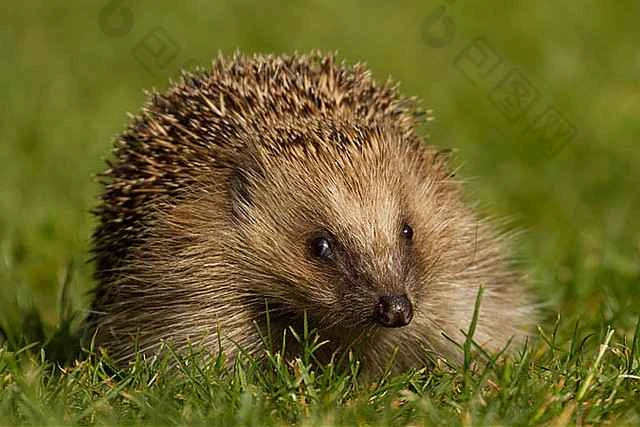
Hedgehogs typically do not exceed 30 centimeters in length and weigh between 600 and 1500 grams, with males being smaller and females slightly larger. Their backs and sides are covered with short, dense spines that erect to form a natural shield for protection when threatened. Hedgehogs have fur on their heads, tails, and bellies, long, pointed snouts, small ears, and short limbs with five toes on both their fore and hind feet, adapted for crawling and curling up. They have between 36 and 44 teeth, all with sharp points, making them ideal for feeding on insects and other prey.
Hedgehogs come in a variety of colors, typically brown, black, white, cream, or a combination of these. Their spines are non-venomous, and their claws are curved and sharp, allowing them to easily grasp and tear food. Hedgehogs have highly developed senses of touch and smell, especially their very long noses, which enable them to accurately locate food sources.
Detailed introduction
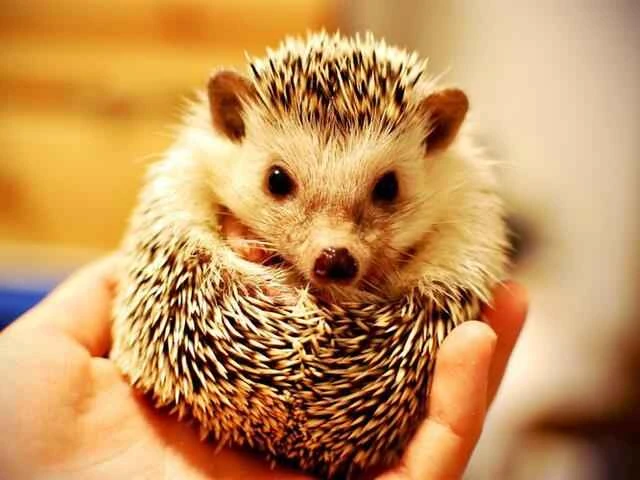
Hedgehogs (scientific name: *Erinaceus *) are the common name for animals in the subfamily Erinaceinae, also known as spiny hedgehogs, spiky pigs, or hedgehog mice. They are best known for the protective spines covering their backs, which they use to curl into a ball for protection when threatened. They are widely distributed in Europe and northern Asia, including northern China and the Yangtze River basin. In the Yangtze River basin, they are colloquially known as " melon-stealing badgers . " No native hedgehog species survive in Australia or the Americas, but the extinct genus *Erinaceus* was once found in North America. Hedgehogs are closely related to shrews (family Sophiidae), while the subfamily Erinaceinae may be a transitional group between the two. Hedgehogs can be divided into 5 genera, containing a total of 18 species. Over the past 15 million years, hedgehogs have undergone relatively little evolutionary change. They range in body length from 10 to 130 cm and weigh between 600 and 1500 g .
Hedgehogs are nocturnal animals, preferring darkness and avoiding light. They are active at night for about 80% of the time, with a range of approximately 1-2 kilometers . Their main diet consists of insects and worms. They possess defensive quills similar to those of porcupines, but unlike porcupines, these quills do not detach. Hedgehogs are resistant to many poisons but not to insecticides. Their main predators are nocturnal carnivores such as minks, owls, and foxes. Hedgehogs hibernate in winter. Hedgehogs are also commonly kept as pets; a common species is the African pygmy hedgehog, a hybrid of the four-toed hedgehog and the North African hedgehog.
Distribution and Habitat
World distribution
Hedgehogs are widely distributed, but there are distinct regional distributions among different species, mainly in Europe and Asia. In Europe, the main species are the European hedgehog and the Eastern European hedgehog, while in Asia, the main species are the Northeastern hedgehog, the Northern white-breasted hedgehog, and some European hedgehogs.
Northern white-breasted hedgehogs are mainly distributed in Europe and Russia , such as Italy, Poland, Romania, Turkey, and Ukraine; northeastern hedgehogs are mainly distributed in the Russian Far East, North Korea, South Korea, and China; European hedgehogs originated from parts of Western and Northern Europe and are now mainly distributed in Europe and Central Asia, such as Austria, Belgium, Croatia, Czech Republic, Denmark, Russia, and China; Eastern European hedgehogs are distributed in the Mediterranean region, such as Greece, Turkey, Israel, Syria, and Lebanon.
China distribution
In China, hedgehogs are mainly distributed in Northeast, Central, East, and South China. Because hedgehogs have high requirements for climate and food conditions, their numbers are generally greater in the south than in the north. Northeast hedgehogs are mainly distributed in Heilongjiang, Jilin, Liaoning, Beijing, and Tianjin; European hedgehogs are distributed in Northeast, North, and East China, such as Zhejiang and Fujian .
Hedgehogs introduced to New Zealand have no natural predators, and their overpopulation has gradually harmed native species . Because their main food source, insects , is insufficient, they have begun to eat snails, earthworms, and bird eggs.
The eradication of roaming hedgehogs has often faced opposition. Starting in 2003, 690 hedgehogs were culled in the Outer Hebrides , while animal welfare organizations attempted to rescue them. However, since the culling ban was passed in 2007, since 2008, captured hedgehogs have no longer been killed but instead returned to the British mainland.
A 2022 study showed that the hedgehog population in rural Britain is declining dramatically, down 30-75% compared to 2000 .
feature
head
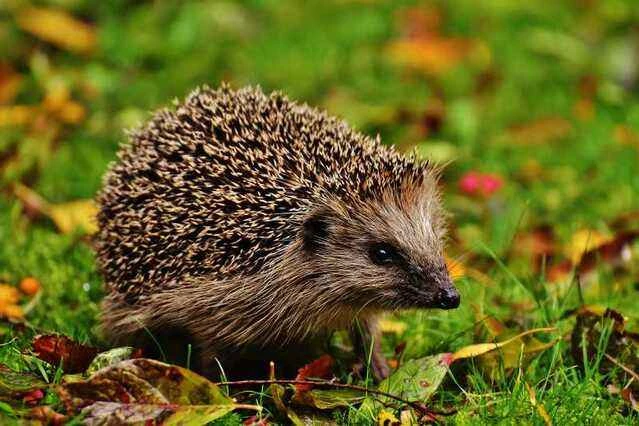
Hedgehogs have long, pointed snouts with two separate incisors and square molars. They have a total of 36-44 teeth, which are sharp and useful for catching insects. Their noses and eyes are black, and their eyes and ears are relatively small, not exceeding the length of their surrounding spines. The hedgehog's head, from the top of its head to its snout, cheeks, ears, and face, is covered in long, white fur, while its belly is covered in coarse brown or cream-colored fur.
Depending on the species, the spines are mainly distributed on the top of the head and back, numbering approximately 5000-2.5 cm. Hedgehogs typically have 3,000-15,000 spines on their backs , which are hard and hollow. The lateral support structure inside the spines makes them both lightweight and tough. Each spine is 1.9-2.5 cm long, hard, and hollow, and its lateral support structure makes it both lightweight and tough. Compared to the spines on the back, the fur on the hedgehog's abdomen is soft and fine. Generally, males are smaller, and females are slightly larger than males . The claws are curved and sharp, with 4-5 toes. A distinctive feature of hedgehogs is the sharp spines on their backs made of keratin. These spines are non-venomous, and unlike porcupines, they do not easily fall off. However , the spines on immature hedgehogs will eventually fall off and be replaced by adult spines; this process is called " quilling . " Spines may also fall off when hedgehogs are under extreme stress or suffer from disease. Hedgehogs exhibit a variety of colors, typically brown, black, white, cream, or a combination of these. Golden hedgehogs have also been found on Alderney Island in the Channel Islands.
The direction of the spines is controlled by two muscles on the back. When defending themselves, hedgehogs curl into a ball with their spines pointing outwards to protect their exposed face, limbs, and abdomen. The key to this defense lies in the number of spines; some desert hedgehogs have evolved lighter weights, and when faced with threats, they may be more inclined to flee or attack (ramming into the opponent), with curling up only as a last resort . Hedgehogs are nocturnal , preferring darkness and avoiding light , although some species are also diurnal. During the day, they typically rest in bushes, grasslands, and under rocks, and sometimes dig burrows in the ground; different species have different habits. Large-eared hedgehogs living in Asia often inhabit burrows left by animals such as turtles, gerbils, foxes, and otters. They maintain a curled-up posture while resting.
Hedgehogs are considered beneficial to agriculture and forestry, as they help control invertebrate populations and promote seed dispersal .
Hedgehogs have poor eyesight, so they primarily rely on hearing and smell to detect prey. Their noses are relatively long and moist, while their ears are relatively large for their size. They communicate using body language and vocalizations, including a combination of purring, nasal sounds, and sharp cries.
Hedgehogs occasionally exhibit a behavior called " spinning, " where they lick and bite the scent source when they encounter a new odor, then smear the scent onto their quills with their tongues. Scientists are unsure of the purpose of this behavior, but it's speculated that it may aid in camouflage, and that the smeared substance might cause additional harm to predators that are stung. A similar behavior, known as " ant bathing ," exists in birds .
Similar to opossums, mice, and moles, hedgehogs possess natural immunity to snake venom, derived from herricane toxins in their muscles. However, this immunity only works with small amounts of venom, and a viper bite is still fatal to a hedgehog. Furthermore, hedgehogs are one of only four mammals immune to alpha-neurotoxin in snake venom ; the other three are pigs, honey badgers, and mongooses. They possess a nicotinic acetylcholine receptor mutation that prevents blindness caused by alpha-neurotoxin; this mutation evolved independently.
sense of smell
The olfactory system of hedgehogs has not been studied in detail. In mammals, the olfactory part of the brain is covered by the neocortex, making it more difficult to study. However, related tests indicate that they have electrical activity similar to that of felines.
diet
Hedgehogs were once classified as belonging to the obsolete order Insectivora, but they are actually omnivores. Their diet includes insects, snails, frogs and toads, small snakes, bird eggs, mushrooms, grass roots, nuts, fruits, and carrion. Hedgehogs that awaken from hibernation in early spring mainly feed on berries. Hedgehogs are lactose intolerant, so dairy products should not be fed to them when kept as pets.
hibernation
All hedgehogs are capable of hibernation, typically entering hibernation between September and May of the following year, with a hibernation period of approximately six months. Male hedgehogs awaken from hibernation earlier than females, or enter hibernation earlier, but they may also choose not to hibernate, depending on environmental temperature, species, and food availability. Hedgehogs living in hot desert regions may estivate (summer hibernate). During hibernation, a hedgehog's body temperature can drop to 2°C , and upon waking, it recovers from 2–15°C to its normal range of 30–35°C . A hedgehog's size varies with the season and resource availability; for example, before and after hibernation, a hedgehog's weight may increase or decrease by about 35% of its average body weight . The survival rate of hedgehogs during hibernation is 60%–100% , but in harsh or unusually warm winters, the mortality rate can be as high as 80% .
Reproduction and lifespan
Courtship and mating
Male hedgehogs actively seek mates before and after hibernation. When a male finds a suitable female, he will circle her, emitting hissing and purring sounds as courtship signals. Because hedgehogs are covered in spines, males must overcome these obstacles to approach females. If the female accepts the male, she will relax her spines and crouch on the ground, allowing the male to climb onto her back for mating. The male will bite the female's shoulder for stability. After mating, the male and female will separate. If the female does not accept the male, she will raise her spines to prevent him from approaching. In this case, the male will eventually leave to find another female who will mate. Female hedgehogs have multiple consecutive estrous cycles during the breeding season and can mate with more than five males in the same cycle .
Hedgehogs typically dig burrows in low-lying areas, under tree roots, in rock crevices, and at the edges of broad-leaved or mixed coniferous and broad-leaved forests. These burrows are relatively large, with multiple entrances and exits, and are divided into several spaces connected by passageways. Suitable burrows usually have good insulation, maintaining stable temperature and humidity through thick layers of fallen leaves and supporting structures. Hedgehogs build several types of burrows: First, short-term day nests: temporary burrows used by hedgehogs during the daytime when they are not hibernating, usually only for a few days. Day nests are often built in thorny or dense vegetation, such as brambles and nettle thickets, and are discarded after use, with a new day nest being built. Second, breeding nests: nests built by female hedgehogs after giving birth to protect and nurse their young. The female hedgehog cares for her young in the breeding nest until they grow up and become independent. Third, hibernation nests: nests built by hedgehogs before hibernation to survive the winter. During hibernation, hedgehogs may move between different hibernation nests up to four times, staying for up to six months.
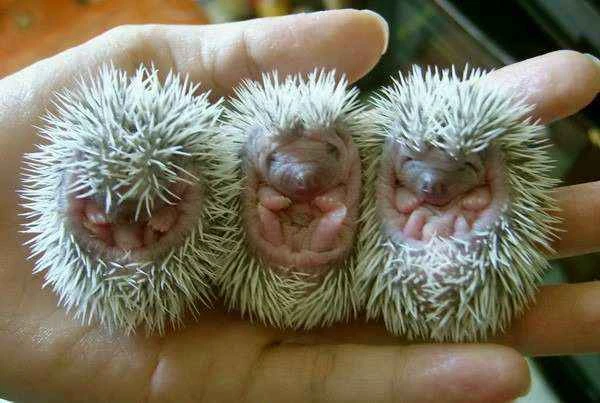
Female hedgehogs reach sexual maturity around 9-11 months of age, with a gestation period of 4-6 weeks. They typically give birth to 4-7 offspring at a time , with each offspring weighing 3-25 grams. Newborns have approximately 100 soft spines. After 2-3 days, their muscle tissue develops enough to keep their spines upright. These soft, white spines are replaced by harder spines as defensive weapons after about 1.5 days. The offspring's eyes open after 12-15 days and they learn to roll into a ball for defense. Their milk teeth fall out around 4 months of age, and permanent teeth grow in around 7-9 weeks of age. Weaning occurs around 5-6 weeks. Between 3-5 weeks of age, the offspring will accompany their mothers while foraging outside the breeding nest, imitating their mothers' foraging and nest-building behaviors. Offspring are usually fully independent by 4-6 weeks of age, at which point they weigh 250 grams or more . If a female hedgehog is disturbed or under excessive stress, she may abandon or even eat her young. Like many animals, adult male hedgehogs sometimes intentionally kill newborn male offspring.
Newborn hedgehogs have closed eyes, their backs are covered by a protective membrane, and their spines remain beneath the skin, giving them a pinkish hue. Several hours after birth, these membranes dry and fall off, revealing the white spines emerging from the skin. Baby hedgehogs typically open their eyes around 13-24 days old, and their mothers continue to care for them until they are 4-6 weeks old. Compared to other animals of similar size, hedgehogs have a relatively long lifespan. In the wild, large hedgehog species can live 4-7 years (with some records exceeding 16 years), while smaller species live 2-4 years (4-7 years in captivity ). In comparison, house mice and large rats live 2 years and 3-5 years, respectively . In captivity, the absence of predation threats and controlled diets help them achieve even longer lifespans, ranging from 8-10 years depending on their size.
The average lifespan of a wild hedgehog is 3 to 5 years, but there are records of individuals living up to 8 years. Under captive conditions, hedgehogs can live up to 10 years .
threaten
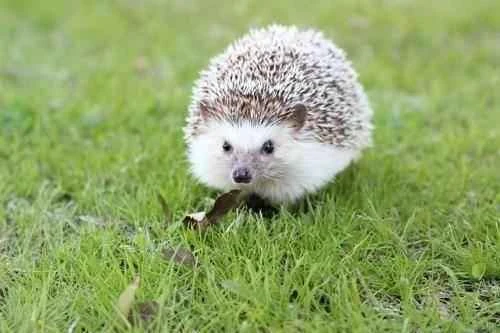
Different species of hedgehogs have different predators: hedgehogs living in forests are mainly predated by birds (especially owls) and blindfolded martens, while smaller species (such as the big-eared hedgehog) are mainly predated by foxes, wolves, and mongooses. Hedgehog bones have been found in the pellets of eagle owls.
In the UK, hedgehogs primarily face the European badger. In areas frequented by badgers, the hedgehog population in Western Europe is relatively low. Therefore, British animal rescue organizations generally do not release hedgehogs into known badger habitats. Badgers also compete with hedgehogs for food.
A hedgehog suffering from balloon syndrome, whose body swells up due to the accumulation of gas under its skin.
Hedgehogs suffer from many diseases similar to those in humans, such as cancer, fatty liver disease, and cardiovascular disease.
Cancer is quite common in hedgehogs, with squamous cell carcinoma being the most common type. This cancer can spread rapidly from the bones of an infected hedgehog to its organs. Surgical removal of the tumor is usually avoided because it might remove too much bone tissue.
It is generally believed that fatty liver in hedgehogs stems from their poor diet. Hedgehogs prefer high-sugar, high-fat foods, but their metabolism is adapted to a diet primarily consisting of low-fat, high-protein insects. Therefore, a high-sugar, high-fat diet can lead to obesity. Besides causing fatty liver, this unhealthy diet can also contribute to heart disease.
Pneumonia is also quite common in hedgehogs. Similar to humans, hedgehogs with pneumonia experience difficulty breathing and nasal discharge. The pathogen that causes pneumonia in hedgehogs is *Bordetella bronchiseptica *.
In rare cases, hedgehogs can also transmit fungal skin diseases to humans or other hedgehogs. This is dermatophytosis caused by Trichophyton erinacei, a specific mating group of dermatophytes ( Arthroderma benhamiae).
Hedgehogs can also suffer from balloon syndrome, a condition in which gas gets trapped under the skin due to injury or infection, causing the body to swell.
Like other small mammals living near human settlements, hedgehogs are vulnerable to being hit by vehicles while crossing roads. In Ireland, hedgehogs are among the deadliest mammals in road accidents. Records show that from April 2008 to November 2010 , 133 hedgehogs died from vehicle collisions on two roads ( 227 km and 32.5 km long respectively ) . Of the 135 hedgehog carcasses collected in Ireland , significantly more males were killed, with the peak mortality rate for males occurring between May and June. Female deaths only surpassed those of males in August, with peak mortality occurring in June and July. One hypothesis suggests that the peak in hedgehog road deaths is related to their breeding season and subsequent separation from their mates, leading to solitary exploration of their surroundings .
Hedgehogs are often kept as pets. The most common pet hedgehog is a hybrid of the four-toed hedgehog (Atelerix albiventris ) and the North African hedgehog ( A. algirus). This hedgehog is smaller than the Western European hedgehog and is therefore sometimes called the African pygmy hedgehog . Other hedgehogs kept as pets include the big-eared hedgehog ( Hemiechinus auritus ) and the Indian long-eared hedgehog ( H. collaris ).
In some regions, such as Hawaii, Georgia, Pennsylvania, and California in the United States, keeping hedgehogs as pets is illegal. In some parts of Canada, a special permit is required to keep a hedgehog. In Europe, only Scandinavia has restrictions on keeping hedgehogs as pets. Italy prohibits keeping wild hedgehogs as pets.
Domesticated hedgehogs may get their heads stuck in paper tubes, especially toilet paper roll cores, and try to run around with them. Keepers call this behavior " tubing , " and some even provide long, thin tubes for them to play with. However, to ensure safety, most keepers will cut the paper tubes beforehand to prevent the hedgehogs from getting trapped. Interestingly, some hedgehogs will still deliberately trap themselves in paper tubes for hours, unwilling to get out.
Edible and medicinal
Hedgehogs possess certain medicinal and economic value, but China prohibits hedgehog farming for consumption purposes, allowing only breeding for non-food uses such as medicinal purposes, display, and scientific research . In many cultures, hedgehogs have been used as a food source. Ancient Egyptians consumed hedgehogs, and some medieval recipes included hedgehog meat as an essential ingredient. Historically, hedgehogs were often used medicinally or as magical implements in Eurasia and Africa. The Bedouin people of the Arabian Desert considered hedgehog meat a remedy for rheumatism, arthritis, and even some diseases and disorders caused by tuberculosis. In Morocco, people inhale charred hedgehog hair or the smoke from sharp spikes to treat fever, impotence, or urinary tract infections. Hedgehog blood is believed to have therapeutic effects on dermatitis, cracked skin, and warts, and hedgehog meat is consumed in sacrificial rituals. Even today, the Roma (also known as Gypsies) retain the custom of eating hedgehog meat, typically steaming or roasting it, and also extracting its blood and fat for medicinal purposes.
In 1981 , Briton Philip Lewis developed hedgehog-flavored potato chips, based on the seasoning Roma used when roasting hedgehog meat. However, because these chips did not actually contain any hedgehog ingredients, the UK Fair Trading Authority required them to change their name to " Hedgehog Flavored Chips " .
A methicillin-resistant Staphylococcus aureus (MRSA) strain, resistant to almost all penicillin-type antibiotics, has been discovered in hedgehogs in Denmark and Sweden. Research indicates that this resistance gene existed in wild hedgehogs long before penicillin and methicillin were available on the market. A fungus within hedgehogs produces penicillin-like antibiotics, leading to the evolution of antibiotic resistance in the bacteria they carry.
Hedgehog Classification | |
Hedgehogs ( Erinaceinae ) can be divided into 5 genera, containing 18 species: | |
African hedgehog (Atelerix) | Four-toed hedgehog (Atelerix albiventris) |
North African hedgehog (Atelerix algirus) | |
South African hedgehog (Atelerix frontalis) | |
Somali hedgehog (Atelerix sclateri) | |
Genus: Erinaceus | Northeast hedgehog (Erinaceus amurensis) |
Western European hedgehog (Erinaceus europaeus) | |
Southern white-breasted hedgehog (Erinaceus concolor) | |
Northern white-breasted hedgehog (Erinaceus roumanicus) | |
Genus *Hemiechinus* | Long-eared hedgehog (Hemiechinus auritus) |
Indian long-eared hedgehog (Hemiechinus collaris) | |
genus *Mesechinus* | Daurian hedgehog (Mesechinus dauuricus) |
Forest hedgehog (Mesechinus hughi) | |
Wang's hedgehog (Mesechinus wangi) | |
The little toothed hedgehog (Mesechinus miodon) | |
genus Paraechinus | |
Desert hedgehog (Paraechinus aethiopicus) | |
Brandt hedgehog (Paraechinus hypomelas) | |
Indian hedgehog (Paraechinus micropus) | |
Naked-bellied hedgehog (Paraechinus nudiventris) | |
genus Paraechinus | Desert hedgehog (Paraechinus aethiopicus) |
Brandt hedgehog (Paraechinus hypomelas) | |
Indian hedgehog (Paraechinus micropus) | |
Naked-bellied hedgehog (Paraechinus nudiventris) | |


