Basic Information
Scientific classification
- Chinese name: donkey
- Scientific name: donkey, ass
- Classification: Hoof Order
- Classification: African wild ass, genus *Equus*, order Perissodactyla, family Equidae, class Mammalia
Vital signs data
- Body length: 200–220 cm
- Weight: 130-260kg
- Lifespan: 50-60 years
Significant features
Size and Appearance: Donkeys are relatively small, with large heads, long ears, a slightly narrow chest, slender limbs, and a short torso. Their height and length are roughly equal, giving them a square shape. Their coat is mostly grayish-brown, with sparse, short hair at the tip of their tails.
Habitat and Habits: Donkeys are herbivores that prefer warm, dry climates. They are resistant to hunger and thirst, and heat, but dislike severe cold. They are docile, hardworking, and resilient. With their sturdiness, resilience, resistance to disease, and docile nature, they are obedient and can survive and work in various environments.
Behavioral characteristics: After working, donkeys like to lie on the ground and roll around to relax. Female donkeys in estrus will frequently open and close their mouths and secrete mucus, while male donkeys like to raise their heads and emit long braying sounds.
Uses and Value: Donkeys play a vital role in agriculture and transportation, plowing fields, grinding grain, and transporting goods. Furthermore, donkey meat and hide have high economic value; donkey meat is hailed as "dragon meat in heaven, donkey meat on earth," while donkey hide can be made into glue or used in pharmaceuticals.
Distribution and Habitat
Donkeys have a very wide range of habitats, found almost all over the world. Their distribution spans from Africa to many countries and regions in Asia. Specifically, their habitats include:
Africa: Donkeys are widely distributed in Africa, including but not limited to Guanzhong Plain, Dezhou, Jiami, Biyang, Xinjiang, and other places. These regions have diverse climatic conditions suitable for the survival and reproduction of donkeys.
Asia: Donkeys are also widely distributed in Asia, from the coast in the east to Xinjiang in the west, from Jilin and Inner Mongolia in the north to the Huai River in the south. These regions have different climatic conditions, and donkeys can be found in everything from warm and dry areas to cold regions.
The Tibetan wild ass is a rare animal unique to the Qinghai-Tibet Plateau and a Class I protected wild animal in my country. They mainly inhabit plateaus, alpine grasslands, and mountain deserts at altitudes of 3,600 to 5,400 meters, foraging for plant-based foods such as thatch, white grass, sand-fixing grass, reeds, sedges, and wormwood.
Kunlun Mountains: Tibetan wild asses also inhabit the Kunlun Mountains, encompassing areas such as the Altun Mountains, Kunlun Mountains, and K2. These regions have extreme climatic conditions, but the Tibetan wild ass, with its robust physique and adaptability, has successfully survived in these harsh environments.
In conclusion, donkeys have a very wide range of habitats, distributed across many countries and regions from Africa to Asia, with extreme environments such as the Qinghai-Tibet Plateau and the Kunlun Mountains being particularly important habitats for them.
Appearance
Donkeys are relatively small in size, with large heads, long ears, a slightly narrow chest, slender limbs, and a short torso. Their height and length are roughly equal, giving them a square shape. Their coat is mostly grayish-brown, with sparse, short hairs at the tip of their tails.
Detailed introduction
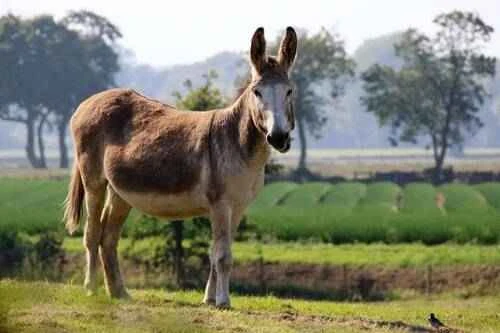
The donkey (scientific name: *Equus africanus asinus* , also known as the horse donkey or assailant ) is a common domesticated animal belonging to the genus *Equus * of the family Equidae . It resembles a horse but is smaller, with longer ears and a narrower chest. Its coat is mostly grayish-brown, and it has long hair at the tip of its tail. Its lifespan is generally fifty to sixty years . It is primarily used as a draft animal and also for military purposes. It is a subspecies of the African wild ass that has been domesticated by humans. While similar in body shape to a horse, it has longer ears and a tail with a peduncle, resembling a cow's tail.
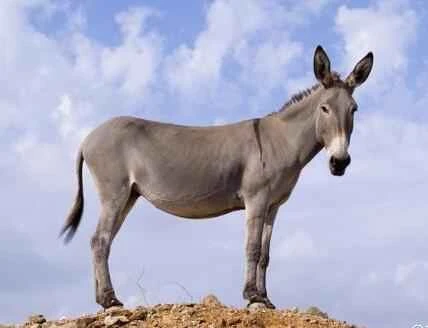
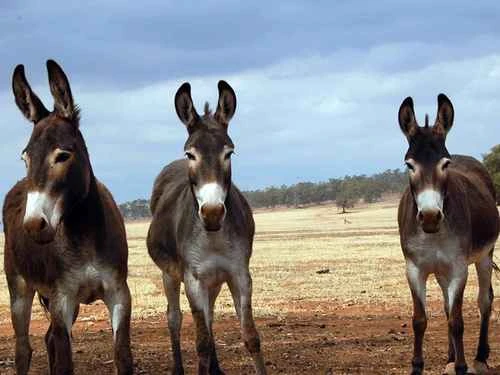
Donkeys are members of the order Perissodactylus. Other members include zebras and horses, all of which have similarly shaped hooves. Their braying is loud, high-pitched, and piercing. They are relatively small in size. They have large heads, long ears, no mane, and sparse, short hair; low withers, a slightly arched back, a short and sturdy loin, and short, thick transverse processes; a short, sloping rump, often pointed; no long hair at the base of the tail, and sparse, short hair at the tip; long, slender limbs, with appendages only on the forelimbs; small, straight, and hard hooves. Their coat colors include gray, black, blue, and brown , with gray being the most common . All donkeys have white eye patches. Due to different breeds, their size varies considerably, ranging from small, similar to a large dog, to as tall as a horse.
Distribution area
Widely distributed, originating in Africa, donkeys can be found in many regions of Europe, Asia, Africa, North America, South America, and Oceania. In China, the distribution of donkeys is closely linked to the number of donkeys raised in different areas, exhibiting distinct regional characteristics. For example, Xinjiang, Inner Mongolia, Gansu, and Shandong are the main production areas for donkey farming in China. In addition, donkeys are also distributed in Asia and Africa. In China, donkeys are mainly distributed in North China , extending from the coast in the east to Xinjiang in the west, from Jilin and Inner Mongolia in the north to the Huai River in the south.
Highly adaptable, donkeys can survive in a variety of environments, including arid deserts, grasslands, mountains, tropical and temperate regions. Globally, they are used for various purposes such as agriculture, transportation, load-bearing, ornamental purposes, and recreation. In rural areas, donkeys are used for plowing, transporting, and herding. Additionally, donkeys are kept as ornamental animals in some tourist destinations and zoos.
Donkeys are herbivorous livestock that prefer warm, dry climates. They are resistant to hunger and thirst, and heat, but dislike severe cold. They are timid yet stubborn, good at walking but not at galloping, have a loud braying voice, and are highly resistant to disease. They have small appetites and chew food finely, so feeding should be done regularly and in measured amounts, with frequent small feedings. Oats, bran, or other concentrated feed should be mixed evenly with the donkey's feed.
Donkeys eat slowly but chew thoroughly, thanks to their strong, well-developed teeth and flexible lips, which are well-suited for chewing coarse, hard feed. Their salivary glands are highly developed; each kilogram of forage can be softened and digested by four times its volume of saliva. A donkey's stomach is small, only about 1/15 the size of a cow of the same size . While the pyloric sphincter is well-developed, the vomiting nerve is underdeveloped, making it unsuitable to feed them easily fermented and gas-producing feeds, as this can cause gastric distension. Food stays in the stomach for a very short time; when the stomach is two - thirds full, the contents are continuously emptied into the intestines with continued eating. Food in a donkey's stomach is digested in layers, so it's not advisable to give them large amounts of water while eating, as this can disrupt the layering and allow undigested food to enter the small intestine, hindering digestion. Therefore, it is essential to feed donkeys regularly, in measured amounts, and frequently.
The intestinal tract of donkeys has an uneven diameter, with the ileocecal junction and cecal junction being relatively small. Improper feeding or insufficient water intake can cause intestinal obstruction and constipation. This necessitates providing donkeys with properly prepared feed and ample water. Under normal circumstances, chyme is broken down in the small intestine by various digestive enzymes, including bile, pancreatic juice, and intestinal juice. Nutrients are absorbed by the intestinal mucosa and transported throughout the body via the bloodstream. The large intestine, especially the cecum, functions similarly to the rumen in cattle, where cellulose is fermented, broken down, and digested by a large number of bacteria and microorganisms. However, because it is located in the middle and lower part of the digestive tract, its ability to digest and utilize cellulose is far less efficient than that of the rumen in cattle and sheep.
Lifestyle
The African wild ass is a general term for three species of mammals belonging to the subgenus *Asinus* of the family Equidae in the order Perissodactyla . Only one species exists in Africa, and the African wild ass is considered the ancestor of the domestic donkey. Its coat color is similar to that of the domestic donkey, being bluish-gray with brown tinges. It also has a similar braying sound and relatively long ears.
There are two species of Asian wild asses: the Tibetan wild ass, mainly distributed in the Qinghai-Tibet Plateau and Tibet; and the Central Asian wild ass, found in Xinjiang Uyghur Autonomous Region of China, Mongolia, the vicinity of Lake Baikal in the former Soviet Union, Iran, and Afghanistan. It is believed to be extinct in Syria and northern Arabian Peninsula. The Asian wild ass is not a typical donkey; its ears are shorter than those of the African wild ass, its hooves are larger, and its braying sounds like a horse. It typically measures 200–220 cm in length and has a shoulder height of about 130 cm; its summer coat is bright chestnut or reddish-brown, while its winter coat is pale gray.
African wild asses live in arid regions. Asian wild asses are both drought- and cold-resistant, generally inhabiting deserts, steppes, and grasslands. Tibetan wild asses are typically found in open plateaus or hilly basins at altitudes of 3000–5100 meters. They are alert, extremely agile, and gregarious, forming large herds of over 200 individuals in summer. They mate in autumn and give birth the following summer, typically producing one foal per litter. African wild asses are an endangered species. The Tibetan wild ass still exists in relatively small numbers and is listed as a key protected animal in China. Crossbreeding wild asses with domestic horses can produce offspring that are vigorous, have a donkey-like braying sound, but are infertile.
Donkeys prefer to live in dry, warm regions, are intolerant of cold, but can withstand heat and thirst; some can even go for days without food. They drink little water and have a strong resistance to dehydration. When dehydrated to 25 %–30 % of their body weight, they only show a decreased appetite, which can be replenished with a single drink. Donkeys eat less, 30 % –40 % less than horses. Donkeys are tolerant of roughage and have a stronger ability to digest crude fiber than horses, with a digestive capacity 30 % higher. Donkeys have strong disease resistance and a more balanced nervous system than horses, making them less prone to digestive diseases.
Reproduction
The breeding cycle exhibits a distinct seasonality, typically occurring in spring and autumn. Spring is the estrus season for donkeys, primarily between February and April . During this period, the quality of eggs in female donkeys is high, leading to a relatively high conception rate. Autumn is another estrus season for donkeys, from September to November . Although the conception rate is slightly lower in autumn than in spring, the reproductive potential of female donkeys in autumn is still significant . The average estrus cycle for female donkeys is 21 days, ranging from 10 to 33 days. In Guanzhong donkeys , 71% have estrus cycles between 18 and 21 days . In Dezhou donkeys, the average is 22 days. The main factors influencing the length of the estrus cycle are climate and feeding and management conditions .
The first mating about two weeks postpartum is called " blood mating , " " mating a blood foal , " or " mating a hot foal . " Postpartum estrus in female donkeys does not manifest with estrus symptoms such as " lip-smacking " or " ear-turning , " but rectal examination confirms follicle development. Follicles appear on the ovaries of female donkeys 5-7 days postpartum and continue to develop until ovulation, without external estrus signs. In Guanzhong donkeys, the first ovulation after calving typically occurs between 12 and 14 days postpartum .
The estrus period in donkeys lasts 3-14 days, generally 5-8 days. According to statistics from 172 estrus periods in Guanzhong donkeys , the average is 6.1 days. 80% of female donkeys experience estrus periods between 4 and 7 days. The length of the estrus period varies depending on the donkey's age, nutritional status, season, temperature, and the intensity of work. Generally, younger, overweight, and heavily worked female donkeys have longer estrus periods; conversely, they have shorter periods. In colder northern regions, female donkeys typically begin estrus in February or March , a phenomenon known as " cold donkeys, hot horses ." However, the estrus period is longer in early spring, with slow follicle development, often resulting in multiple follicles developing and alternating follicle development in both ovaries, sometimes lasting 20 days or longer. It generally returns to normal from April onwards .
First mating age : This refers to the age at which a donkey is first bred. After reaching sexual maturity, the foal continues to develop physically and can only be bred when it reaches a certain age and weight. Breeding too early can affect the donkey's physical development. Female donkeys reach physical maturity at 3.5 to 5 years old, so the ideal age for first mating is 3 years old, when they are at 90% of their adult weight . Male donkeys, on the other hand, are generally ready for breeding at 4 years old.
Sexual cycle: The estrous cycle of donkeys is relatively long, usually 11 to 15 days. During this period, female donkeys will exhibit estrus behaviors and physiological changes. The estrus period usually lasts 2 to 3 days.
Male insemination: Male donkeys attract female donkeys by trampling with their hind legs and licking them, and then mate. During mating, the male donkey (male donkey) delivers sperm into the female donkey's (female donkey's) reproductive tract through its penis. This process usually occurs when the female donkey enters estrus.
Fertilization and Conception: Sperm encounters an egg in the female donkey's reproductive tract. If fertilization is successful, conception occurs. Typically, after conception, the fertilized egg moves towards the uterus and implants, beginning the pregnancy process.
Pregnancy: The fertilized egg successfully implants in the uterus of the female donkey and begins to develop into an embryo. The embryo will carry on in the female donkey's uterus for about 11 to 14 months , approximately 320 to 370 days. During pregnancy, the female donkey will experience physiological changes such as weight gain, mammary gland development, and increased appetite to adapt to the developmental needs of the fetus .
Parturition: Once gestation ends, the fetus will begin to show signs of labor. Before parturition, the female donkey usually exhibits obvious pre-partum signs, such as a sagging abdomen, raised tail, and swollen udder. The parturition process generally lasts several hours , meaning the donkey is about to give birth. The female donkey will use uterine contractions to push the fetus through the reproductive tract until birth.
Donkey rearing: Once born, a foal will quickly stand and suckle at its mother's milk. In its early life, the mother provides nutrition and protection, helping the foal grow rapidly. Foals are typically weaned within a few months, and the mother will then care for and feed them. The foal grows under its mother's care until it can live independently. It's important to note that mating between a donkey and a horse may produce a mule (a crossbreed of donkey and horse), while mating between donkeys will produce donkey offspring. Crossbreeding between donkeys and horses is relatively common in producing mules.
A male donkey can mate with a female horse, and the offspring is called a mule. Mules are large, possessing the load-bearing capacity and resilience of a donkey, and the agility and running ability of a horse, making them excellent draft animals. However, they are generally infertile, with very few exceptions. If a male horse mates with a female donkey , the offspring is called a mule. Mules are smaller and generally not as good as mules, but they can sometimes reproduce.
Donkeys mature relatively early; male donkeys reach sexual maturity at 1 year old, and female donkeys at 1-1.5 years old, with growth and development ceasing at 3 years old. They experience estrus in both spring and autumn, with an estrous cycle of approximately 23 days and an estrus period lasting 5-6 days. The gestation period is about 360 days. They can reproduce until over 20 years old.
Donkey fetuses grow and develop rapidly, with a birth height reaching over 62% of an adult donkey's and a weight reaching 10 % to 12 % of an adult donkey's. Donkeys reach sexual maturity early, at 1.5 to 2 years old, and have a higher reproductive rate than horses, with a female donkey typically giving birth to more than 10 foals in her lifetime.
use
Animal power
Donkeys are more adaptable than horses, able to tolerate coarse food and heavy loads, and are cheaper than horses, thus they have always been important draft animals for humans. Some young donkeys can carry quite tall people. A typical donkey can carry up to 100 kilograms and can walk continuously for five to six hours on mountain paths without a problem . They are widely used in agriculture to help people with plowing, carrying goods, and transportation . Donkeys are quite alert to danger, and therefore, in situations where they are in danger, they may refuse to obey commands, appearing quite stubborn—a phenomenon known as " donkey temper . " However, they are generally docile, and in travel and leisure, donkeys can also be loyal companions to humans.
There are more than 30 breeds of donkeys in China , among which the superior breeds are produced in Shandong Province. The Guanzhong donkey, Dezhou donkey, Jiami donkey, Biyang donkey, Guangling donkey, and Hexi donkey are well-known. They weigh 250-290 kg, are 1.1-1.3 meters tall, can carry a load of 250-350 kg, and can travel 30-50 km per day. They are good helpers for short-distance transportation, pulling carts, carrying goods, plowing fields, and grinding rice and flour in rural areas, especially in mountainous, semi-mountainous, and hilly areas.
edible
Donkey meat is believed to have health benefits such as replenishing blood, invigorating qi, and nourishing deficiencies. It is so delicious that the saying "dragon meat in heaven, donkey meat on earth" aptly describes its appeal. The consumption of donkey meat has become popular in Guangdong, Guangxi, Shaanxi, Beijing, Tianjin, Hebei, Shandong, and other regions. In Baoding, Hebei, there is a famous snack called " Donkey Meat Sandwich ," made by adding cooked donkey meat to a baked flatbread. Donkey intestines are also a famous dish. During the Northern Song Dynasty, Han Zhen loved donkey intestines and always used them in his banquets, requiring them to be freshly killed and cooked. One guest, while using the restroom, witnessed the gruesome sight of a live donkey being gutted and its intestines removed, and, unable to bear it, never ate donkey meat again. When Zhu Zaiji, the Ming Dynasty emperor, was still Prince Yu, he enjoyed donkey intestines. After ascending the throne, he became more frugal and, upon hearing that the Imperial Household Department slaughtered a donkey daily, he stopped eating them. During the Qing Dynasty, there was a method called " pouring boiling water on donkey meat ," which involved pouring boiling water over the donkey's body, scraping off its hair, and then cutting the meat while it was still alive. This method was gradually phased out due to its cruelty. Donkey hide is tough and thick, and can be used for leather making. It also has medicinal value. In traditional Chinese medicine, donkey hide is used as a raw material. Dong-E Ejiao is a precious raw material for traditional Chinese medicine. Every year, about four million donkeys are killed in China because of Ejiao, which has led to a sharp decline in the number of donkeys in China. This has even led to some African countries banning the export of donkeys to China.
breeding methods
Donkey farming is a component of traditional animal husbandry, and it is transforming from providing auxiliary power for agriculture to producing meat and hides. It is rapidly developing from small-scale, low-profit to medium-scale, high-profit.
Meat donkeys possess strong disease resistance, high survival rates, and wide adaptability to natural environments, allowing meat donkey farmers to reduce costs and expand profit margins. Meat donkeys are less prone to disease than mules, horses, cattle, and sheep, especially gastrointestinal diseases. Generally, as long as proper immunization, keeping the donkey pen clean and dry, maintaining appropriate lighting, ventilation, and stocking density, providing adequate feed, and ensuring sufficient clean drinking water, meat donkeys rarely get sick. The fertilization rate and foal production rate of meat donkeys are both 90%, and the foal rearing rate and survival rate reach 95% . Meat donkeys have wide natural adaptability, are heat- and thirst-resistant, drink little water, and have poor cold tolerance. They are more commonly found in hot and dry areas and are not suitable for living in high-altitude mountainous areas or severely cold and humid regions. Western, southeastern, and northern Shandong are very suitable areas for raising meat donkeys, and large-scale raising of meat donkeys is also possible in vast rural areas of China. They are docile and prefer to live in groups. They can be raised in orchards, on hillsides, or in enclosures, fed with ordinary feed and grass. Generally, grass accounts for about 80% of their feed. Minor grains are their concentrated feed, and minor grain straw is their roughage. They are also suitable for factory farming. To accelerate their growth, they can be fed compound feed or complete pelleted feed.
Selecting suitable donkey breeds based on local breeding conditions and market demand is key to investing in this project. The quality of the donkeys directly affects fattening efficiency and future development. In China, donkeys are classified into three categories based on size: large, medium, and small. Medium-sized donkeys are preferred for raising, followed by large donkeys. Small donkeys are mostly used for making donkey-hide gelatin (Ejiao), but their meat can also be sold on the market.
Donkey milk is also highly valuable. It is very similar to human milk, with almost 99% of the nutrients found in human milk , making it the best alternative to human milk. Furthermore, donkey milk can moisturize the skin and improve the facial environment.
Feeding stage
adult donkey fattening
1. Newly purchased donkeys should only drink water on the first day; on the second day, they should drink water and be fed grass or hay; on the third day, they should drink water and be allowed to eat grass or hay freely, and be fed 0.5 kg of wheat bran; from the fourth to the sixth day, the same applies, but with 1 kg of corn added .
2. After a 6 -day transition period, they can enter the fattening period. They can freely eat roughage such as hay, cottonseed hulls, soybean stalks, and corn stalks. Each head should be fed 3.5 kg to 4 kg of mixed concentrate per day, which consists of: 50% cottonseed cake or soybean meal and peanut cake , 29% cornmeal , 20% wheat bran , and 1% salt . In addition, each head should be fed 20 grams of sodium bicarbonate per day.
3. During the fattening period, exercise should be restricted, clean drinking water should be provided, the donkeys should be brushed daily, and the pen and surrounding environment should be kept dry and hygienic. The donkeys can be slaughtered after 60-70 days of fattening.
fattening young donkeys
1. Purchased donkeys should be dewormed first, without castration, and fed in separate troughs according to sex and weight.
2. Newborn donkeys consume colostrum for 6 days, then nurse from their mother after 7 days. At 15 days old, they are trained to eat a thin porridge made from equal parts corn, wheat, and millet, with a little sugar added to encourage them to eat. Feed 10-20 grams daily . 3. After 22 days old, feed 80-100 grams of mixed concentrate . The formula is: soybean meal plus cottonseed cake 50% , cornmeal 29% , wheat bran 20% , and salt 1% . At 1 month old, feed 100-200 grams per donkey daily ; at 2 months old, 500-1000 grams per donkey daily ; and after 9 months old , 3.5 kg per donkey daily. The total concentrate consumption for fattening is 500 kg. Frying cottonseed until it turns yellow or boils until it expands and cracks, feeding 1 kg per donkey daily , will further improve fattening results.
4. Roughage should be freely available, and the following should be selected: millet straw, soybean straw, peanut vines, sweet potato vines, corn silage with ears, and high-quality forage. It should be chopped short.
5. Feed the donkey four times a day, morning, noon, evening, and night . The proverb " A horse won't get fat without night grass " applies to donkeys as well, emphasizing the need to mix grass with water before feeding. The proverb " Grass makes you fat, feed makes you strong, water makes you energetic " means that eating more grass is essential for weight gain.
6. When feeding, pay attention to feeding small amounts frequently, mixing the food in all four corners, ensuring the food drinks enough water, and supplementing with an appropriate amount of salt.
7. Each group consists of 20 to 25 donkeys, who are free to roam, graze on roughage, drink water, and consume salt.
8. Brush the donkey's body daily, remove feces and urine, and clean the feeding trough.
Donkey foal care
After the foal is born, immediately wipe away the mucus and dirt from its lips and nostrils before cutting the umbilical cord. There are two methods for cutting the umbilical cord: manual cutting and ligation cutting. ( I ) Manual cutting is the most common method nowadays. This method allows the umbilical cord to dry quickly and reduces the risk of infection. The method is as follows: Hold the umbilical cord with one hand about 3-4 fingers' width from the foal's abdomen , and with the other hand, pinch the umbilical cord towards the fetus a few times to allow the blood in the umbilical cord to flow into the foal's body. After the umbilical vein pulsation stops, cut the umbilical cord with your fingers about 3 fingers' width from the abdominal wall. Then , thoroughly disinfect the remaining umbilical cord end on the abdominal wall with a cotton ball soaked in 5% iodine tincture. Bandaging is not necessary. However, disinfect with 5% iodine tincture 1-2 times every 7-8 hours . Only use a sterile rope to ligate the umbilical cord when bleeding is difficult to stop. Regardless of whether it is ligated or not, it must be thoroughly disinfected with iodine tincture.
(II) Umbilical cord ligation and cutting involves tying the umbilical cord with sterile cotton thread 3-5 cm from the abdominal wall of the newborn foal , then cutting and sterilizing it. This method results in slow drying of the umbilical cord stump, and due to inadequate sterilization, it is prone to infection and inflammation. Therefore, manual umbilical cord cutting should be used whenever possible. Unlike cows and horses, donkeys do not lick the foal's body of mucus after giving birth. The assistant can use a soft cloth or towel to wipe the mucus off the foal to prevent it from getting cold. Once the foal is standing, it should be allowed to nurse colostrum as soon as possible, which helps to expel meconium and prevent constipation.
Variety Introduction
China has a vast territory, and the domestication of donkeys predates that of horses and mules, resulting in a long history of donkey breeding. Donkeys can be categorized into large, medium, and small sizes. China's five major superior donkey breeds are the Guanzhong donkey, Dezhou donkey, Guangling donkey, Biyang donkey, and Xinjiang donkey. Large donkeys are mainly distributed in the central plains and hilly areas with developed agriculture and excellent feed conditions , including breeds like the Guanzhong donkey, Qingyang donkey, Dezhou donkey, and Jinnan donkey. Medium-sized donkeys include the Biyang donkey, which stands between 110-130 cm tall. Small donkeys include the Xinjiang donkey (arid desert ecosystem type) , the Liangzhou donkey (arid semi-desert ecosystem type) , the Xiji donkey (loess hilly and gully area type) , the Gunsha donkey (alpine sandy area ecosystem type) , the Northeast donkey (plain ecosystem type ), and the Southwest donkey (plateau mountain type), primarily found in North China, Gansu, Xinjiang, and Yunnan, where donkeys stand between 85-110 cm tall.
small
North China donkey
The North China donkey is a small breed. Its main production areas are east of the Loess Plateau in northern Shaanxi, within the Great Wall, and extending to the Huang-Huai-Hai Plain, and also distributed in the three northeastern provinces. It is a type of small donkey. Environmental conditions: The production area includes plateaus, mountains, hills, and plains. Although topography and climate vary, these areas are all major grain and cash crop producing regions in northern China, with abundant feed sources, developed agriculture and animal husbandry, and environmental conditions very suitable for the donkey's living characteristics. The North China donkey is the second largest draft animal in northern China's agricultural areas after cattle. Due to poor agricultural conditions, low crop yields, and low livestock breeding levels, small donkeys are mostly raised. In recent decades, to meet production needs, some areas with poor agricultural production conditions but good animal husbandry conditions, such as the Yimeng Mountains, the Taihang and Yanshan Mountains, the Yulin area of northern Shaanxi, the Zhangjiakou area, the Kulun Banner of Zhaomeng League, and Huaibei, have leveraged their local advantages to develop commercial donkey breeding. Besides self-consumption, most donkeys are sold through well-known livestock trading markets such as Datong, Zhangjiakou, Jinan, Weifang, Jieshou, and Zhoukou, and distributed throughout various regions. Although these donkeys have their own regional names, such as the Rolling Sand Donkey of Shaanxi, the Kulun Donkey of Inner Mongolia, the Taihang Donkey of Hebei, the Small Donkey of Shandong, and the Gray Donkey of Huaibei, their physical characteristics are basically the same. Their coat color is mostly gray, and their heritability is stable, hence they are collectively called North China Donkeys. Physical Appearance: Donkeys from different regions have different characteristics depending on their production area, but they share the following common features: height under 110 cm, slightly larger in plains and less common in mountainous areas, weight 130-170 kg. They have good structure, short bodies, slightly large abdomens, and coarse, stiff coats. The Rolling Sand Donkey is 107 cm tall and weighs 140-190 kg; the Taihang Donkey is 102.4 cm tall; the Kulun Donkey of Inner Mongolia is 110 cm tall; and donkeys from Yimeng, Northern Jiangsu, and Huaibei are 108 cm tall. Production Performance: Male donkeys reach sexual maturity at 18-24 months of age, and female donkeys at 12-18 months of age. Female donkeys begin breeding at 2.5 years of age, and male donkeys at 3-3.5 years of age. The estrus season is mostly concentrated in spring and autumn, with an estrus cycle of 21 to 28 days and an estrus period of 5 to 6 days. The reproductive lifespan of male and female donkeys is generally 13 to 15 years, and female donkeys will produce 8 to 10 foals in their lifetime .
North China donkeys are small in size, highly adaptable, numerous, and widely distributed. To meet the needs of commercial livestock production, their body structure should be improved through selective breeding to enhance their precocity and meat production performance. In summary, China has a large donkey population and a wide distribution. Through long-term natural and artificial selection, several breeds with significant differences in body size, physical structure, and production performance have emerged. However, in the past, during the small-scale farming era, donkeys were primarily selected for their riding, draft, and carrying capabilities. In commercial livestock production, we need to improve the meat production performance of donkeys. Therefore, on the one hand, we need to strengthen the breeding of meat donkey breeds; on the other hand, donkey producers should engage in crossbreeding between different breeds, especially by crossing large breeds such as Guanzhong donkeys and Dezhou donkeys with local medium and small donkey breeds, utilizing hybrid vigor to improve the growth rate and meat production performance of donkeys, and developing large-scale farming.
Southwest Donkey
This breed of donkey is small. Major production areas include Yunnan donkeys from various parts of Yunnan Province, Sichuan donkeys from Ganzi, Aba, and Liangshan in Sichuan Province, and Tibetan donkeys from Shigatse and Shannan in Tibet. Environmental conditions: Yunnan, Sichuan, and Tibet are mostly plateau mountainous and hilly areas with high altitudes, numerous rivers, significant temperature differences, and distinct dry and wet seasons. Agriculture in these areas is relatively developed. Major crops include rice, wheat, broad beans, peas, sweet potatoes, and rapeseed. Tibet is particularly famous for its highland barley. Crop straw and wild grasses are the main forage, while beans and wheat are the main concentrated feed. However, for a considerable period after the introduction of donkeys over 1000 years ago, donkey-producing areas were mostly mountainous. The soil was barley-poor, vegetation sparse, and donkey husbandry was extensive. They grazed in the wild during the day and were supplemented with straw at night. Only small amounts of concentrated feed were given during heavy work and pregnancy, thus resulting in the small size of the donkey breed. Physical Appearance: The head appears heavy and robust, with a broad forehead and large, long ears; the topknot is low, the chest is shallow and narrow, the back and loin are short and straight, the rump is short and sloping, and the abdomen is slightly large; the forelimbs are straight, the hind limbs are slightly outward-pointing, and the hooves are small, sharp, and strong; the coat is thick and dense, mainly gray, with eagle-wing, light-backed, and tiger-striped markings; the rest of the body is reddish-brown. Production Performance: Yunnan donkeys mature early, mating and reproducing at 2-3 years old. They typically have two litters every three years , but if raised specifically for meat, they can have one litter per year . The slaughter rate is 45% -50 % , the net meat yield is 30% -34 % , and the net meat weight per head is approximately 35 kg.
Xinjiang donkey
Physical Appearance: Xinjiang donkeys are small in stature, with a dry and sturdy build. They have a slightly large head, erect ears, a broad forehead, a short nose, and short hair growing inside the ear flaps. They have a thin neck, a flat back, a short waist, a short and sloping rump, a shallow chest, and flat ribs. Their limbs are relatively short, with dry and strong joints, and small, hard hooves. Their coat is mostly gray or black. Production Performance: Xinjiang donkeys develop sexual desire at one year old. Male donkeys begin breeding at 2-3 years old, and female donkeys at 2 years old. Under extensive feeding and heavy work conditions, malnutrition and abortion are rare. The survival rate of foals is over 90%. The 150th Regiment of the 8th Agricultural Division of the Xinjiang Production and Construction Corps introduced Guanzhong donkeys and crossbred them with local small donkeys, resulting in offspring with a height of 120-125 cm. The height of improved donkeys from Turpan can reach 125-130 cm. Therefore, introducing larger donkey breeds for crossbreeding and improvement of Xinjiang donkeys can increase the size and weight of local donkeys, which is an important way to increase meat production in meat donkey farming. They belong to the small donkey category. Main production areas: Primarily produced in Kashgar and Hotan regions of southern Xinjiang. Distributed to the Gansu-Henan corridor, agricultural and semi-agricultural/semi-pastoral areas of Qinghai, and the Guyuan and Xiji areas of Ningxia, where they are locally known as Xiji donkeys. In Wuwei, Zhangye, and Jiuquan of the Hexi Corridor in Gansu, they are called Liangzhou donkeys. They are also found in various counties of northern Xinjiang. Environmental conditions: Xinjiang has a continental climate. Due to the influence of high mountains and deserts, summers are hot and dry, with temperatures reaching 55℃ in the desert under direct sunlight . It is windy and sandy, with large diurnal temperature variations, hence the saying " wear a fur coat in the morning and gauze at noon, eat watermelon while holding a stove ." The frost-free period is short, and rainfall is low. There are large areas of grassland pastoral areas as well as developed agricultural areas with patches of oasis. Due to climate and water scarcity, crop yields are low. Historically, due to poor socio-economic conditions, farmers relied entirely on donkeys for farming, transport, and riding; donkeys can be found wherever people live. Physical appearance: Xinjiang donkeys are short in stature, with a dry and sturdy build. They have a slightly large head, erect ears, a broad forehead, a short nose, and short hair growing inside the ear shells. They have a thin neck, a low and flat topknot, a flat back, a short and sloping waist, a short and shallow rump, a narrow and shallow chest, and flat ribs. Their limbs are relatively short, with dry and sturdy joints, and small and hard hooves. Their hair is mostly gray or black.
medium
Qingyang Donkey
Main production areas: Qingyang, Ningxian, Zhengning, Zhenyuan, Heshui, and Huachi counties in eastern Gansu Province, and Wuqi and Dingbian counties in Shaanxi Province, with Qingyang County as the central production area.
Environmental conditions: The production area is located on the Loess Plateau in eastern Gansu Province, at an altitude of 1,000 to 1,700 meters, in the upper reaches of the Jing River, adjacent to the Guanzhong Plain in Shaanxi Province. The average annual temperature is 9 to 10.5℃ , the frost-free period is 120 to 180 days, and the annual precipitation is 300 to 500 millimeters. The soil is fertile, the climate is mild, and agriculture is developed, earning it the reputation of " Granary of Eastern Gansu " . Due to the inconvenient transportation in this region, farmers' economic income was low in the past, and they mostly raised cattle and donkeys for draft purposes. For many years, they mainly raised small donkeys. Through continuous introduction and crossbreeding with large donkeys from Guanzhong, the size of local small donkeys has increased significantly, and their appearance has also changed. In addition, they have adapted to the local environment, are carefully managed, and their forage is mainly wheat straw and hay, supplemented with a small amount of concentrated feed only during busy farming seasons. They are quite tolerant of roughage. Through long-term self-breeding and cultivation, the hybrid donkeys have formed the local superior breed of Qingyang donkey.
Physical appearance: The donkey is robust and sturdy, with a body length slightly greater than its height. It has a symmetrical structure, a medium-sized head, not very long ears, large neck muscles, short and sparse mane, well-developed chest, large abdomen, straight limbs, prominent joints, and moderately sized and sturdy hooves. It is docile and agile. The coat color is mainly three-pink, with a small number of blue and gray. The Qingyang donkey is a medium-sized donkey.
Huaiyang Donkey
Main production areas: The southeastern part of the eastern Henan plain along the Shahe River and its tributaries, specifically the western part of Huaiyang and Dancheng, the northwestern part of Shenqiu, the northern part of Xiangcheng and Shangshui, the eastern part of Xihua, the southern part of Taikang, and Zhoukou City, with Huaiyang County as the central production area. Environmental conditions: The production area is at an altitude of 50 meters, with a temperate monsoon climate, a frost-free period of 216 days, and an average annual temperature of 14.6℃ . The soil is predominantly alluvial and loam, fertile, and abundant in wheat and other grains, making it a historical " granary ." Donkeys are the main draft animals in the area. The local area has long valued donkey breeding, has abundant agricultural by-products, and traditionally cultivates alfalfa. Donkeys are often fed various beans, with a daily intake of 1-1.5 kg , ensuring their nutritional needs and consolidating the results of breeding. The production area is close to livestock distribution centers such as Zhoukou and Jieshou, and often exports breeding donkeys, thus stimulating donkey production and breeding efforts. In the past 30 years, Huaiyang County has further strengthened its breeding efforts, carrying out breed registration in key donkey-producing areas. Enhanced selection and mating have significantly improved the quality of meat donkeys, making them a superior local breed. Physical characteristics: A medium-sized donkey, with a height slightly greater than its length, a relatively wide body, a slightly heavy head, broad shoulders, a high withers, a well-developed forequarters, a relatively short midsection, a barrel shape, and large, sturdy limbs with a large tail. The reddish-brown donkey also features a larger body, a high withers, a single ridge and back, and long limbs. The coat is primarily pinkish-black, with less gray, even less pure black, and rarely reddish-brown.
Biyang Donkey
This is a medium-sized donkey. Main production areas: Biyang, Tanghe, Sheqi, Fangcheng, and Nanyang cities and counties in southwestern Henan Province, with Biyang and Tanghe counties as the central production areas. Environmental conditions: Biyang County is located between the Funiu and Tongbai Mountains, with an altitude ranging from 810 to 983 meters. The area has four distinct seasons, an average annual temperature of 14.61°C , a frost-free period of 212 days, and an average annual rainfall of 920.5 mm, classifying it as a warm temperate climate. The land is fertile and suitable for cultivation, with developed agricultural and pastoral production, particularly wheat and various grains. Straw and peas are the main feed for donkeys. Grazing is possible on riverbanks and hillsides, providing abundant forage resources. Local people have a long history of donkey breeding, carefully raising and selecting high-quality breeds. Many specialized donkey breeders use carefully selected superior breeds, thus forming a high-quality breeding area. As early as 1957, the Biyang County Donkey Breeding Farm was established, where outstanding individuals and core groups were selected locally to carry out systematic breeding work, which rapidly improved the quality of the donkey herd. Physical characteristics: Male donkeys are powerful and imposing, while female donkeys are docile. They are medium-sized, square or high-square in shape. They have a compact and symmetrical structure, are agile and elegant, with well-developed muscles, and often have double ridges and double backs. The back and loin are straight, the head is dry and refined, and the mouth is square; the ears are large and moderately sized, with a tuft of white hair in the middle of the ear; the head and neck are well-connected, the loin is short and strong, the rump is high, wide, and sloping, the limbs are straight, the pasterns are short and upright, and the hooves are sturdy. The coat color is primarily tri-colored.
Jiami Donkey
Also known as the Suimi donkey, it is a medium-sized donkey. Main production areas: Primarily produced in Jiaxian, Mizhi, and Suide counties of Shaanxi Province, with the central production area in the contiguous area of these three counties. It is distributed to nearby counties, Linxian County in Shanxi Province, surrounding provinces, and Yan'an and Yulin cities. Environmental conditions: The production area is located in the gully region of the Loess Plateau in northern Shaanxi, characterized by undulating ridges, crisscrossing gullies, fragmented land, and rugged, narrow roads. The altitude ranges from 715 to 1350 meters, with large temperature differences and an average annual sunshine duration of 2617 to 2741 hours. Spring is windy, summers are hot, and winters are cold, exhibiting a typical continental climate. It is arid with little rainfall, averaging 430 to 450 millimeters annually, and a frost-free period of only 150 to 180 days. It is suitable for planting miscellaneous grains, with a large amount of alfalfa cultivation, and crop rotation to improve soil and provide forage. Since the Eastern Han Dynasty, farmers have been accustomed to raising donkeys for various uses such as plowing, pulling, carrying, and riding.常以舍饲为主,以豆麦、高梁、玉米加谷草、麦草为主,夏季喂青苜蓿。各县有一些传统的专门种驴饲养户,精选良种,承担配种工作,经长期培育形成这一地方优良品种。体型外貌:佳米驴体型中等,略呈方形,体质结实,结构匀称,眼大有神,耳薄而立;颈肩结合良好,背腰平直,四肢端正,关节强大,肌腱明显,蹄质坚实。公驴颈粗壮,胸部宽,富有悍威。母驴腹部稍大,后躯发育良好。毛为粉黑色,因白色部分大小不同,又分为两种,一种是黑燕皮,全身被毛似燕子,仅嘴头、鼻孔、眼周以及腹部为白色;一种是黑四眉,除具有黑燕皮特征外,腹下的白色面积较大,甚至扩展到四肢内侧,胸前、额下及耳根处。
云南驴
体形外貌:头显粗重,额宽隆,耳大长;胸浅窄,背腰短直,尻斜短,腹稍大;前肢端正,后肢稍外向,蹄小而尖坚;被毛厚密,毛以灰色为主,并有鹰膀,背浅,虎斑;其它部分为红褐色。生产性能:云南驴性成熟早, 2 ~ 3岁即可配种繁殖,一般3年2胎,如专门作肉驴饲养也可1年1胎,屠宰率45% ~ 50% ,净肉率30% ~ 34% , 每头净肉量为35千克左右。
Large
广灵驴
体型外貌:体格高大、骨骼粗壮、体质结实、结构匀称、耐寒性强。驴头较大、鼻梁直、眼大、耳立、颈粗壮,背部宽广平直,前胸宽广,尻宽而短,尾巴粗长,四肢粗壮,肌腱明显,关节发育良好,管骨较长,蹄较小而圆,质地坚硬,被毛粗密。被毛黑色,但眼圈、嘴头、前胸口和两耳内侧为粉白色,当地群众叫“五白一黑” ,又称黑化眉。还有全身黑白毛混生,并有五白特征的,群众叫做“青化黑” ,这两种毛色的均属上等。生产性能:其繁殖性能与其它品种近似,惟多在2 ~ 9月发情, 3 ~ 5月为发情旺季。终生可产驹10胎,经屠宰测定,平均屠宰率为45.15% ,净肉率30.6 % 。有良好的种用价值,曾推广到全国13个省区,以耐寒闻名,对黑龙江省的气候适应也较好。属大型驴。主要产地:产地为山西省东北部的广灵、灵邱两县,分布于广灵、灵邱及其周围各县的边缘地带。环境条件:境内山岳起伏,小部分为河谷盆地,海拔700~2 300米。地处塞外山区,风大沙多,气候变化差异大,年平均气温为6.2 ~ 7.9C ,年降水量420 ~ 500毫米,无霜期130--~150天,为塞外的主要杂粮产地。该地区历来重视畜牧业发展,农民养驴农耕,是中国塞外商品驴的繁殖基地。由于当时盛产谷子、豆类,又种植紫花苜蓿,农民以谷草、黑豆和苜蓿草精心喂养,注意选种选配,结合役使和放牧,形成广灵驴体型高大、体躯结实的品种特征。
晋南驴
体型长方形,外貌清秀细致,是有别于其它驴种的特点。头清秀,大小适中,颈部宽厚,背腰平直,尻略高而斜,四肢细长,关节明显,肌腱分明,前肢有口袋状附蝉。尾细长,似牛尾。皮薄而细,以黑色带三白为主要毛色,另外还有一种灰色大驴。体型较美,细致结实,为中国优良的大型地方良种。主要产区:产于山西南部运城市和临汾市南部,以夏县、闻喜县为中心产区,包括平陆、芮城、永济、临猗等县市及临汾南部各县市。环境条件:产区地处黄土高原,濒临黄河。有平原、丘陵和山地,地形复杂。海拔400 ~ 1 500米,地势东北高而西南低,土地肥沃,气候温和,年平均气温12—1413 ,年降水量500毫米左右,无霜期180 ~ 210天。夏县是禹的故乡,该县人文、农耕历史悠久,有发达的农业,是山西著名的粮棉产地,盛产煤。当地农民喜爱养驴,作为农耕和运输工具。喂驴精心而得法,全年舍饲,充分利用农副产品,又种苜蓿。做到夏加苜蓿冬加麦麸,并将鲜苜蓿与麦秸碾青混合调制,使驴等家畜常年都能得到青饲草,重视选种选配和幼驹培育,促进了该品种的形成,并向外地输出大量优质种驴。体型外貌:体型长方形,体质紧凑,外貌清秀细致,是有别于其他驴种的特点。头部清秀,大小适中,颈部宽厚而高昂,髻甲稍低,背腰平直,尻略高而斜,四肢细长,关节明显,肌腱分明,前肢有口袋状附蟑。
德州驴
体型外貌:体格高大,结构匀称,体型方正,头颈躯干结构良好。公驴前躯宽大,头颈高扬,眼大嘴齐,有悍威,背腰平直,尻稍斜,肋拱圆,四肢有力,关节明显,蹄圆而质坚。毛色分三粉(鼻周围粉白,眼周围粉白,腹下粉白)的黑色和乌头(全身毛为黑色)的两种。其体高一般为128 ~ 130厘米,最高的可达155厘米。
生产性能:生长发育快, 12 ~ 15月龄性成熟, 2.5岁开始配种。母驴一般发情很有规律,终生可产驹10只左右, 25岁好驴仍有产驹的;公驴性欲旺盛,在一般情况下,射精量为70毫升,有时可达180毫升,精液品质好。作为肉用驴饲养屠宰率可达53% ,出肉率较高,为小型毛驴改良的优良父该品种。
关中驴
体形外貌:关中驴体格高大,结构匀称,体型略呈长方型。头颈高扬,眼大而有神,前胸宽广,肋弓开张良好,尻短斜,体态优美。 90%以上为黑毛,少数为栗毛和青毛。生产性能:在正常饲养情况下,幼驴生长发育很快。 1.5岁能达到成年驴体高的93.4% ,并表现性成熟。 3岁时公母驴均可配种。公驴4 ~ 12岁配种能力最强,母驴终生产5 ~ 8胎。多年来关中驴一直是小型驴改良的重要父本驴种。特别对庆阳驴种的形成起了重大作用。
原产地及产地的自然条件:关中驴属于大型驴种。形成历史悠久,是中国优良的地方品种。主要分布在陕西省关中平原和延安市南部,以兴平、礼泉、乾县、武功、咸阳、蒲城和临潼等地为中心产区。曾被输出到朝鲜、越南等国。关中平原号称“八百里秦川” 。土壤肥沃,气候温和。年平均气温12 ~ 1413 ,年日照1980 ~ 2 400小时,年降水量540 ~ 750毫米,无霜期190 ~ 210天。水利灌溉条件好, 农业发达,盛产粮棉,有丰富的农副产品,还有种植苜蓿、大豆、豌豆养畜的习惯,素以有大牛(秦川牛) 、大驴而享誉全国。从西汉以来,驴一直是该地区重要的役畜,群众既有丰富的养驴经验,又很重视科学的选种选配。尤其对种公驴要求毛色纯正,黑白界线分明,体型高大,结构匀称,两睾丸大而对称,富有悍威,四蹄端正,蹄大而圆,叫声宏亮。因此,经过长期的选育,该品种质量不断提高。体型外貌:关中驴体型高大,结构匀称,体型略呈长方型。头颈高扬,眼大而有神,前胸宽广,肋弓开张良好,尻短斜,体态优美。 90%以上为黑毛,少数为栗毛和青毛。生产性能:据测定,老龄淘汰驴平均屠宰率为52.7% ,净肉率39% 。


