Basic Information
Scientific classification
- Chinese name: Sea dog
- Scientific name: fur seal, fur-eared seal
- Order: Carnivora
- Family and genus: Sealidae, order Carnivora; genus Seal
Vital signs data
- Body length: 150-210 cm
- Weight: 45-270 kg
- Lifespan: 20 years
Significant features
It gets its name from its resemblance to a cute little dog, and is also known as the "fuzzy sea lion" because of its thick, smooth fur.
Distribution and Habitat
Fur seals are found all over the world. In addition to the northern fur seals that live in the Bering Sea, they can also be found in the waters of Australia, New Zealand, Tasmania, South Africa, and Antarctica.
Appearance
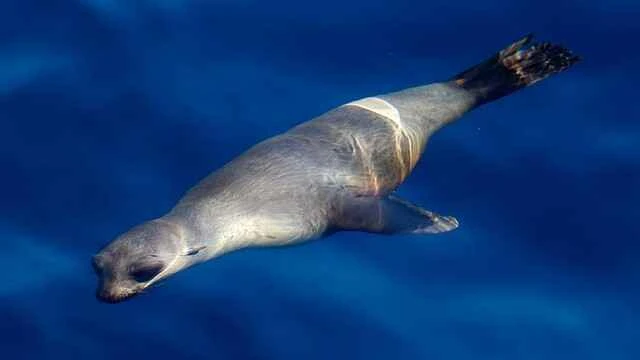
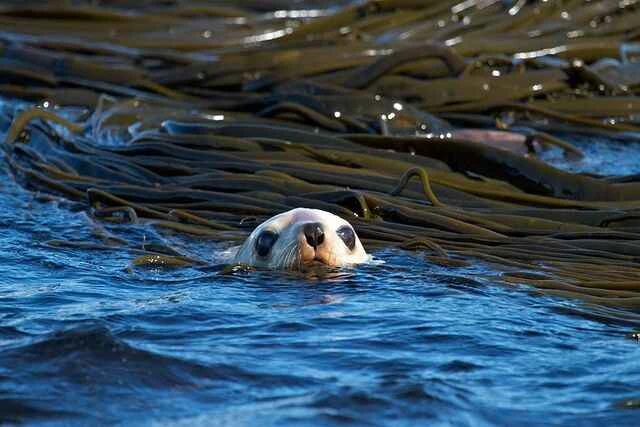
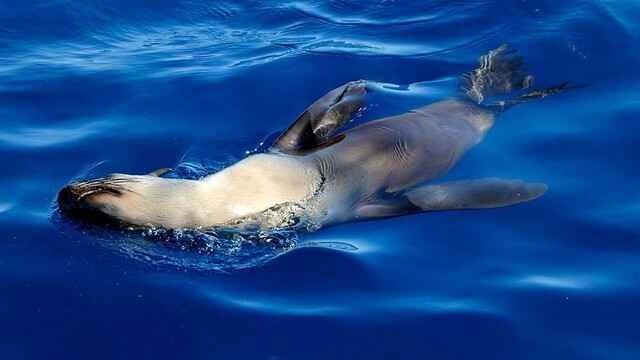
The seal has a spindle-shaped body, a round head, large eyes, but small ears, and long whiskers. Its body is covered with fine, short fur, with the skin on its back being brownish-gray or dark brown, while the skin on its belly is lighter in color, appearing grayish-white. Its forelimbs have five toes with webbing between them, and its hind limbs are broad and fan-shaped, facilitating paddling.
Detailed introduction
Fur seals are mammals belonging to the genus *Seratos* of the subfamily Seloninae in the family Selonidae. They are about the same size as seals, reaching nearly 2 meters in length, but weigh much less, only about 20 kilograms. Their limbs have degenerated into flippers, making them very slow-moving on land. Fur seals are carnivorous, preying on cod, frogfish, as well as crabs, shellfish, and other marine life. They are social animals, enjoying sunbathing. During the day, large groups often gather on rocky shores and snowy areas to bask in the sun or hunt in coastal waters. At night, they come ashore to rest. Breeding occurs in late spring and early summer. Large groups of male fur seals return to their birthplace first, claiming territory and waiting for females to come ashore to mate and reproduce. Each year, about half of the fur seal pups die shortly after birth. Some are trampled to death by other fur seals in the colony, while others die from hookworm disease or other infections.

Fur seals are born with the ability to move and swim on land. They are excellent swimmers, able to swim continuously for 5 minutes at a speed of 15 miles per hour shortly after birth, and can dive to a depth of 240 feet. Fur seals are clumsy on land, but not as clumsy as real seals. This is because their flippers are larger, allowing them to reach speeds of up to 5 miles per hour.
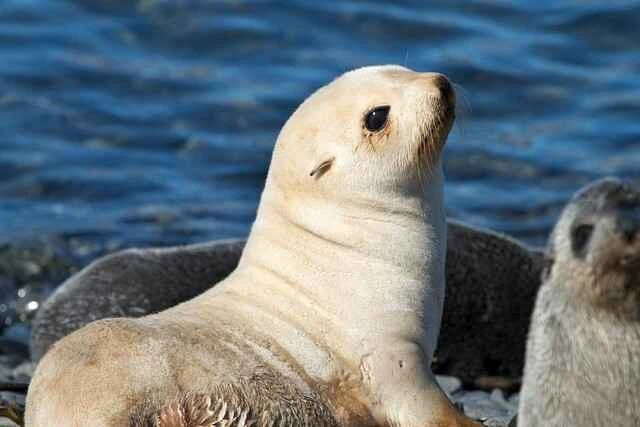
They hunt by day in coastal waters and rest on land at night. They have keen hearing and a keen sense of smell. Except during the breeding season, they have no fixed habitat and must travel up to 1,000 kilometers for a single hunt. They generally hunt at dusk, which helps them avoid their natural predators (sharks, whales, polar bears, etc.). These predators are rarely seen during this time; and the dim light makes them difficult to spot.

What's particularly interesting is that stones, weighing 200-400 grams, are often found in the stomachs of seals. The biological significance of these stones is difficult to determine. Some believe they ingest stones to regulate body balance, as the stones reduce the buoyancy of their fat. However, many biologists believe these stones, like grains of sand in a bird's gag, are used to grind food, aiding digestion. Others suggest the stones are used to kill parasites in the stomach; once the parasites are ground to death, they are refluxed. However, the presence of numerous stones in the stomachs of young seals still feeding on their mother's milk makes these theories difficult to reconcile. To date, a convincing answer has not been found.
In traditional Chinese medicine texts, fur seals are also known as "tanguis" because the testicles and penis of male fur seals are commonly called "fuguishin" or "tanguishin," and can be used in combination with other medicines to prepare traditional Chinese medicine. A research team composed of researchers from the UK's Natural Environment Research Council and Bielefeld University in Germany has found that climate change has already significantly impacted the survival of Antarctic fur seals, with consequences including a decline in the overall fur seal population, lighter birth weights, delayed reproductive periods, and even genetic alterations.
Fur seals are recognized as endangered by the World Wildlife Fund. They are listed in the IUCN Red List of Threatened Species (2012 version 3.1).