Basic Information
Scientific classification
- Chinese name: Xanthomonas fulvidracocephala
- Scientific name: Ptychodera flava
- Classification: Hemichordates
- Family and genus: Asteriformes, Asteridae, Asteroidea
Vital signs data
- Body length: 50-100 mm
- weight:
- life:
Significant features
Intestinal gills
Distribution and Habitat
Widely distributed in the tropical waters of the Indo-Pacific region. Domestically, it is found in Hainan. It inhabits the intertidal zone, burrowing into sandy or muddy bottoms.
Appearance
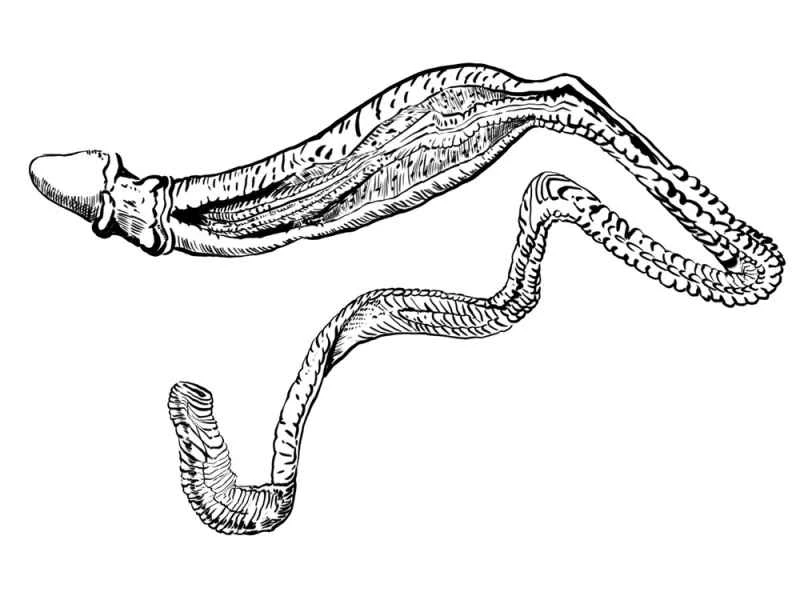
The snout is conical or round. The collar narrows in the middle, with a distinct annular groove at its posterior edge. The gills are sausage-shaped with extremely wide gill openings. The liver sacs are arranged in regular longitudinal rows. Epidermal rings are particularly prominent in the liver area, while the rings on both sides of the back form small island-like patterns. The rings on the outer edge of the genital wings are weaker and often form small branches. The tail is swollen.
Detailed introduction
Ptychodera flava is a species of enterobranch that is widely distributed along the coasts of the Pacific and Indian Oceans. It belongs to the genus Ptychodera in the family Ptychoderidae. [1] This species was discovered by naturalist Johann Friedrich von Eschscholz during his participation in the second voyage of Russian explorer Otto von Kotzeb and is the earliest known hemichordate.
It is listed as a Class II protected wild animal in the "List of Key Protected Wild Animals in China".