Basic Information
Scientific classification
- Chinese name: minke whale
- Scientific name: Balaenoptera acutorostrata (common/northern minke whale) / Balaenoptera bonaerensis (antarctic minke whale)
- Order: Cetacea
- Family and genus: Baleen whales (family Baleen whales)
Vital signs data
- Body length: Common minke whales are typically 7–10 meters long, with the largest reaching about 10.7 meters; Antarctic minke whales are mostly in the range of about 8–10 meters, with the largest individuals approaching 11 meters or more (there are differences depending on the sea area and sex).
- Weight: Weight varies greatly depending on the individual and the sea area; authoritative species overviews often give an upper limit reference of "up to about 9 tons (about 20,000 pounds)".
- Lifespan: Lifespan can reach several decades, with common authoritative overviews giving an upper limit of about 50 years.
Significant features
One of the smallest baleen whales, it swims fast and reacts quickly; it mainly feeds on krill and small schools of fish, and its name often covers two closely related species.
Distribution and Habitat
Common minke whales are widely distributed in the North Pacific and North Atlantic Oceans, and can also enter some mid-to-low latitude seas; Antarctic minke whales are mainly associated with the Southern Ocean around Antarctica, and in summer they often feed on krill near the edge of sea ice and the pack ice zone.
Appearance
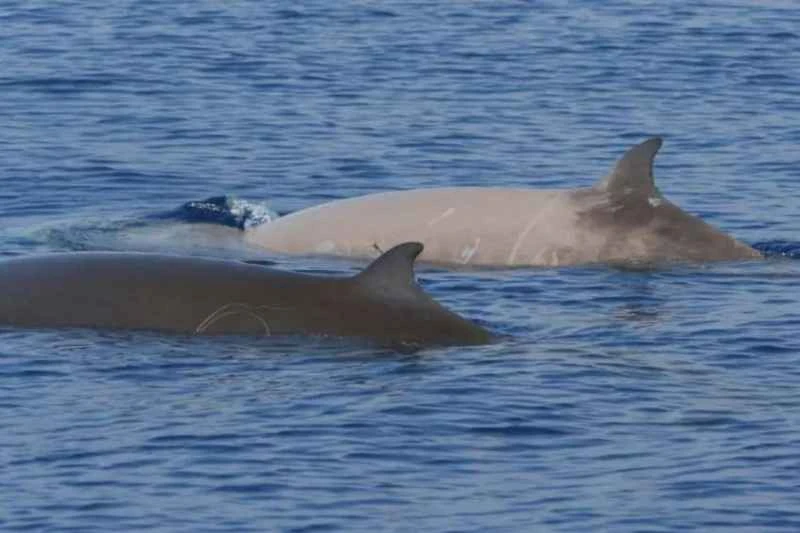
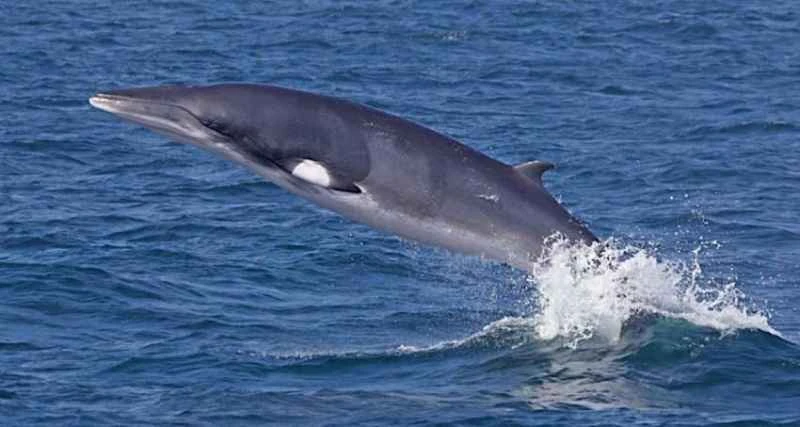
The minke whale has a streamlined body, a pointed head, and a sickle-shaped dorsal fin positioned towards the rear; its abdomen has longitudinal grooves that facilitate sucking-and-swallow feeding. Common minke whales in the Northern Hemisphere often have white bands on their pectoral fins, making them easily identifiable.
Detailed introduction
Minke whales are the smallest and most widely distributed baleen whales in the baleen whale family, often referred to as "small fin whales of the ocean." In popular science contexts, "minke whale" usually refers to the common/northern minke whale ( Balaenoptera acutorostrata ), but there is a closely related, independent species in the Southern Ocean of the Southern Hemisphere—the Antarctic minke whale ( Balaenoptera bonaerensis ). Because of their similar appearance and overlapping ecology, the two are often referred to together as "minke whales" in the wild and in research materials.
Minke whales are fast swimmers with quick reflexes, often leaving short, clear spouts on the surface of the water. They primarily feed on small fish, krill, and other planktonic crustaceans, making them an important part of the food web in many marine areas. However, they are also affected by factors such as entanglement in fishing gear, collisions with ships, ocean noise, and climate change.
Classification and nomenclature
Minke whales belong to the genus Balaenoptera within the family Balaenopteridae of the order Cetacea. The two most common "minke whales" are the common/northern minke whale ( B. acutorostrata ) and the Antarctic minke whale ( B. bonaerensis ). In the Northern Hemisphere, "minke whale" usually refers to B. acutorostrata ; while in the Southern Ocean and high-latitude waters of the Southern Hemisphere, B. bonaerensis is more common.
Appearance features
Both species have streamlined bodies, pointed heads, and sickle-shaped dorsal fins positioned towards the rear. Common minke whales in the Northern Hemisphere often have striking white bands on their pectoral fins, considered a key identifying feature; Antarctic minke whales generally have a colder-water appearance, and their bodies often show abrasions and circular scars (such as bite marks from biscuit sharks). Both species possess a longitudinal groove on their abdomen (glottis-ventral fold), facilitating a "sucking" feeding motion.
Distribution range and habitat
Common minke whales are widely distributed, found in the North Pacific, North Atlantic, and parts of the mid- to low-latitude seas, often inhabiting the continental shelf margins and coastal to open ocean areas. Antarctic minke whales are mainly associated with the high-latitude circum-Antarctic waters of the Southern Ocean, and in summer they can enter sea ice edges and pack ice zones, using areas rich in krill as important foraging grounds. Overall, minke whale populations cover a variety of marine environments from nearshore to the open ocean.
Lifestyle Habits and Behaviors
They mostly appear alone or in small groups, but may also form looser gatherings when food is plentiful. They are fast swimmers and agile turners, and may quickly change course when encountering ships. Migratory behavior varies depending on the population and the sea area: many populations forage at high latitudes and breed and overwinter at low latitudes, migrating thousands of kilometers round trip.
feeding habits
Their diet consists mainly of small, schooling fish and crustaceans, with common prey including krill, anchovies, sardines, herring, and other small fish and shrimp. Minke whales use the expansion of their throat folds to swallow large amounts of water and prey at once, then filter the water through their baleen plates to continue feeding.
Reproduction and life cycle
Typically, each whale gives birth to one calf. Gestation and breeding seasons vary depending on the sea area, but generally follow the typical baleen whale pattern of "foraging at high latitudes and breeding at low latitudes." Lifespan can reach several decades, with authoritative species overviews often giving an upper limit of around 50 years.
Relationship with humans
Minke whales are among the most frequently recorded baleen whales during coastal whale watching activities, and are also a species involved in whaling activities in some countries/regions, both historically and currently. Major human-related risks today include entanglement and bycatch in fishing gear, ship collisions, marine noise pollution, and the impact of marine heat waves and ecological changes on prey resources.
Protecting the status quo and threats
On a global scale, the common minke whale is assessed as Least Concern (LC), while the Antarctic minke whale is assessed as Near Threatened (NT). Because population status and stressors vary across different sea areas, conservation management typically emphasizes monitoring "by population and region" to reduce fishery entanglement, control the risk of ship collisions, and mitigate the potential impact of loud noise activities on cetaceans.
Frequently Asked Questions
Q1: What are the differences between minke whales, humpback whales, and blue whales?
Mink whales are smaller and swim faster, with more prominent dorsal fins that often spout water in short bursts; blue whales and humpback whales are larger and their behavior and appearance are easier to distinguish.
Q2: Is the "Minke whale" a species or a type of whale?
In everyday usage, it may refer to the common/northern minke whale ( Balaenoptera acutorostrata ), or it may refer to the species complex of "minke whales," which includes the Antarctic minke whale ( B. bonaerensis ).
Q3: What do minke whales eat?
They mainly feed on krill and small schooling fish (such as herring and sardines), filtering their food through baleen.
Q4: Are minke whales endangered animals?
The common minke whale is assessed as Least Concern (LC) globally; the Antarctic minke whale is assessed as Near Threatened (NT). Populations in different sea areas face varying threats, requiring continued monitoring and management.