Basic Information
Scientific classification
- Chinese name: Hastings River Pseudomomyxopod
- Scientific name: Pseudomys oralis
- Classification: Rodentia
- Family and genus: Muridae, Genus: *Muscicapella*
Vital signs data
- Body length: The head and body length is about 14–17 cm, and the tail length is about 13–15 cm. The tail length is often close to the head and body length.
- Weight: Weight is mostly in the range of about 70–110 grams, which is affected by seasonal body condition and individual differences.
- Lifespan: Limited data on lifespan in the wild, usually estimated to be several years; population recovery depends on relatively stable habitats and low predation pressure.
Significant features
This is a native rodent species endemic to eastern Australia, found in patchy distributions. It relies on forest floor cover for shelter and has a highly seasonal diet, with fungi likely serving as an important supplement during the cooler seasons.
Distribution and Habitat
It is distributed in patches along the Great Dividing Range in northeastern New South Wales and southeastern Queensland, commonly at elevations of approximately 300–1100 meters; it prefers open woodlands and sparse forests with thick understory grass/sedge/shrub cover.
Appearance
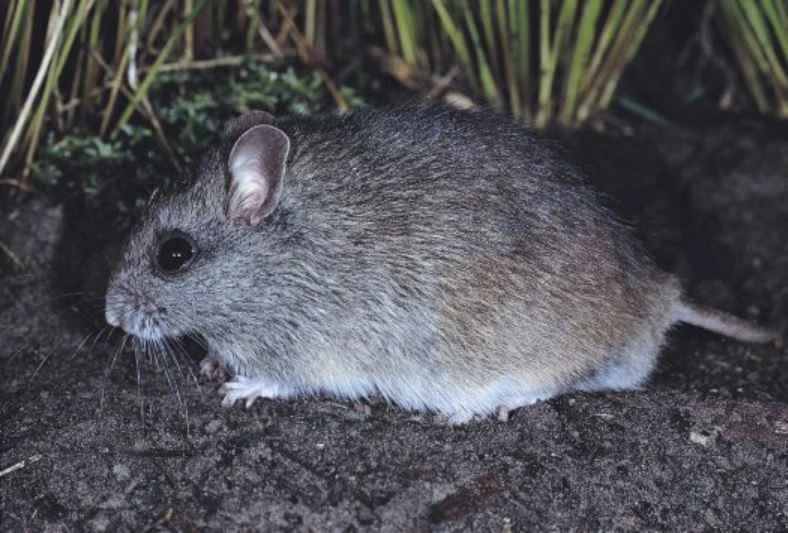
It has brownish-grey back fur, lighter-colored belly, rounded muzzle, large eyes with dark eye rings, and a relatively long, furry tail, with the belly of the tail often being lighter in color.
Detailed introduction
The Hastings River Mouse ( Pseudomys oralis ) is a native rodent endemic to eastern Australia. Its scattered distribution, elusive nature, and nocturnal activity make it rarely seen in the wild. Unlike introduced house mice that can thrive in human settlements, the Hastings River Mouse is highly dependent on forest/woodland surface structures, requiring thick layers of herbaceous, sedge, or shrub cover to evade predators and secure a stable food source.
From a conservation perspective, this is a typical species characterized by "narrow distribution and fragmented populations." Habitat alteration (clearing, grazing, roads, and forestry activities), changes in understory structure due to unbalanced fire patterns, and persistent pressure from invasive predators (feral cats, foxes) all amplify the extinction risk of small local populations. Despite its small size, it still plays a role in the ecosystem: participating in forest material cycling and microhabitat regeneration through behaviors such as foraging, seed transport, and digging for food.
Classification and nomenclature
The Hastings River mouse belongs to the class Mammalia, order Rodentia, family Muridae, and genus Pseudomys . The English name "Hastings River" comes from its historical name and does not indicate that it lives near only one particular river; "mouse" reflects its rodent-like appearance.
Appearance features
The Hastings River Raccoon is a medium-sized animal with a rounded snout, large eyes, and often prominent dark circles around the eyes. Its back is mostly brownish-gray or grayish-brown, while its belly is light yellowish-brown to grayish-white, and its feet are often whiter. It has a relatively long, hairy tail, with the underside of the tail often being lighter in color.
Adults have a head and body length of approximately ten centimeters, with a tail length close to that of the head and body. Their weight ranges from tens to hundreds of grams, varying depending on the region and season. Compared to introduced rodent species such as black rats and brown rats, they are generally more "fluffy" and more sensitive to continuous ground cover structures.
Distribution range and habitat
This species is distributed in patches, mainly along the Great Dividing Range in eastern Australia, ranging from near the Hunter Valley in New South Wales northward to parts of the southeastern mountainous region of Queensland (such as the Bonya Ranges), and is mostly found at altitudes of about 300–1100 meters.
Typical habitats are open forests and sparse woodlands with dense understory covering of sedges, herbs, heather-like shrubs, ferns, or rushes; commonly found in micro-topographical combinations such as streamsides, damp valleys, swamp edges, ridges, or slopes. For it, "surface cover" and "continuously available understory structure" are key conditions.
Lifestyle Habits and Behaviors
They are primarily nocturnal, resting during the day under fallen trees, in dense ground vegetation, or in concealed nesting sites; at night, they forage along the ground cover. They are cautious and will quickly burrow into grass, crevices in fallen trees, or other sheltered locations when disturbed.
Fire patterns have a significant impact on habitat quality: excessively frequent or high-intensity fires reduce surface cover and food resources, while prolonged periods without fire can alter understory community structure. A more reasonable approach is to maintain a moderate understory structure and resource diversity, ensuring a spatially sustainable supply of cover and food.
feeding habits
It is an omnivorous predator with a diet that varies significantly with the seasons. During warmer seasons, it typically feeds on a variety of plant materials (seeds, tender leaves, stems, etc.) and also preys on invertebrates such as insects. In colder seasons or when resources are scarce, fungi may become an important supplement. This "seasonal shift" helps it survive fluctuations in forest resources.
Reproduction and life cycle
Reproduction is largely dependent on climate and resource conditions, typically occurring more actively in warmer months when resources are more abundant. Females typically give birth to small litters, with the young developing in the nest and gradually becoming independent. Due to the dispersed population and the difficulty in tracking individuals, the exact reproductive frequency and lifespan remain uncertain, but overall they are small, wild mammals with a slow recovery rate.
Relationship with humans
The Hastings River hamster poses no direct threat to humans and is not a common household pest. It is more of a member of the forest ecosystem and is often considered an "indicator species" sensitive to understory structure and fire management patterns. Human impacts are primarily indirect: land-use change, altered fire patterns, and increased predation pressure in fragmented landscapes.
Protecting the status quo and threats
This species is generally assessed as Vulnerable (VU) on a global scale and is also listed as a threatened species in Australia. Its main threats include habitat fragmentation and degradation (clearing, roads and forestry activities, etc.), changes in understory structure due to unsustainable fire patterns, predation by invasive predators (feral cats, foxes), competition from invasive rodents, and disease risks.
Conservation strategies typically emphasize maintaining suitable understory structure and ecological corridors, integrating fire management with species needs (avoiding frequent high-intensity burning), controlling invasive predators, and identifying and protecting key small populations through long-term monitoring and genetic research.
Frequently Asked Questions
Q1: Is the Hastings River Rhinoceros a "house mouse"?
No. It is a native Australian rodent that mainly lives in forest/woodland environments and is highly dependent on forest understory structures. It is not a common rodent species in human settlements.
Q2: What is its most typical habitat like?
They are commonly found in open forests or sparse woodlands, with a thick layer of herbaceous plants, sedges, shrubs, or ferns covering the ground. They are often found near streams, moist valleys, ridges, or the edges of swamps and other micro-topographical features.
Q3: What does it mainly eat?
The diet varies with the seasons: in warmer seasons, it tends to consist more of plant-based foods and also includes insects; in colder seasons, it often increases the proportion of foods such as fungi.
Q4: What is its biggest threat?
The main factors include habitat fragmentation and degradation, unbalanced fire patterns, predation by feral cats and foxes, and competition from introduced rodent species.