Basic Information
Scientific classification
- Chinese name: Small-eyed snake
- Scientific name: Cryptophis nigrescens
- Classification: Squamata
- Family and genus: Elapidae, genus *Symplocos*
Vital signs data
- Body length: Adults are generally about 50–90 cm in total length, with large individuals reaching nearly 1 meter. They are medium-sized, slender venomous snakes.
- Weight: Weight varies depending on individual size and nutritional status, with most adults weighing between tens and hundreds of grams.
- Lifespan: It is estimated that it can survive in the wild for about ten years or longer, and sexual maturity usually takes several years.
Significant features
One of the common small to medium-sized venomous snakes in eastern Australia, it is known for its relatively small eyes, dark body color, and nocturnal nature. It is highly camouflaged and often hides under fallen trees and rocks in woodlands, thickets, and urban green spaces.
Distribution and Habitat
It is mainly distributed along the eastern coast and near the inland of Australia, from eastern Queensland through New South Wales to eastern Victoria. It inhabits moist or dry sclerophyllous forests, open woodlands, forest edge shrublands, rocky slopes, and green belts near farmland and suburbs, often hiding under fallen trees, rocks, leaf litter, and building debris.
Appearance
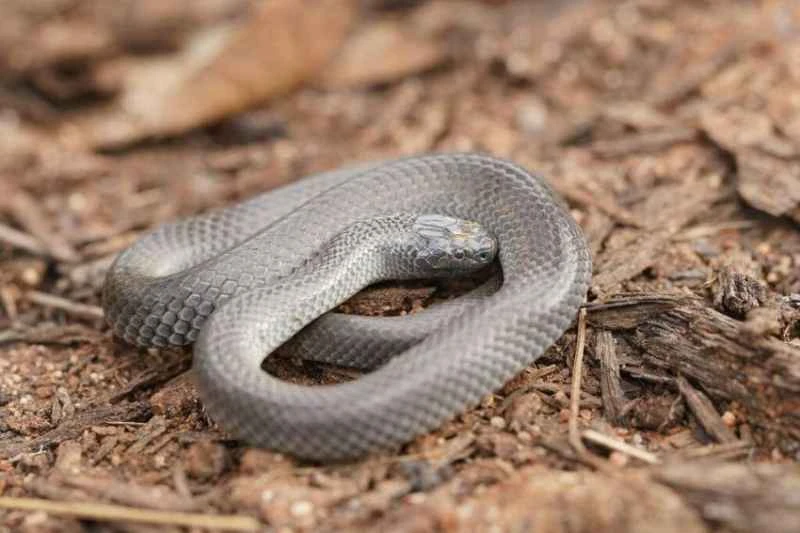
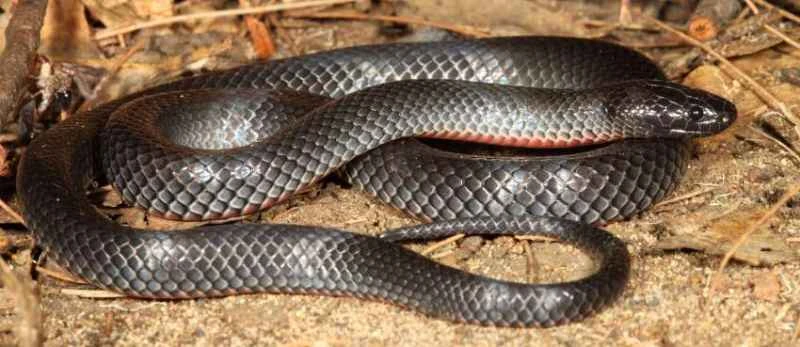
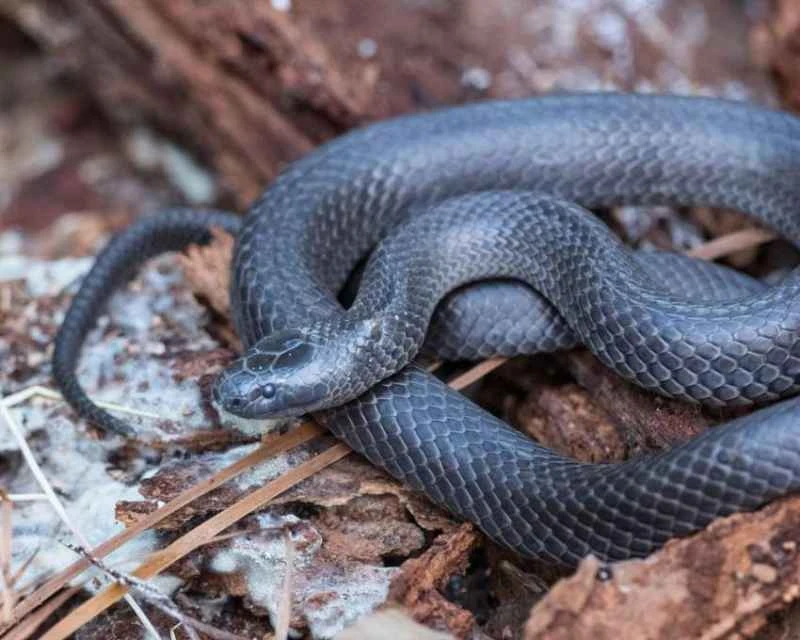
The body is slender and slightly thin, with the back mostly dark gray, blackish-brown, or nearly black, occasionally with a slight metallic or purple sheen, and the belly is pale pink, grayish-pink, or light gray. The head is slightly flat and not wide, with noticeably small eyes and round pupils. The upper lip scales are similar in color to the back as the head and sides, making the eyes not very conspicuous in the overall appearance.
Detailed introduction
The small-eyed snake (scientific name *Cryptophis nigrescens *) is a medium-sized, highly venomous native Australian snake belonging to the genus *Cryptophis* in the family Elapidae. As its name suggests, its eyes are relatively small compared to its body and head, giving it a distinctive appearance. The small-eyed snake is mainly distributed along the eastern coast and near-inland areas of Australia, commonly inhabiting woodlands, scrublands, and urban green spaces. It is a typical nocturnal, highly stealthy, terrestrial venomous snake.
Classification and nomenclature
The small-eyed snake belongs to the class Reptilia, order Squamata, suborder Serpentes, family Elapidae, and genus Cryptophis . The genus Cryptophis contains several small to medium-sized venomous snakes distributed in Australia and New Guinea, characterized by their relatively small eyes and often monochromatic body coloration. Cryptophis nigrescens was previously classified in other genera (such as Rhinoplocephalus ) in earlier literature, but with advancements in systematic classification, the genus Cryptophis is now more commonly used. The common English name, Small-eyed Snake, directly translates to "small-eyed snake," highlighting its distinctive small eyes.
Appearance features
The small-eyed snake has a slender and somewhat delicate body, with adults typically measuring 50–90 cm in total length, though larger individuals can approach 1 meter. Its back is mostly a uniform dark gray, blackish-brown, or nearly black, sometimes with a slight purple or blue sheen, lacking distinct patterns. The underside is usually pale pink, grayish-pink, or light gray, with some individuals exhibiting a more fleshy pink hue, contrasting with the dark back. The head is slightly flattened and not very wide, with noticeably small eyes and round pupils; the upper lip scales and sides of the head are similar in color to the back, making the eyes even less visually striking. The overall impression is of a "slender, dark-colored snake with a simple head and small eyes."
Distribution range and habitat
The small-eyed snake is endemic to eastern Australia, distributed from eastern Queensland through most of New South Wales, extending south to parts of eastern Victoria. Its habitats are diverse, including moist or dry sclerophyllous forests, open woodlands, forest edges, rocky slopes, and greenbelts near farmland and suburbs in coastal and hilly areas. The small-eyed snake is highly dependent on cover, often hiding under fallen logs, rocks, leaf litter, animal burrows, and human construction debris (such as piles of planks and tiles). Due to its adaptability, it can also be found around some urban and rural residential areas.
Lifestyle Habits and Behaviors
The small-eyed snake is primarily nocturnal, a typical nocturnal venomous snake. During the day, it usually hides under cool, concealed cover, only occasionally being spotted on the surface on cloudy days or when temperatures are low. After nightfall, they slowly slither through leaf litter, grass, or among rocks, searching for small prey. Small-eyed snakes are generally secretive and timid, often fleeing quickly into cover when encountering humans; however, if cornered, continuously harassed, or accidentally stepped on, they will adopt a defensive posture, coiling into an S-shape and preparing to bite. While not large in size, their venom poses a certain risk to humans and should be taken seriously.
feeding habits
The small-eyed snake is a carnivorous predator, primarily feeding on small vertebrates, including lizards and skinks, small snakes, frogs, and occasionally small mammals. They mostly hunt using a combination of active searching and short-range ambush, moving slowly along the ground at night, using their sense of smell and tongue to detect prey. Once close, the small-eyed snake will quickly lunge and bite, injecting venom through its anterior fangs to paralyze or kill the prey before swallowing it whole. Because the small-eyed snake frequently preys on lizards and small snakes, it plays a certain ecological role in controlling the populations of some small reptiles and amphibians.
Reproduction and life cycle
Like many Australian cobras, the small-eyed snake is viviparous, giving birth to live young instead of eggs. The breeding season typically occurs during the warmer months, when males seek out females to mate with. After fertilization, the embryo develops inside the female for several months, eventually producing several to over ten young snakes. Newborn tadpoles are small but already possess a complete venom gland and fang system, enabling them to hunt and defend themselves independently. Data on the small-eyed snake's lifespan in the wild is relatively limited, but it is generally estimated that it can live for about ten years or even longer, although sexual maturity may take several years.
Relationship with humans
Because of their elusive nature, medium size, and nocturnal habits, direct encounters with the small-eyed snake are relatively rare. However, they can still be found near homes, gardens, or farms in densely populated suburbs and rural areas of eastern Australia. Their venom is believed to be highly myotoxic and neurotoxic; severe bites can cause muscle pain, weakness, and dark urine, posing serious health risks if not treated promptly. Therefore, when encountering a small-eyed snake or any small to medium-sized black snake resembling this species, maintain distance and do not attempt to catch or drive it away. If bitten, immediately apply pressure and bandage, and seek medical attention as soon as possible.
Protecting the status quo and threats
In existing conservation assessments, the small-eyed snake is generally considered a widely distributed and relatively stable species, approaching or equivalent to the IUCN "Least Concern" category. However, local populations may still be affected by habitat loss and fragmentation, road traffic, human hunting, and domesticated or wild predators such as cats and dogs. Urban expansion and agricultural development leading to the clearing of woodlands and shrublands will reduce suitable hiding places and prey resources. The key to protecting the small-eyed snake and other native snakes lies in: maintaining the eastern woodland and shrubland ecosystems, reducing indiscriminate hunting of snakes, and raising public awareness of the risks and ecological value of venomous snakes through public education.
Frequently Asked Questions
Q1: How venomous is the small cobra?
The venom of the small-eyed snake has significant myotoxic and neurotoxic properties. A bite may cause symptoms such as muscle pain, weakness, and darkened urine. It is one of the venomous snakes that requires serious medical attention. If a bite occurs, apply pressure bandage immediately and seek medical attention as soon as possible.
Q2: Why is it called "small-eyed snake"?
Compared to many snakes of similar size, the small-eyed snake has eyes that are proportionally smaller on its head, making them appear "inconspicuous." This unique feature is the origin of its genus name and English name, Small-eyed Snake.
Q3: What should I do if I encounter a small cobra in the suburbs or on a farm?
Remain calm, keep a safe distance from the snake, and do not attempt to catch, drive away, or kill it. In most cases, small-eyed snakes will leave on their own once they determine there is no threat. If its location poses a potential risk to people or pets, contact your local professional snake catcher or wildlife agency.
Q4: What role does the small-eyed snake play in the ecosystem?
The small-eyed snake primarily preys on lizards, small snakes, and other small vertebrates, helping to regulate their populations and maintain food web balance in woodland and scrub ecosystems. It is also preyed upon by birds of prey and large snakes, making it an important member of the reptile community in eastern Australia.