Basic Information
Scientific classification
- Chinese name: Murga snake / Brown King snake
- Scientific name: Pseudechis australis
- Classification: Squamata
- Family and genus: Elapidae, genus *Symplocos*
Vital signs data
- Body length: Adults are generally about 1.5–2.0 meters in total length, with large individuals exceeding 2.5 meters, making it one of the larger terrestrial venomous snakes in Australia.
- Weight: Weight varies depending on individual size and nutritional status, with large adults reaching several kilograms.
- Lifespan: It is estimated that it can survive for more than ten years or even longer in the wild, and it takes several years to reach sexual maturity.
Significant features
The brown king snake is a large venomous snake widely distributed in the Australian outback and semi-arid regions. It has a wide diet and a large amount of venom, and is an important high predator in the ecosystem.
Distribution and Habitat
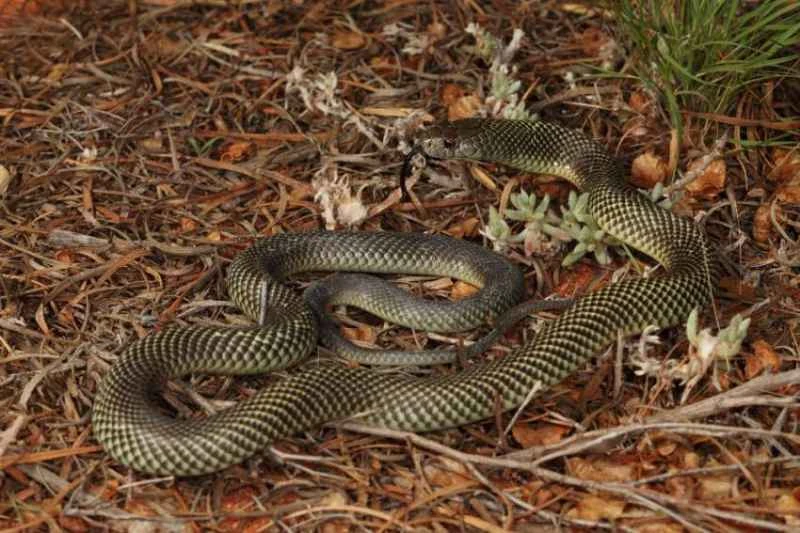
They are widely found in grasslands, scrublands, savannas, forest edges, farmlands, pastures, and around small settlements in the Australian outback and semi-arid regions, often using piles of rocks, fallen logs, abandoned caves, and building ruins as hiding places.
Appearance
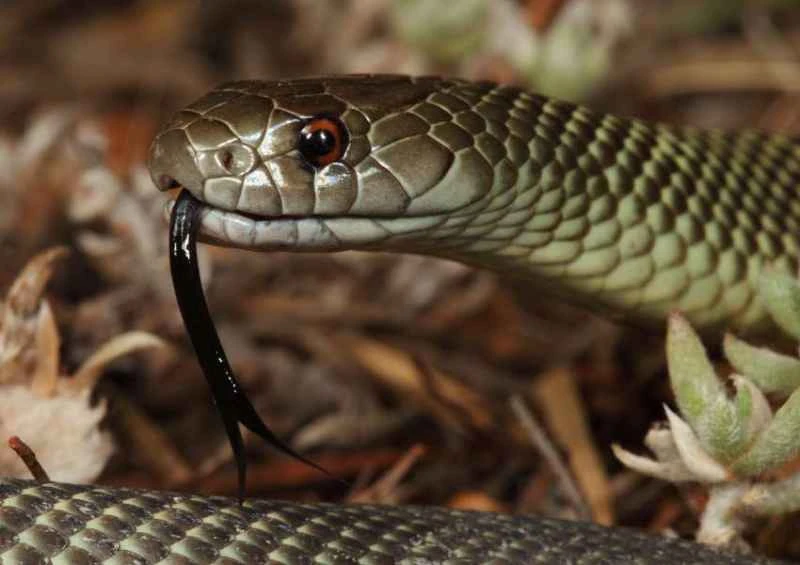
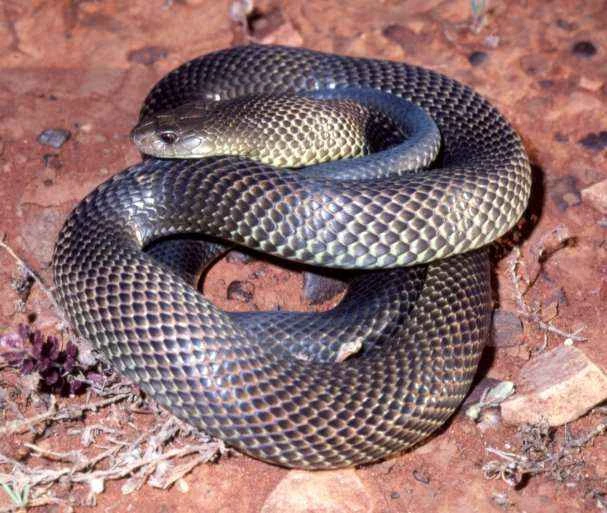
The body is robust and slender, with the back ranging in color from light yellowish-brown to dark chocolate brown. The scales are slightly glossy with subtle shadows on the scale edges, while the belly is pale yellow or cream-colored. The head is slightly wide, and the transition between the neck and the torso is not obvious, giving an overall impression of stability and strength.
Detailed introduction
The Mulga Snake (scientific name *Pseudechis australis* ), also known as the King Brown Snake in English, is one of Australia's largest and most venomous terrestrial snakes, belonging to the genus *Pseudechis* in the family Elapidae. It is widely distributed in the Australian outback and semi-arid regions, appearing in grasslands, scrublands, and forest edges, and is an important large predator in the local ecosystem. Despite having "brown" in its name, it is not closely related to the genus * Pseudonaja * (Brown Snake) in terms of systematics; rather, it is more closely related to species in the genus *Pseudechis*.
Classification and nomenclature
The Murga snake belongs to the class Reptilia, order Squamata, suborder Serpentes, family Elapidae, and genus Pseudechis . The genus Pseudechis includes many Australian venomous snakes, such as the red-bellied black snake, and the Murga snake is one of the largest and most widely distributed species within it. The specific epithet * australis* means "southern," indicating its origin in Australia, in the Southern Hemisphere. Due to its often brownish body color and robust build, it is commonly known locally as the King Brown Snake. However, from the perspective of snake research and snake safety education, the public is usually reminded that it belongs to the genus Pseudechis, not the genus Pseudechis.
Appearance features
The Murga snake is a medium to large-sized snake with a robust and powerful body. Adults typically reach 1.5–2.0 meters in length, with larger individuals exceeding 2.5 meters and even approaching 3 meters in some records. Its body color varies considerably, ranging from light yellowish-brown and coppery-brown to dark chocolate brown, depending on geographical location and habitat. Some individuals exhibit slight reticulation or scale edge shading, giving them a subtle "scale pattern." The dorsal scales are large and slightly glossy, while the ventral surface is mostly pale yellow to cream, sometimes with orange or pink hues. The head is slightly broad, with an indistinct transition between the neck and torso. The eyes are medium-sized with round pupils, and the upper jaw has fixed anterior-slotted fangs, making it a typical anterior-slotted venomous snake of the Elapidae family.
Distribution range and habitat
The Murga snake is widely distributed across much of the inland and semi-arid regions of the Australian continent, including large areas of inland Queensland, western New South Wales, South Australia, the Northern Territory, and Western Australia. It is highly adaptable, thriving in a variety of habitats: from dry sandy or gravelly grasslands, scrublands, and savannas, to forest edges, farmland margins, roadsides, pasturesides, and around small settlements. It often uses rock piles, fallen logs, abandoned animal burrows, and human remains as cover, and sometimes hides under surface debris and low vegetation during the day to escape the heat.
Lifestyle Habits and Behaviors
Murga snakes are primarily diurnal or twilight-prone, with their activity rhythms varying with season and temperature. When temperatures are suitable, they are more active during the day; in the hot summer months, they forage mainly at dawn and dusk, hiding in shady, concealed places during the day. Murga snakes have relatively complex temperaments. Some individuals are quite calm and will quickly leave when encountering humans; others exhibit obvious defensive behavior when threatened or cornered, such as raising their forebody, inflating their body, and hissing. If approached further, they will launch a rapid bite. Due to their large size, long fangs, and abundant venom, the risk of being bitten should not be underestimated.
feeding habits
The Murga snake is a typical omnivorous predator. Its diet includes a variety of small and medium-sized vertebrates, such as small rodents, lizards, other snakes (including venomous snakes), birds and their chicks, and frogs. They also consume animal carcasses, playing a role in cleaning up rotting remains. When hunting other snakes, the Murga snake exhibits a degree of tolerance to the venom of certain local snakes, allowing it to feed safely. When hunting, they typically approach their prey through ambush or active searching, quickly bite and inject venom, then retreat to wait for the prey to become paralyzed and die before swallowing it whole.
Reproduction and life cycle
The Murga snake is an oviparous snake, with its breeding season typically occurring from late spring to summer. During courtship, males may engage in "constriction fighting" to compete for females, using body entanglement and dominance to establish dominance. After mating, the female will seek out secluded, relatively warm, and dry locations to lay her eggs, such as under fallen trees, in rock crevices, and abandoned caves. The number of eggs laid per clutch varies considerably, generally ranging from 8 to 20, depending on the female's size and nutritional status. The incubation period is closely related to ambient temperature, with the young snakes hatching several weeks later. Newly hatched fry possess venom similar to adults, but their smaller size makes them easier prey for birds of prey, cats, foxes, and large reptiles.
Relationship with humans
Murga snakes are not uncommon in some rural and semi-arid pastoral areas, sometimes appearing near houses, farm buildings, and roadsides, thus increasing their chances of encountering humans compared to some inland snakes. Due to their large size and potent venom, bites can cause severe poisoning, requiring immediate pressure bandaging and emergency medical treatment. On the positive side, they prey heavily on rodents and other pests, playing a positive role in controlling rodent populations in farmland and grain storage areas. Australian law generally protects native wild snakes, and the general public is prohibited from arbitrarily capturing or killing snakes; if encountering a snake, maintain distance and contact professional snake catchers.
Protecting the status quo and threats
In the IUCN Red List and related assessments, the Murga snake is generally considered "Least Concern" or a species with a low threat level due to its wide distribution, adaptability, and ability to utilize diverse habitats, including those affected by human disturbance. However, local populations may still be threatened by habitat fragmentation, road traffic fatalities, indiscriminate hunting driven by human fear, indirect effects from pesticides and rodenticide baits, and disturbance from invasive predators. Key to protecting the Murga snake and other native Australian snakes lies in: maintaining natural grassland and scrubland ecosystems, properly managing farmland and grazing areas, reducing misunderstandings and hostility towards snakes, and encouraging safe, non-lethal responses to encounters with snakes through public education.
Further Reading
Cogger, H. (2000) "Australian Reptiles and Amphibians", Reed New Holland Publishing.
Wilson, S. and Swan, G. (2008), “The Complete Guide to Reptiles in Australia,” Reed New Holland Publishing.
References
Greer, AE (2006) "Encyclopedia of Reptiles in Australia: Elapidae", Australian Museum
Ehmann, H. (1992) "The Australian Animal Encyclopedia: Reptiles", Australian Museum, Angus & Robertson Publishing.
Mirtshin, P. and Davis, R. (1991), “Dangerous Snakes of Australia,” revised edition, Ure Smith Press.
Frequently Asked Questions
Q1: Is the Murga snake a "brown snake" or a "black snake"?
Although it is often called the King Brown Snake in English, it belongs to the genus * Pseudechis *, which is different from the true brown snake genus * Pseudonaja *. Therefore, in snake prevention and medication, it is generally classified as a "black snake".
Q2: How potent is the venom of the Murga snake?
While the venom of the Murga snake is not as extreme as that of the inland taipan, the amount of venom injected is usually very large; a single bite can inject a considerable amount of venom. Without timely medical treatment, it can still cause severe poisoning and even death in humans.
Q3: What should I do if I encounter a Murga snake?
Remain calm and keep a safe distance from the snake. Do not attempt to drive it away, catch it, or swat it. In most cases, the snake will leave on its own once it determines that there is no threat in the surroundings. If you encounter it in your house or yard, contact local wildlife or snake catchers.
Q4: What impact do Murga snakes have on farms and the ecosystem?
The Murga snake preys heavily on rodents and other small mammals, helping to control rodent populations and potentially benefiting crops and food storage. As a top predator, it also maintains food web balance, a crucial component of the health of inland and semi-arid ecosystems.


