Basic Information
Scientific classification
- Chinese name: Dodo
- Scientific name: Dodo, Mauritian Dodo, Foolish Dove, Lonely Pigeon, Raphus cucullatus, Dodo
- Classification: Landfowl
- Family and genus: Columbidae, Dodo
Vital signs data
- Body length: 70-90 cm
- Weight: 17-28kg
- Lifespan: No verification data available.
Significant features
It is the first extinct species recorded by humankind.
Distribution and Habitat
The dodo bird once lived in the Republic of Mauritius, an island nation in East Africa, located approximately 3,943 kilometers southwest of the Indian Ocean. It is about 800 kilometers from the east coast of Madagascar and 2,200 kilometers from the African mainland.
The dodo is a forest-dwelling bird. Given its tropical location, Mauritius enjoys a warm climate, although the ocean's influence moderates the temperatures. The combination of high humidity and warm temperatures fosters a diverse range of biomes on Mauritius, including plains, hills, lush forests, and coastal coral reefs. However, the dodo primarily inhabits forests.
Appearance
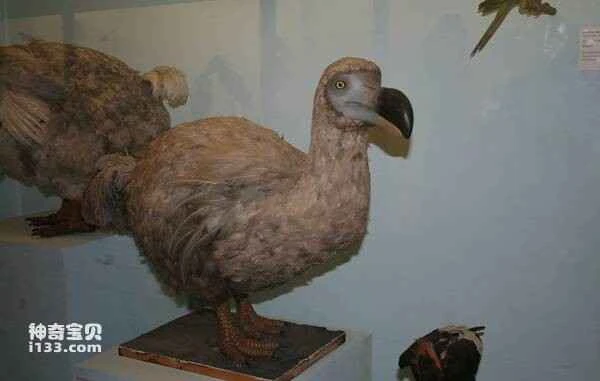
Our understanding of the dodo's appearance is based on several sources. These include the diaries and writings of sailors and captains who landed in Mauritius in the 16th and 17th centuries, as well as paintings by a few people who were alive enough to witness them (although it's impossible to prove that all the artists who created dodo depictions actually saw them in person); some fossils unearthed on the island, now housed in the British Museum; and a foot and a beak preserved at Oxford University, but no complete specimen (the museum model is based on partial remains). From these records and images, scientists and ornithologists have pieced together a fairly detailed composite image of the dodo.
The dodo was comparable in size to a swan and exhibited significant sexual dimorphism. Males could reach 90 cm in length and weigh up to 28 kg, while females were only 70 cm long and weighed just 17 kg. Their plumage was brown or gray, with females being lighter in color than males. The dodo was a large, plump bird covered in soft gray feathers, with a tuft of white feathers on its tail. Its wings were small and weak, unable to lift it off the ground. Because they couldn't fly, those who saw them often thought they didn't have real wings at all, describing them as having "small wings." However, studies of the skeleton show that the dodo did indeed have wings, but these wings were not for flight and resembled those of a penguin. The dodo had short, thick, yellowish legs. Each leg had four toes, three in front and one behind acting as a thumb, all with thick, black claw tips. Overall, it was light gray, with a head slightly lighter than its body and small yellow eyes. The dodo's beak is believed to have come in various shapes: curved, long, and hooked. Its pale green or yellowish color is one of the dodo's most distinctive features. Those who see it are amazed by its unique shape and size. One witness even described it as bizarre.
Detailed introduction
The dodo (Raphus cucullatus), also known as the dodo bird, is one of the most famous extinct animals besides dinosaurs. It is also the only extinct bird species in Mauritius to be designated as the national bird.
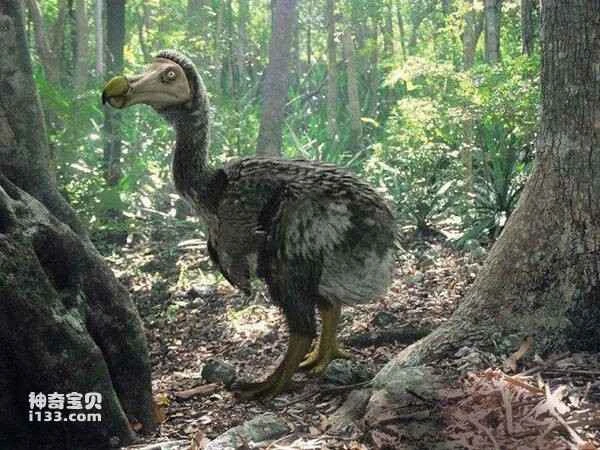
Sailors landing in Mauritius found much amusement in watching the clumsy behavior of the dodo birds. One story recounts a dodo attempting a hasty escape. When it tries to flee (a swaying motion might be a more accurate term), its belly drags on the ground, slowing it down. Their wings are too small and weak to lift the dodo off the ground, as they cannot fly. But in most cases, the dodo is described as a lazy, rather foolish animal. It offers virtually no defense against predators, except for its large beak, which, if necessary, can unleash a "terrible bite" against itself or its young.
Scientists' understanding of the dodo's diet is largely based on speculation. Some sailors have reported seeing dodos wading into pools to fish. They have been described as "strong and greedy" hunters. However, what truly attracts tourists to Mauritius is that dodos seem to frequently eat stones and iron without any problems. It is speculated that these rocks aid digestion.
Details regarding the dodo's mating and incubation periods are unclear. Several people describe the dodo's nest as a grassy bed deep in the forest. There, the female lays one egg, which she then protects and raises. One sailor recounted hearing the call of a young dodo in its nest, which sounded "like the call of a gosling." Breeding begins in August (green line), molting begins in March (red line) due to the stormy summer (yellow line) and food shortages. Like many modern birds that live on islands, the dodo's breeding season appears to begin around August. After hatching, the chicks quickly grow to near-adult size, reaching sexual maturity before the stormy summer begins. After summer, molting begins around March, replacing the feathers on their wings and tail. By July, molting is complete, giving the dodo the opportunity to fatten up and prepare for the start of the next breeding season.
Despite its brief coexistence with humans, the dodo had a significant cultural impact, appearing both on official coats of arms and in literature: a dodo is depicted on the left side of a shield in Mauritius. Its history of discovery and extinction, its strange appearance, and the notion that it was a foolish bird have made the dodo an important cultural reference, and it is mentioned in numerous works of art.
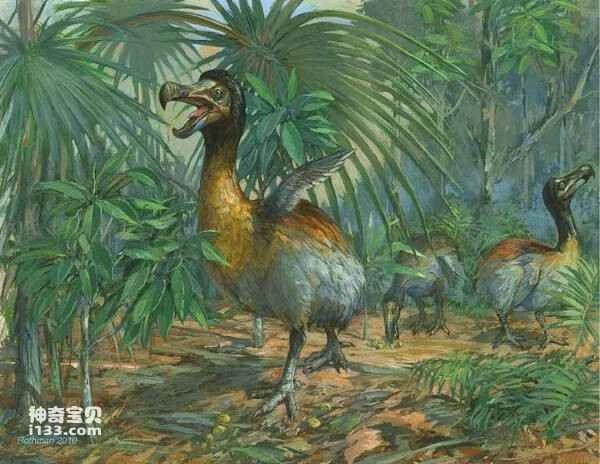
Many animals have gone extinct due to human activity, but the dodo is the first recorded extinction of a species. According to records, in 1598, a ship veered off course en route to the East Indies and discovered Mauritius. The Dutch crew on board recorded sightings of the dodo, which is likely the earliest recorded discovery of this bird. It disappeared from sight in less than 200 years. The exact date of the dodo's extinction remains uncertain, but most scholars believe it occurred in 1681, with some studies even suggesting it became completely extinct in the early 18th century.
There are three main theories regarding the extinction date of the dodo: 1662, 1681, and between 1688 and 1715. Even considering the furthest possible date, the dodo existed for less than 120 years from its encounter with humans to its extinction. This short period coincides with the time when humans and other species began to enter Mauritius. Therefore, it can be inferred that invasive species did indeed have a significant impact on the dodo's extinction.
In August 2016, the world's most complete dodo bird skeleton was auctioned for 4.4 million.
Protect wild animals and ban the consumption of wild game.
Maintaining ecological balance is everyone's responsibility!