Basic Information
Scientific classification
- Chinese name: Hawksbill turtle
- Scientific name: Eretmochelys imbricata
- Classification: Testudines
- Family: Cheloniidae Eretmochelys
Vital signs data
- Body length: Carapace length 60–95 cm (adult)
- Weight: Approximately 40–70 kg (larger individuals may weigh more).
- Lifespan: Estimated 30–50+ years
Significant features
Sharp beak; overlapping scales on the carapace; primarily feeds on sponges; slow to mature; transnational migration; sex determined by temperature.
Distribution and Habitat
Shallow waters with coral reefs and rocky reefs in the tropical Atlantic/Indian/Pacific Oceans, commonly <30 m.
Appearance
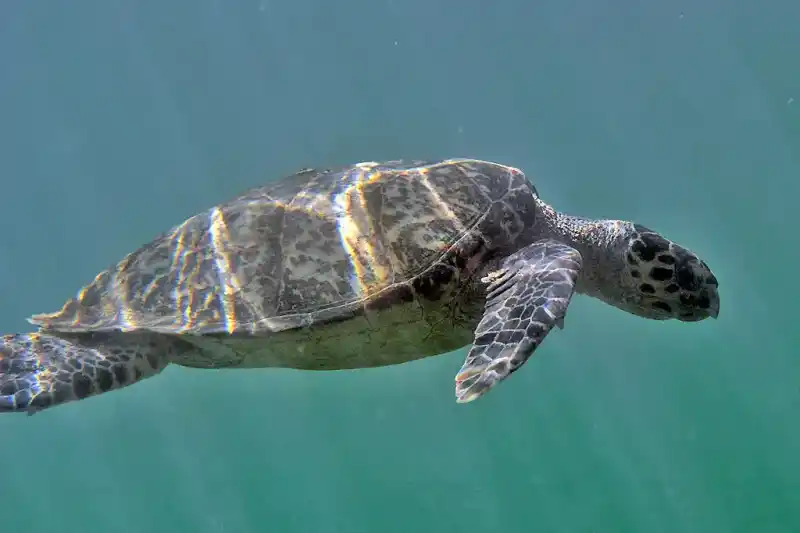
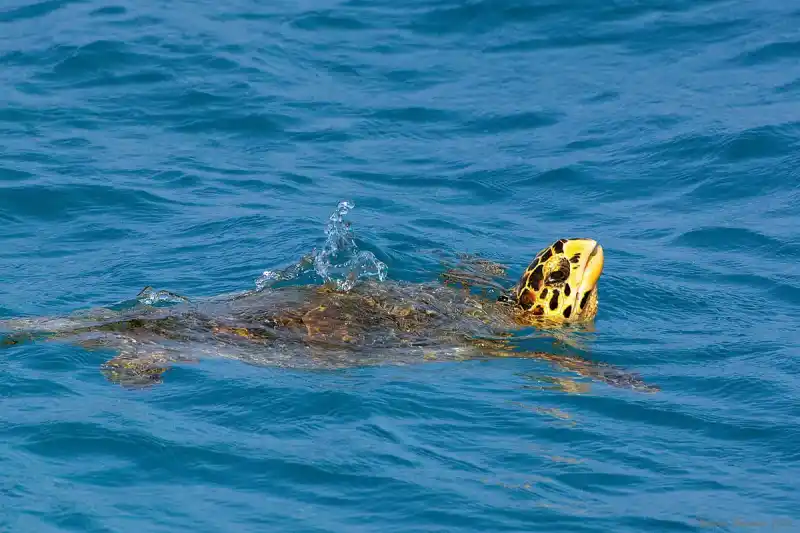
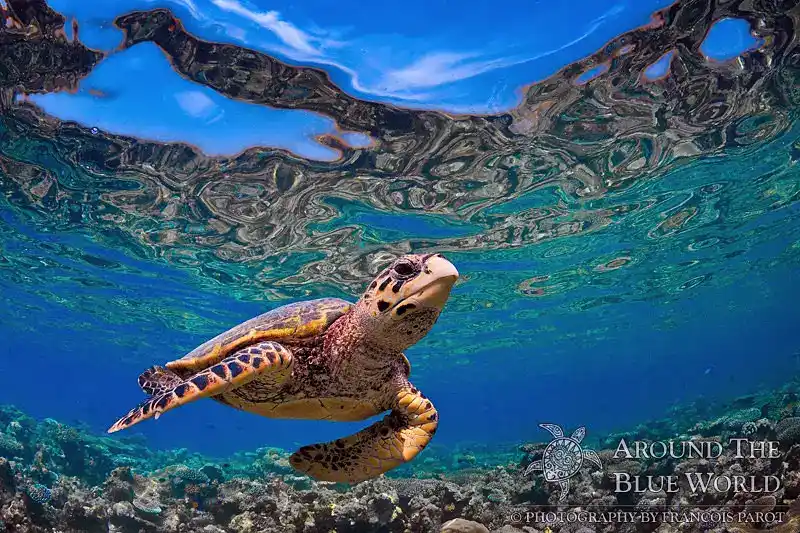
Heart-shaped to oval carapace with serrated posterior margin; paddle-shaped forelimbs; small, pointed head with an eagle-like beak-like upper jaw.
Detailed introduction
The hawksbill turtle ( Eretmochelys imbricata ) is one of the most iconic sea turtles in tropical waters, renowned for its protruding upper jaw resembling an eagle's beak and its imbricate carapace scales . It plays a vital role as a spongivore in coral reef ecosystems, helping to maintain the reef community structure.
Ecology and Biology
Diet: Primarily sponges , but also consumes sea anemones, sea squirts, algae, and small invertebrates. Its beak shape facilitates feeding in coral crevices.
Life history: Larvae drift with ocean currents, subadults settle in nearshore reef areas; maturity is slow (about 20–35 years).
Reproduction: Female turtles come ashore at night to build nests and lay eggs on the beach; temperature determines sex (higher temperatures favor females).
Morphology and Recognition
The carapace is heart-shaped to elliptical with a serrated posterior margin; the carapace scales overlap each other in a "tile-like" pattern; the head is small and pointed with a well-developed beak-like upper jaw ; the limbs are paddle-shaped forelimbs adapted for swimming.
Body size and lifespan
Body length: Carapace length is commonly 60–95 cm (adults).
Weight: mostly 40–70 kg , larger individuals can weigh more.
Lifespan: Estimated 30–50+ years .
Distribution and Habitat
Widely distributed in the tropical Atlantic, Indian and Pacific Oceans , they prefer coral reefs, rocky reefs and seagrass/kelp areas ; they often forage in shallow waters (mostly < 30 m) and migrate across borders.
Conservation and Threats
Major threats: shell trade (hawksbill turtle shells) , illegal fishing and egg harvesting , by-fishing gear (longline/gillnets), beach development and light pollution , coral reef degradation and marine debris .
Key management points: habitat protection, ban on the sale of hawksbill turtle products , improvement of fishing gear (round hooks/turtle traps), management of beach lighting and cleanup of marine debris; inclusion in strict appendices of international conventions.
IUCN: Critically Endangered (CR) (subject to the latest authoritative assessment).
Frequently Asked Questions
Q1: How to distinguish it from similar species such as green sea turtle or hawksbill turtle? Hawksbill turtles have sharp beaks , overlapping scales on their carapaces, and serrated posterior edges; green sea turtles have smooth carapaces and blunt beaks.
Q2: Why are hawksbill turtles important to coral reefs? As sponge predators , they can suppress some of the competition from corals by sponges, thus maintaining the balance of the community.
Q3: How to protect nests on the beach? Reduce nighttime light sources, set up protective fences, patrol and sign, prevent vehicles from running over them, and conduct public education.
Q4: How to reduce harm after accidental capture? Use turtle-catching devices , round hooks, reduce the depth of the longline and the holding area during the season; remove the hook in the water as much as possible before releasing.