Basic Information
Scientific classification
- Chinese name: Black Rat
- Scientific name: Rattus rattus
- Classification: Rodentia
- Family and genus: Muridae (Muscicapidae)
Vital signs data
- Body length: Adults typically have a head and body length of about 16–24 cm and a tail length of about 18–26 cm, with the tail often being longer than the body.
- Weight: The weight is generally 120–250 grams, and a few well-nourished individuals may weigh more than 300 grams.
- Lifespan: In the wild, lifespan is typically 1–1.5 years, but can reach 2–3 years in favorable conditions and without natural predators.
Significant features
A typical invasive rodent found globally, it is slender, long-tailed, and has large ears, making it an excellent climber. It is often found on rooftops and in trees and is one of the most important pests in cities and farmlands.
Distribution and Habitat
Originally from South Asia, it has now spread to most continents and islands except Antarctica with human migration. It is commonly found in urban buildings, warehouses, ports, farmhouses, granaries and orchards, and also lives in a variety of habitats such as farmland edges, thickets and forest edges.
Appearance
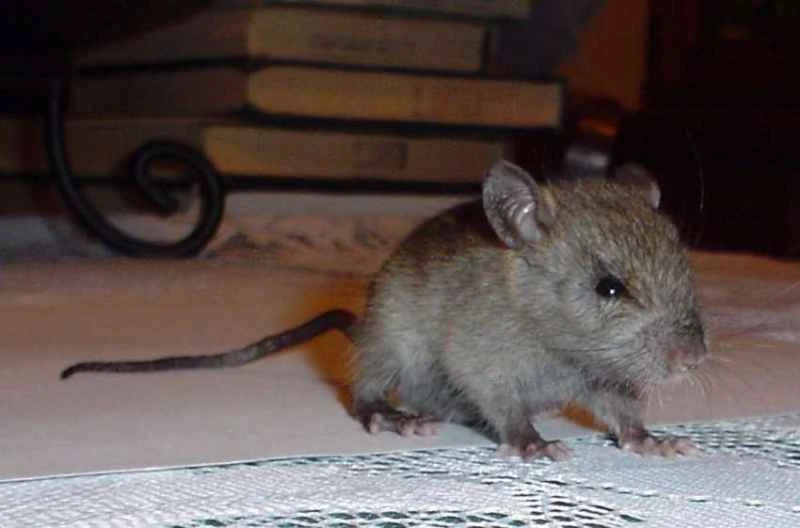
With a slender body, small head and pointed snout, relatively large ears that can fold to cover the eyes; the back fur is mostly black, dark gray or brownish-black, the belly is lighter in color, grayish-white or yellowish-white, the tail is thin and long with obvious scale rings, giving an overall impression of agility and flexibility.
Detailed introduction
Black rats (scientific name *Rattus rattus *) are small to medium-sized rodents belonging to the genus *Rattus* in the family Muridae. Native to South Asia, they were unintentionally introduced to various parts of the world through human navigation, trade, and migration. Today, they are found on most continents and islands except Antarctica, making them one of the most typical "invasive species" and urban pests. Historically, black rats have been associated with the spread of major infectious diseases such as plague, profoundly impacting human society and ecosystems.
Classification and nomenclature
Black rats belong to the class Mammalia, order Rodentia, family Muridae, and genus Rattus . Their scientific name is *Rattus rattus* , and they are also commonly known as "boat rats" or "roof rats" in different regions. Although their Chinese name is "black rat," their fur is not always pure black; some subspecies and populations exhibit dark gray, brownish-black, or dark brown fur. Black rats are common house mice, similar to brown rats ( *Rattus norvegicus *), but they are typically smaller, more slender, and have relatively longer tails.
Appearance features
Black rats are medium to small in size, with slender and agile bodies. Adults typically have a head and body length of 16–24 cm and a tail length of 18–26 cm, with the tail often longer than the body. Their weight is generally 120–250 grams, although some well-nourished individuals can exceed 300 grams. They have relatively small heads, pointed snouts, and prominent, relatively large ears that can fold to cover their eyes; this is one of the key characteristics distinguishing black rats from brown rats.
The fur on the back and sides is mostly black, dark gray, or dark brown, while the fur on the belly is lighter, sometimes grayish-white or yellowish-white. The fur is relatively smooth and close to the body, giving an overall impression of being "slender and agile." The tail is long and thin, with clearly visible bare scale rings and a few short hairs. The fore and hind toes are sharp and powerful, making it easy to climb walls, tree trunks, and various vertical structures, hence the nickname "roof rat."
Distribution range and habitat
Black rats originated in the Indian subcontinent and surrounding areas. Later, with the expansion of human navigation, trade, and agriculture, they were introduced to Europe, Africa, the Americas, Oceania, and countless islands, and are now widely distributed in temperate to tropical regions worldwide. In many island nations and island ecosystems, black rats have become a serious invasive species, posing a significant threat to native birds, reptiles, and invertebrates.
In terms of habitat selection, black rats are highly adapted to human-occupied environments. They are commonly found in urban buildings, warehouses, ports, farmhouses, granaries, and orchards, and also live on farmland edges, in thickets, forest edges, and coastal areas. Compared to brown rats, which are more ground-oriented, black rats are better at living and foraging in high places, such as on rooftops, beams, tree canopies, and vines.
Lifestyle Habits and Behaviors
Black rats are typically nocturnal or twilight-active animals, hiding during the day in concealed places such as roof cavities, wall holes, under floors, tree hollows, and piles of stones. They are agile, adept at climbing and jumping, and can easily move between power lines, beams, and tree branches. Their social structure is relatively flexible, generally consisting of small groups of several blood-related individuals, with a certain social hierarchy and territorial awareness.
Black rats have an extremely high reproductive rate, which is one of the main reasons they have become an invasive species and a pest. Under suitable conditions, female rats can produce multiple litters a year, with each litter typically containing 5–10 pups, and in some cases more than ten. The young rats grow rapidly and can reach sexual maturity within a few months, leading to a rapid expansion of the population.
feeding habits
Black rats are typical omnivores with a very wide range of diets. They mainly feed on grains, seeds, fruits, roots, and various plant materials, but also prey on insects, mollusks, bird eggs, and young birds. In human living environments, black rats will gnaw on stored grains, poultry feed, kitchen food, garbage, and various chewable items such as electrical wires and plastic packaging.
This broad-spectrum diet allows black rats to survive in a variety of environments, but it also brings serious economic losses and safety hazards, such as chewing up electrical wires and causing fires, contaminating food, and spreading pathogens.
Reproduction and life cycle
In warm regions or in temperature-controlled buildings, black rats can breed almost year-round. The gestation period for females is approximately 21–23 days, with litters of 5–10 pups. The pups are born naked and blind and require nursing and care from their mothers in the nest. After about 3 weeks, the pups begin to open their eyes, move around, and try solid food, reaching sexual maturity in 1–2 months.
In the wild, black rats typically live for 1–1.5 years, but in areas with favorable environmental conditions and a lack of natural predators, a few individuals can live for 2–3 years. Their high reproductive rate and short generation cycle make their populations extremely responsive to environmental changes, making them difficult to control.
Relationship with humans
Black rats have long been considered a significant pest and invasive species. On the one hand, they gnaw on grain, damage storage facilities and buildings, and chew through cables and water pipes, causing economic losses. On the other hand, black rats, along with parasites such as fleas, have been involved in the transmission of serious infectious diseases such as plague. Even in modern cities, they may carry various pathogens, such as Salmonella and Leptospira, posing a potential threat to public health.
However, from an ecological perspective, black rats also act as medium-sized predators and part of the food chain in certain natural or semi-natural environments, becoming prey for birds of prey, snakes, and small carnivorous mammals. Humans often use a combination of measures to control black rats, such as sealing burrows, improving food storage facilities, setting rat traps, and using rodenticides, but the impact on non-target wild animals and environmental safety must also be considered.
Protecting the status quo and threats
Due to their wide distribution, large population size, and high adaptability to human activities, black rats are classified as "Least Concern (LC)" on the IUCN Red List. On a global scale, they do not lack living space; in fact, they require active control and eradication in many island ecosystems to protect native species and ecological integrity.
Currently, the focus is more on how to effectively reduce the negative impacts of black rats on human health, food security, and native biodiversity while respecting animal welfare and ecological balance.
Frequently Asked Questions
Q1: What is the difference between black rats and brown rats?
Black rats are typically smaller and more slender, with larger ears and longer tails that are often longer than their bodies, making them better at climbing and moving around at heights; brown rats are more robust, with larger heads and smaller ears, and are more active on the ground and in sewers.
Q2: What harm do black rats pose to humans?
Black rats gnaw on grains and crops, damage building structures and electrical wires, and can spread a variety of pathogens through their feces and parasites. Historically, they have also been closely associated with the spread of plague and are important pests in cities and farmlands.
Q3: How to reduce the problem of black rats in homes and warehouses?
Key measures include sealing holes and cracks in walls, properly storing and sealing food, promptly cleaning up garbage and debris, maintaining a clean environment, and using rodent traps and professional rodent control solutions as needed to minimize the impact on non-target wildlife.
Q4: Do black rats play a positive role in the ecosystem?
In some natural environments, black rats are prey for birds of prey, snakes, and small carnivorous mammals, and are part of the food web. However, in islands and fragile ecosystems, their predation pressure on native birds and small animals often far outweighs their ecological contribution, thus usually requiring control or eradication.